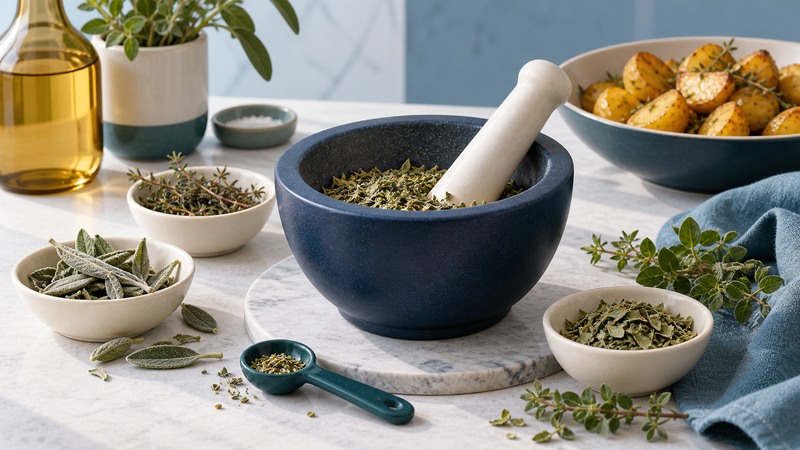
Poultry seasoning is an herb-and-spice mixture useful for much more than poultry. Sage and thyme make a recognizable foundation, with other herbs and warm spices changing the balance. The original blend here keeps salt separate and uses explicit ingredient forms so you can reproduce or adjust a small batch.
Make the herb blend
Use dry measuring spoons, a bowl and a clean dry jar. Measure level US teaspoons, using rubbed sage and dried leaves as specified. Ground sage packs differently from rubbed sage; matching the form matters.
On a narrow screen, scroll the table sideways. Keyboard users can focus it and use the arrow keys.
| Ingredient | One batch | Double batch |
|---|---|---|
| Rubbed dried sage | 4 tsp | 8 tsp |
| Dried thyme leaves | 2 tsp | 4 tsp |
| Dried marjoram leaves | 2 tsp | 4 tsp |
| Dried rosemary, crushed fine | 1 tsp | 2 tsp |
| Ground black pepper | ½ tsp | 1 tsp |
| Ground nutmeg | ¼ tsp | ½ tsp |
Yield: approximately 3¼ tablespoons before settling. A double batch totals 19½ teaspoons, or 6½ tablespoons. Grinding and settling can reduce the final jar volume.
- Crush the rosemary finely so large needles will not remain in the finished food.
- Combine it with the sage, thyme, marjoram, pepper and nutmeg. Rub or stir until reasonably even.
- Transfer to the dry jar and label the date and ingredient forms. Stir or shake before measuring.
Download the poultry-seasoning blend card (TXT). This is an original house formula with checked quantities and arithmetic; it has not been kitchen-tested by Yenra.
Compare labels before replacing a brand
The McCormick Culinary poultry-seasoning ingredient list includes thyme, sage, marjoram, rosemary, black pepper and nutmeg. The formula above uses those familiar types of ingredients in its own proportions; it is not a copy of the manufacturer’s blend.
Another product may include different herbs, salt or other seasonings. If a recipe names a brand, compare its label before making a substitution. A fine commercial powder and a coarse homemade leaf blend can occupy the same spoon with different ingredient mass.
For a simple variation, replace the 2 teaspoons marjoram with 2 teaspoons additional thyme. The ingredient-volume total remains 9¾ teaspoons, but the flavor becomes more thyme-led. Mark the jar accordingly. Changing the sage quantity at the same time makes it harder to learn which alteration you prefer.
Try it in small, measured amounts
On a narrow screen, scroll the table sideways. Keyboard users can focus it and use the arrow keys.
| Food | Starting amount | How to use it |
|---|---|---|
| 1 pound (454 g) potatoes or other vegetables | 1 tsp | Toss with the oil in your established roasting recipe; taste after cooking. |
| 2 US cups cooked soup or beans | ¼ tsp | Stir in, warm through and assess the herb flavor. |
| 4 US cups plain bread cubes for stuffing | 1 tsp | Use within a complete stuffing recipe; account for broth, salt and other herbs. |
These quantities are starting trials, not tested complete recipes. Sage intensity and leaf size vary. If you want more flavor, add a small increment and keep the salt adjustment separate. For a six-pound vegetable batch at the suggested rate, use 6 teaspoons: 2 US tablespoons.
A strongly herbal result is easier to prevent than undo. If it happens, combine with an unseasoned portion of the food. Nutmeg contributes a background warm note here; increasing it substantially changes the character of the blend.
Use a thermometer for poultry and stuffing
Follow a complete recipe for meat or stuffing preparation. USDA guidance requires poultry and stuffing to reach 165°F (74°C), checked with a food thermometer. Measure the appropriate places in the poultry and the center of the stuffing. An aromatic browned surface gives no reliable reading of the center.
Portion spice into a separate small bowl before handling raw poultry. Keep raw juices and used utensils out of the storage jar. Discard contaminated leftover seasoning. If you use the blend in a wet marinade or dairy sauce, follow the storage rules for the resulting food.
Maintain a blend you will use
Keep the dry jar tightly closed in a cool cupboard away from steam and sunlight. Make a small batch while the herbs are fragrant; mixing stale ingredients does not restore their aroma. Penn State Extension’s storage guidance recommends checking spices and herbs by their characteristic aroma.
For pepper-forward seasoning, use the Cajun-style blend. For a red pepper note alongside herbs, the paprika guide helps you decide whether smoke and heat belong in the dish.
Explore all seasoning and ingredient guides · Food, cooking and meal planning