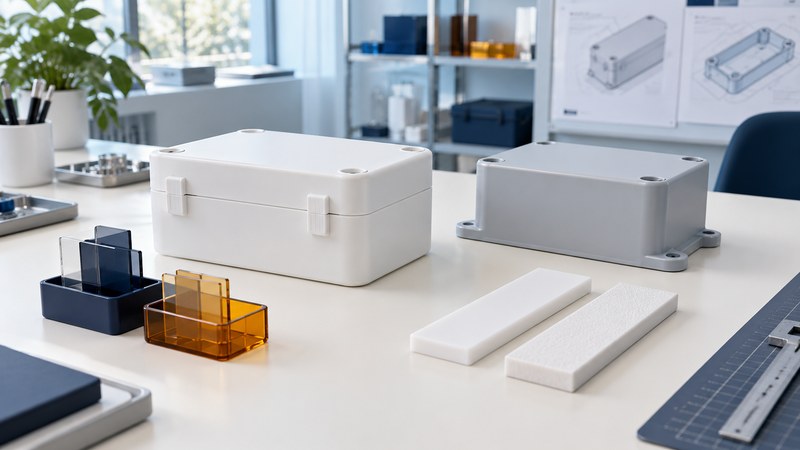
Accura 25 is an SLA photopolymer marketed for polypropylene-like prototypes. Use its data sheet to define a particular test, then compare it with the exact production polypropylene grade and part process. Appearance and fit can be useful prototype outcomes while thermal, fatigue and chemical behavior need their own evidence.
Identify the sheet and specimen condition
Start with the official Accura 25 material page and obtain the data sheet applicable to the proposed build. The worked reading below uses the 3D Systems Accura 25 sheet marked 09-20. Its mechanical values are labeled for post-cured material, and its notes say performance varies with conditions and application.
Ask the service provider to identify the printer, resin lot, build orientation, cleaning and post-cure record. The sheet's property table supplies no complete cure recipe. Use the applicable processing instructions and retain the actual schedule with the part.
On narrow screens, scroll the table horizontally. Keyboard users can focus it and use the arrow keys.
| Property | Published value and method | Interpretation |
|---|---|---|
| Tensile strength | 38 MPa; ASTM D638 | A specimen result under the stated method, requiring application-specific design judgment. |
| Tensile modulus | 1,590–1,660 MPa; ASTM D638 | Stiffness data; 1,590 MPa equals 1.59 GPa. |
| Elongation at break | 13–20%; ASTM D638 | Failure extension of a specimen; repeated latch life needs a cycle test. |
| Heat deflection temperature | 58–63 °C at 66 psi; 51–55 °C at 264 psi; ASTM D648 | The applied stress condition changes the result; retain it beside the temperature. |
Compare like measurements
Place the chosen polypropylene grade's data beside the resin data with matching units, methods and conditioning. Record differences in specimen geometry, processing and test temperature before interpreting a numerical gap. Mark an absent property as unknown. A typical data-sheet value becomes an input to an engineering assessment, rather than an automatic acceptance limit.
Separate tensile strength from stiffness, impact from repeated flexing, and heat deflection from continuous service. For a loaded warm enclosure, define load, time, temperature and allowable deformation, then obtain relevant creep or part-test evidence. A single HDT number cannot supply that history.
Choose the prototype question
Specify the inspection locations and environmental conditions for each question. A latch failure in the prototype is evidence about that prototype and test. Record it without assuming the same failure mechanism or lifetime in molded PP.
Give the supplier a decision-ready brief
List which features need visual review, dimensional inspection or functional testing; identify the approved evidence for each. Request the actual process record and any deviations with the delivered parts. Review unknown material properties before using the prototype in a consequential load or exposure test.
Continue with what printed prototypes can prove about molded parts and SLA post-curing records. Keep the Accura sheet revision and the selected PP grade visible in the comparison so future readers can reproduce it.
Use the working record
Download the editable working record. It includes the task-specific fields, instructions, fictional example and source references needed to preserve the evidence behind a decision. Complete it with the people responsible for the actual process.