 Polypropylene is one of manufacturing's most adaptable materials. The lightweight polyolefin becomes a clear food container, a fatigue-resistant living hinge, a sterile laboratory tube, a woven grain sack, a vehicle bumper, a hot-water pipe, a capacitor film or an energy-absorbing foam simply by changing its molecular architecture, additives and manufacturing process.
Usually abbreviated PP, polypropylene is made by polymerizing propylene. Most commercial material is isotactic: its methyl side groups are arranged regularly enough for the chains to crystallize. That semicrystalline structure gives PP a useful combination of stiffness, low density (about 0.90 grams per cubic centimeter), moisture resistance, chemical resistance and a melting range high enough for many hot-fill, dishwasher and steam-sterilization applications. Exact performance always depends on the grade, part design and exposure conditions.
A family of materials, not one plastic
| PP family | Distinctive characteristics | Representative applications |
|---|---|---|
| Homopolymer | High stiffness, good heat resistance and efficient processing | Caps, housewares, fibers, sheet, appliance parts and living hinges |
| Random copolymer | Small amounts of comonomer improve clarity and impact strength while lowering crystallinity | Clear containers, medical ware, food packaging and PP-R pressure pipe |
| Impact or heterophasic copolymer | A dispersed elastomer-rich phase provides toughness, especially at lower temperatures | Automotive trim, crates, luggage, appliances and battery cases |
| High-melt-strength PP | Modified chain architecture resists sag and cell collapse | Extrusion foam, deep-draw sheet, blow-molded parts and lightweight core structures |
| TPO and TPV | PP blended with elastomer; a TPV contains a dynamically vulcanized rubber phase | Bumpers, roofing membranes, soft-touch parts, seals and weatherstrips |
| Filled or reinforced PP | Talc, calcium carbonate, glass or natural fibers tailor stiffness, shrinkage, temperature capability and cost | Structural vehicle parts, fan housings, appliance tubs and industrial components |
Modern plants use Ziegler-Natta or single-site catalysts in bulk-loop, slurry and gas-phase reactors. Catalyst selection, hydrogen, comonomer and reactor sequence control stereoregularity, molecular weight distribution, melt flow and impact phase. Sequential reactors can build a stiff PP matrix and a rubbery copolymer phase in one production train. Producers then add antioxidants and other stabilizers before pelletizing. Controlled-rheology grades use chain scission to create the predictable flow needed for thin-wall molding and fine fibers.
Packaging: rigid containers, closures and films
Packaging is PP's most visible market. Injection molding produces yogurt cups, deli tubs, takeout containers, caps, dispensing closures and thin-wall food boxes. The polymer's fatigue resistance makes the integral living hinge on a flip-top cap possible: the hinge can flex repeatedly without a separate pin. Clarifying nucleators let random copolymers approach glasslike transparency, while nucleating agents shorten molding cycles and improve stiffness.
Thermoformed PP sheet serves trays, cups and portion packs; extrusion blow molding makes bottles and handled containers. Heat-resistant grades support microwave reheating, hot filling and some retort systems. PP is a strong moisture barrier but a comparatively modest oxygen and aroma barrier, so demanding foods may require coatings or multilayer structures. Designers increasingly balance that shelf-life benefit against the difficulty of recycling incompatible layers.
Biaxially oriented polypropylene, or BOPP, is stretched in both directions to become strong, clear and dimensionally stable. It is used for snack wrap, confectionery film, labels, adhesive-tape backing and overwrap. Metallization adds light and gas barrier; coatings add printability, sealing or antifog behavior. Cast polypropylene (CPP) supplies soft, heat-sealable layers for pouches and laminates. Current development emphasizes mono-PP packages whose film, sealant, label and closure remain compatible with the same recycling stream.
Fibers, textiles and nonwovens
PP's low density means a kilogram produces a great deal of fiber. Melt spinning supplies carpet backing, upholstery, ropes, twine, geotextiles, reusable shopping bags and woven sacks for fertilizer, grain and building products. Drawn slit tape becomes strapping and the woven fabric of bulk containers. Hydrophobicity, stain resistance and chemical durability suit outdoor and industrial uses, although ultraviolet stabilizers are essential for prolonged sunlight exposure.
Spunbond nonwovens form the strong outer layers of diapers, wipes, medical gowns and protective covers. Meltblowing uses high-velocity air to make much finer fibers for filtration and absorbent media. Combining spunbond and meltblown layers produces SMS fabrics with strength and particle-barrier performance. Surface treatments can make naturally water-repellent PP wettable where fluid acquisition is needed, and electret charging improves air-filter capture without relying only on smaller pores.
Vehicles and mobility
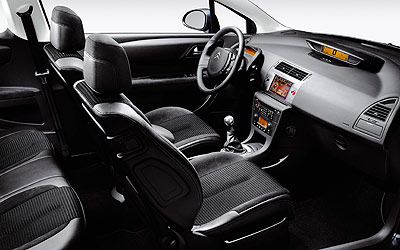
Automakers use PP to remove mass, integrate fasteners and ribs, mold complex surfaces and resist everyday chemicals. Applications include instrument panels, consoles, door trim, pillar covers, wheel-arch liners, underbody shields, HVAC ducts, battery cases and luggage-compartment parts. Tough TPO compounds dominate many bumper fascias. Talc controls shrinkage and raises stiffness; short- and long-glass fibers enable more structural carriers, front-end modules and seat components. Long-fiber thermoplastic pellets preserve fiber length during molding, while continuous-fiber PP organosheets can be heated, formed and overmolded.
The Citroën C4 and Peugeot 1007 cockpit programs featured in the original version of this article were early examples of low-density compounded PP replacing heavier interior materials. That strategy has matured: suppliers now tune scratch resistance, low odor and emissions, ultraviolet stability, recycled content, color, impact behavior and acoustic response together. Electric vehicles add opportunities in battery-module components, cable management and lightweight interior structures, but every electrical or under-hood application requires the appropriate flame, heat and chemical validation.
Medicine, laboratories and hygiene
Medical and laboratory grades become syringes, specimen cups, diagnostic consumables, pipette tips, centrifuge tubes, inhaler parts, pill containers and sterilization trays. PP contains no inherent plasticizer and tolerates many acids, bases and alcohols. Selected grades withstand steam autoclaving; others are formulated for radiation or ethylene-oxide sterilization. These capabilities are grade-specific—radiation can embrittle unstabilized PP, and extractables, biocompatibility, sterilization dose and supplier change control must be qualified for the finished device.
Nonwoven PP is equally important in masks, gowns, drapes, wound-care components and absorbent hygiene products. High-purity resins also serve pharmaceutical packaging, but stringent food and medical uses create a high bar for post-consumer recycled content because unknown contaminants, odor and variable prior use must be controlled.
Buildings, infrastructure and agriculture
PP-R random-copolymer pipe is heat-fused into leak-resistant hot- and cold-water systems. PP-H homopolymer offers stiffness and chemical resistance for industrial piping, while block-copolymer PP-B is used where impact performance matters. Other products include drainage fittings, chemical ventilation, corrugated stormwater pipe, geomembranes, geotextiles, concrete-reinforcing fibers and sheets for corrosion-resistant tanks. Thermoplastic polyolefin roofing typically combines PP-based resins and elastomers with reinforcement and stabilizers.
Agriculture uses PP in woven feed and produce sacks, baler twine, irrigation components, greenhouse fabrics, nursery pots and harvest crates. Reusable designs can provide long service, but outdoor products need light stabilization and credible collection routes; thin, soil-contaminated material remains particularly difficult to recover.
Electrical, appliance and industrial products
PP provides electrical insulation, low moisture uptake and easy molding for appliance housings, dishwasher parts, washing-machine components, junction hardware and cable accessories. Extremely clean BOPP film is a dielectric in capacitors, including power-electronics and motor applications. Microporous PP and multilayer PE/PP films are used as lithium-ion battery separators: their pore structure, thickness uniformity, shutdown behavior and puncture resistance are safety-critical engineered properties, not interchangeable commodity-film attributes.
Industrial uses range from reusable pallets and totes to laboratory tanks, fans, pumps, filter housings, strapping and stationery. Chemical resistance is broad but not universal: strong oxidizers, some hydrocarbons, stress, temperature and exposure time can change the result. Engineers should consult grade-specific chemical-resistance and creep data rather than infer performance from the polymer name.
Expanded PP, composites and additive manufacturing
Expanded polypropylene (EPP) is a closed-cell bead foam that combines very low density with repeated impact recovery. Steam-chest molding turns pre-expanded beads into vehicle energy absorbers, reusable transit packaging, HVAC components, helmet liners, sports products and lightweight drone or model-aircraft structures. Unlike brittle cushioning that protects once, a correctly designed EPP part can survive multiple load cycles.
Compounding greatly widens the design space. Talc improves dimensional stability; glass fiber raises stiffness and heat capability; calcium carbonate can adjust cost, impact and processing; conductive fillers manage static; and maleic-anhydride-grafted PP helps the nonpolar matrix bond to glass, wood or natural fibers. Flame retardants, pigments, slip agents, antiblock additives, antistats, clarifiers and ultraviolet stabilizers solve other needs, but may affect emissions, food contact, welding or recycling.
PP can also be fused-filament printed, pellet-extruded and used as the matrix in large-format additive manufacturing. Its low density and fatigue resistance are attractive, yet crystallization causes shrinkage, warpage and poor adhesion to many build surfaces. Heated chambers, controlled cooling, purpose-designed copolymers and fiber reinforcement make production more reliable. For high-volume parts, injection molding remains much faster; printing is strongest for prototypes, tooling and large or customized components.
How PP is shaped and joined
| Process | What it makes well | Key control |
|---|---|---|
| Injection molding | Thin-wall packages, caps, medical parts, crates and complex components | Melt flow, crystallization, shrinkage and weld-line strength |
| Film and sheet extrusion | CPP, BOPP feedstock, thermoforming sheet and board | Gauge uniformity, orientation, surface treatment and cooling |
| Fiber spinning | Filament, spunbond and meltblown webs | Molecular-weight distribution, draw ratio and fiber diameter |
| Thermoforming | Cups, trays, liners and twin-sheet structures | Melt strength and a narrow forming-temperature window |
| Blow and foam molding | Hollow containers, EPP parts and extruded foam | Parison or cell stability and controlled cooling |
Hot-plate, vibration, spin, ultrasonic and laser welding can join PP without solvents or fasteners. Its low surface energy, however, makes ordinary paint, ink and adhesive reluctant to wet the surface. Corona, plasma or flame treatment, primers and PP-specific adhesives improve bonding. Mechanical design must also allow for molding shrinkage, anisotropy, creep under sustained load and a coefficient of thermal expansion greater than metal.
Recycling and circular feedstocks
PP carries resin identification code 5, but the symbol identifies resin rather than guaranteeing local acceptance. Mechanical recycling sorts containers—often using near-infrared sensors—then grinds, washes, separates, melts, filters and repelletizes them. PP floats in water, which helps separate it from denser PET, but PE also floats and must be distinguished by sorting and process control. Repeated heat histories, mixed melt flows, pigments, fillers, labels, food residue and odor can limit the recovered resin.
Better washing, melt filtration, vacuum degassing, deodorization, optical sorting, stabilizer replenishment and compatibilization are raising recycled-PP quality. Designers help by favoring detectable colors, compatible labels and adhesives, minimal decoration, separable metal parts and mono-material PP structures. The Association of Plastic Recyclers PP test protocol evaluates how resins, barriers, coatings, closures and other package features affect a recycling stream. RecyClass design-for-recycling guidelines likewise maintain current criteria for rigid PP packaging and flexible PP film.
| Route | Output | Opportunity and constraint |
|---|---|---|
| Mechanical recycling | Washed flake or pellets retaining the polymer | Most direct route when streams are clean; quality reflects sorting and use history |
| Dissolution purification | Purified PP recovered after selective dissolution | Can remove color, odor and contaminants without breaking every chain; solvent recovery and economics matter |
| Pyrolysis or catalytic conversion | Hydrocarbon oils, gases or chemical feedstocks | Can accept some mixed waste, but requires energy, upgrading and rigorous yield accounting |
| Bio-attributed or circular cracker feedstock | PP chemically equivalent to fossil-derived resin | Can serve demanding uses through mass-balance systems; claims require transparent certification |
Selective dissolution is receiving attention because it separates PP from additives and contamination while retaining the polymer molecule. Commercial developer PureCycle reported in 2026 that a P&G study found its purified recycled PP met a stringent cosmetics-purity screening level; application approval still depends on the resin, process, jurisdiction and finished package. Advanced conversion routes such as pyrolysis turn mixed polyolefins into hydrocarbon feedstocks, but PP does not conveniently depolymerize back to propylene in the way some condensation polymers return to their monomers. Energy use, actual product yield and allocation rules therefore matter.
Renewable naphtha and waste-derived pyrolysis oil can enter existing crackers, with certified mass-balance accounting assigning a share of circular or biogenic feedstock to PP products. The resulting polymer can be chemically identical to conventional PP—a benefit for demanding applications—but it is not biodegradable. Claims such as recycled, bio-attributed, recyclable and compostable describe different things and should never be treated as synonyms.
Limits and responsible selection
PP is not automatically the lowest-impact choice. It persists if littered, can contribute microplastics through wear and fragmentation, and is flammable unless formulated otherwise. Unstabilized material degrades in sunlight and through oxidation at elevated temperature. Many grades become less impact-resistant in the cold; all can creep under long-term load. Gas permeability may rule out an uncoated package, and low surface energy complicates finishing.
Good selection begins with the full duty cycle: temperature, chemicals, ultraviolet exposure, load duration, sterilization, fire standard, food contact, emissions, appearance, joining and end-of-life collection. A durable reusable PP crate may outperform a single-use alternative over many trips, while an elaborate multilayer package may preserve food yet resist material recovery. Life-cycle assessment is most useful when it compares the same function, service life and local disposal system.
The next phase of polypropylene is less about discovering one spectacular new use than improving the entire system. Higher-flow resins enable thinner parts; advanced catalysts and nucleators improve performance with less material; reinforced PP displaces heavier assemblies; mono-material packaging simplifies recovery; and better sorting and purification expand realistic markets for recycled resin. PP's enormous range will remain an advantage only if product design, collection and reprocessing evolve together.