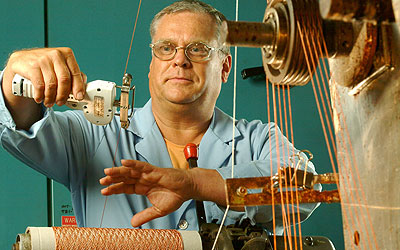
Polyester is not one material but a large family of polymers whose molecular chains contain repeating ester bonds. The best-known member is polyethylene terephthalate, or PET: the material used in beverage bottles, food trays, films and most fibers sold simply as “polyester.” Other polyesters provide faster crystallization, greater heat resistance, elasticity, biodegradability, optical clarity or the ability to form permanent thermoset structures.
This breadth explains polyester's reach. It appears in clothing, upholstery, ropes, tire reinforcement, electrical connectors, appliances, vehicle parts, solar backsheets, flexible packaging, paints, boats, wind-energy components, surgical sutures and 3D-printed prototypes. Modern polyester technology is advancing in two directions at once: highly specialized grades are extending performance, while recycling and bio-based chemistry aim to reduce dependence on virgin fossil feedstocks and keep products in useful circulation.
Polyester's scale also makes its shortcomings consequential. Textile fibers shed during manufacture, wear and washing. Mixed fabrics and multilayer packages are difficult to recycle. Additives, dyes and contamination complicate recovery. Recycled polyester fiber is still made overwhelmingly from bottles rather than discarded clothing. Better chemistry matters, but durable design, collection, sorting, reuse and lower material consumption remain equally important.
The principal polyester families
| Polyester | Important characteristics | Common uses |
|---|---|---|
| PET: polyethylene terephthalate | Strong, clear, chemically resistant, readily oriented and widely recyclable | Fibers, bottles, trays, film, strapping and engineering compounds |
| PBT: polybutylene terephthalate | Fast crystallization, dimensional stability and electrical performance | Connectors, switches, automotive parts, appliance housings and brush bristles |
| PTT: polytrimethylene terephthalate | Elastic recovery, softness and stain resistance | Carpet, apparel, upholstery and resilient fibers |
| PEN: polyethylene naphthalate | Higher thermal and barrier performance than PET | Specialty films, electronics, labels and demanding containers |
| PETG and copolyesters | Clarity, toughness and easier thermoforming with reduced crystallization | Medical packages, displays, protective parts, cards and 3D-printing filament |
| TPEE or copolyester elastomer | Rubber-like flexibility with thermoplastic processing | Boots, seals, hoses, cable jackets, dampers and flexible automotive parts |
| Liquid-crystal polyester | High flow, stiffness, heat resistance and low moisture uptake | Miniature electronic connectors, antennas and precision molded components |
| Unsaturated polyester resin | Liquid thermoset precursor that crosslinks into a rigid network | Fiberglass boats, panels, tanks, cultured stone and construction composites |
| Alkyd polyester | Oil-modified coating resin with tunable drying and film properties | Architectural paints, industrial coatings and printing inks |
| PLA, PHA and other aliphatic polyesters | Some grades are bio-based and industrially compostable under defined conditions | Packaging, disposable articles, fibers, biomedical products and 3D printing |
Not every polyester is compatible with the same recycling stream. PETG, PLA, multilayer structures and thermoset polyester can disrupt bottle-PET reprocessing if they are not identified and separated. “Polyester” on a label therefore describes chemistry broadly, not end-of-life compatibility.
How PET is made
Conventional PET is produced from purified terephthalic acid and monoethylene glycol. Their polycondensation forms long polymer chains while water and other small molecules are removed. Melt-phase polymerization produces resin suitable for many fibers and films. Bottle and high-performance grades may undergo solid-state polymerization, which increases molecular weight below the melting temperature while limiting degradation.
Polymer chain length is commonly described through intrinsic viscosity. Bottle, industrial-fiber and strapping grades generally require higher molecular weight than many staple-fiber applications. Moisture must be removed before melt processing because water breaks polyester chains at high temperature, reducing strength and changing viscosity.
Catalysts, comonomers and additives tailor the material. Isophthalic acid can slow crystallization and improve bottle clarity. Glycol modifications create PETG and other amorphous copolyesters. Titanium dioxide makes fiber opaque. Nucleating agents speed crystallization, while stabilizers, pigments, flame retardants, impact modifiers and glass fibers create specialized compounds.
Fiber technology: far more than inexpensive clothing
Molten PET is filtered and extruded through spinnerets to form continuous filaments. Drawing aligns the molecular chains and increases strength. Heat setting stabilizes dimensions and controls shrinkage. Filaments may remain continuous, be textured for bulk and stretch, or be cut into staple fiber for spinning with cotton, wool or other fibers.
Fiber cross-section is a powerful design tool. Round filaments provide standard performance. Trilobal shapes increase sparkle and apparent bulk. Hollow fibers trap air for insulation and reduce weight. Multichannel fibers move moisture through capillary action. Extremely fine microfibers create soft fabrics and dense filtration media. Bicomponent spinning places two polymers in one filament to create self-crimp, thermal bonding or a dissolvable component.
Solution dyeing and lower-impact coloration
Traditional polyester is commonly dyed with disperse dyes at elevated temperature. Solution or dope dyeing adds pigment before the filament is formed, placing color throughout the fiber. It can improve colorfastness and ultraviolet stability while avoiding much of the water and process chemistry of later dyeing. The tradeoff is less flexibility: manufacturers must commit to a color before spinning and manage separate inventories.
Digital textile printing, supercritical-carbon-dioxide dyeing and improved low-temperature carriers seek to reduce water, energy or chemical use. Commercial suitability depends on production volume, shade, fabric construction and recovery of the process medium.
High-tenacity industrial yarn
Industrial polyester is drawn and heat treated for high strength, low shrinkage, fatigue resistance and dimensional stability. It reinforces tires, conveyor belts, hoses and coated fabrics and is used in seat belts, cargo restraints, geotextiles, marine lines, sewing thread and architectural membranes. Adhesion finishes help inert polyester bond to rubber or coating matrices.
The original article focused on the high-tenacity and solution-dyed fibers once sold by Performance Fibers, a business ultimately incorporated into Indorama Ventures. Those products remain representative of an important segment, but current polyester technology extends from commodity apparel filament to precisely engineered reinforcement and filtration structures.
Textiles and apparel
Polyester dominates global fiber production because it combines strength, wrinkle resistance, rapid drying, scalable manufacturing and comparatively low cost. Textile Exchange's 2025 Materials Market Report estimates that polyester represented 59 percent of world fiber output in 2024. Production rose to about 78 million tonnes, and 88 percent was fossil-based.
Apparel uses range from smooth filament linings and fleece insulation to moisture-management sportswear and durable work clothing. Home textiles include carpet, curtains, bedding, upholstery and fiberfill. Nonwovens serve hygiene products, wipes, roofing, filtration, insulation and automotive interiors.
Blending polyester with cotton can improve durability, drying and dimensional stability, while elastane adds stretch. These benefits complicate recycling because each fiber requires different separation or depolymerization conditions. Sewing thread, labels, coatings, prints, zippers and trims add further materials to an apparently simple garment.
Packaging: bottles, trays, films and barriers
PET bottles are formed by injection molding a compact preform and then reheating and stretch-blow molding it. Biaxial orientation aligns chains in two directions, increasing strength and gas-barrier performance while using little material. The result combines clarity, toughness and low mass for beverages, foods, personal care and household products.
Thermoformed PET sheet becomes produce containers, trays, lids and clamshells. Amorphous PET provides clarity, while crystallized PET tolerates higher service temperatures in ovenable applications. Design choices such as labels, adhesives, pigments, multilayers and barrier coatings strongly affect whether sorters recognize the article and recyclers can return it to a high-value stream.
Biaxially oriented PET film, often called BOPET, is dimensionally stable, electrically insulating and resistant to heat and chemicals. It serves flexible packaging, release liners, labels, magnetic and optical media, motor insulation, capacitors, display films and photovoltaic components. Thin coatings of aluminum, oxides or polymers add moisture, oxygen or light barriers.
Engineering plastics and electrical components
PBT is one of the most important engineering polyesters. It crystallizes quickly during molding, supports short cycle times and maintains dimensional and electrical properties. Glass-fiber reinforcement increases stiffness and heat resistance for connectors, sensor housings, ignition components, switches and appliance parts.
Engineering PET offers high strength and dimensional stability when crystallized and reinforced, but it generally requires careful drying and mold-temperature control. PET/PBT blends balance processing and mechanical properties. Impact modifiers improve toughness, and halogen-free flame-retardant packages address demanding electrical standards.
Liquid-crystal polymers align rigid molecular segments during flow, creating thin, intricate parts with high stiffness and low warpage. Their ability to fill small connector geometries makes them important in compact electronics and high-frequency hardware.
Elastic and flexible copolyesters
Thermoplastic copolyester elastomers combine hard crystalline polyester segments with softer flexible segments. They can be injection molded, extruded or blow molded like a thermoplastic while flexing like rubber. Automotive boots, air ducts, constant-velocity-joint covers, seals, hoses, medical components and cable jackets use their fatigue, chemical and temperature resistance.
PTT fiber derives its spring-like recovery from the shape of its molecular chain. It produces soft, resilient carpet and apparel fibers with useful stain performance. Some commercial PTT uses bio-derived 1,3-propanediol, demonstrating that part of a polyester's carbon feedstock can be renewable even when the complete polymer is not biodegradable.
Thermoset polyester resins and composites
Unsaturated polyester resin is chemically different from bottle PET. It contains reactive unsaturation and is commonly diluted with a crosslinking monomer. When initiated, it cures into an infusible three-dimensional network. Glass fibers turn it into a structural composite used for boat hulls, vehicle panels, shower surrounds, tanks, pipes, gratings and wind-energy components.
Sheet molding compound and bulk molding compound combine resin, chopped reinforcement, fillers and additives in a moldable intermediate. Pultrusion continuously pulls fibers through resin and a heated die to make beams, ladder rails and structural profiles. Resin transfer molding and vacuum infusion produce larger shapes with controlled reinforcement.
Thermosets cannot simply be melted and remolded. Current research and early commercial work focus on recoverable fibers, chemical breakdown, recyclable crosslinkers and vitrimer-like networks whose bonds can exchange under heat or a catalyst. These approaches seek repairability and reprocessing without giving up the creep resistance that makes a thermoset useful.
Coatings, adhesives and additive manufacturing
Polyester polyols react with isocyanates to form polyurethane coatings, adhesives, foams and elastomers. Saturated polyester resins provide weatherable coil coatings, can coatings and powder coatings. Alkyds remain widely used in architectural and industrial paints because fatty-acid modification tunes drying, flow and film formation.
Powder coatings apply solid resin particles electrostatically and fuse them with heat, avoiding the liquid solvent used by many conventional coatings. Polyester and polyester-epoxy hybrid powders protect appliances, furniture, automotive components and architectural metal.
PETG is a common filament for material-extrusion 3D printing because it combines easier processing than highly crystalline PET with useful toughness and chemical resistance. PLA, another polyester, prints at lower temperature and comes largely from renewable feedstocks. High-performance stereolithography resins may also contain polyester-based oligomers, although the cured network is not necessarily recyclable with thermoplastic PET.
Medical and biomedical polyesters
PET's strength and biostability support vascular grafts, surgical meshes, sutures and implantable textile structures. Surface treatments and careful knitting or weaving control tissue interaction. Medical packaging uses clear copolyesters where toughness, sterilization compatibility and visual inspection matter.
Resorbable aliphatic polyesters such as polylactide, polyglycolide and their copolymers hydrolyze inside the body at controlled rates. They are used in sutures, screws, scaffolds and drug-delivery systems. Their design challenge is matching mechanical retention and degradation products to healing and biological response.
Mechanical recycling: the established route
Mechanical recycling sorts, washes, grinds and remelts polyester without intentionally breaking it into monomers. Clear beverage bottles are the most favorable feedstock because deposit systems and optical sorting can produce relatively clean, compositionally consistent bales. Flakes may be purified, melt filtered, pelletized and solid-state polymerized to restore molecular weight for demanding uses.
Recycled PET becomes bottles, sheet, strapping, fiber and compounds. Bottle-to-bottle recycling preserves the material in a packaging loop; bottle-to-fiber has historically consumed large volumes but usually makes later recycling more difficult. Food-contact applications require validated decontamination and traceability.
Heat, moisture and repeated processing shorten chains and can cause yellowing or contamination. Solid-state treatment, chain extenders, blending and careful drying recover performance, but mechanical recycling works best when feedstock is clean and products are designed for sorting.
Textile-to-textile recycling remains the missing loop
Recycled polyester is growing in absolute volume, yet it is not growing quickly enough to displace virgin production. Textile Exchange estimates that recycled polyester reached about 9.3 million tonnes in 2024 but fell to 12 percent of polyester output because virgin production expanded faster. About 98 percent of recycled polyester came from plastic bottles. Less than 1 percent of the total fiber market came from recycled pre- or post-consumer textiles.
Mechanical textile recycling can shred clean production waste or used garments into short fibers for insulation, nonwovens and lower-grade yarns. Repeated shredding reduces fiber length and quality. Melt recycling can make new filament from clean all-polyester waste, but dyes, finishes, elastane and other blends complicate filtration and color.
Better garment design would use compatible threads and trims, reduce inseparable blends, disclose chemistry and enable automated identification. Near-infrared sorting, digital product records and robotic disassembly can improve feedstock, but collection and stable demand are prerequisites.
Chemical and molecular recycling
PET's ester bonds can be deliberately cleaved. The resulting molecules are purified and used to make new polyester, potentially handling colored or degraded material that cannot return to high-quality products mechanically.
| Route | Principal products | Strength | Challenge |
|---|---|---|---|
| Glycolysis | BHET and shorter oligomers | Established chemistry and direct return toward PET intermediates | Product purification and sensitivity to feedstock contamination |
| Methanolysis | Dimethyl terephthalate and ethylene glycol | Strong purification pathway for varied polyester waste | Energy, solvent recovery, pressure and plant economics |
| Hydrolysis | Terephthalic acid and ethylene glycol | Direct recovery of PET's primary monomers | Acid, alkali or high-temperature neutral hydrolysis requires separation and corrosion control |
| Enzymatic hydrolysis | Terephthalic acid and ethylene glycol | Mild aqueous conditions and high chemical selectivity | Pretreatment, reaction rate, enzyme cost and industrial scale-up |
| Thermolysis | Mixed oils, gases and chemical feedstocks | Can process some mixed waste streams | Less selective for recovering polyester-to-polyester monomers |
Eastman's methanolysis-based polyester renewal facility in Kingsport, Tennessee, began operating in 2024. The company says it can process colored and opaque PET, carpet and polyester clothing by depolymerizing them to basic building blocks. Other companies are commercializing glycolysis, hydrolysis and hybrid purification routes.
“Chemical recycling” is not one environmental outcome. Energy source, solvent recovery, yield, pretreatment, transportation, displaced virgin production and allocation of recycled content determine lifecycle benefit. Mass-balance accounting can support mixed-feedstock systems but should be explained clearly so buyers understand whether recycled molecules are physically traceable to a specific product.
Enzymatic recycling moves from laboratory to demonstration
PET hydrolases catalyze the cleavage of PET in water. Protein engineering improves their activity, thermal stability and tolerance of products or process conditions. Enzymes are attractive because their selectivity can isolate PET from dyes and some mixed textile components under milder conditions than conventional chemical depolymerization.
The polymer's crystallinity limits enzyme access, so waste may need sorting, grinding and thermal or mechanical pretreatment to create more amorphous surface. High solids loading, enzyme recovery, reaction time and purification determine whether a process can compete economically.
Carbios operates a PET biorecycling demonstration plant in Clermont-Ferrand, France. Its EU-supported program processed packaging and textile waste into purified terephthalic acid and ethylene glycol and concluded its demonstration phase in March 2026. The company is pursuing larger licensed facilities, but the sector remains in scale-up rather than broad commodity deployment.
A 2025 review in Communications Materials identifies activity, thermostability, substrate tolerance, enzyme production and economics as continuing challenges. Enzymatic recycling is technically promising; it is not yet a universal destination for every polyester article.
Bio-based polyester and new monomers
Bio-based does not necessarily mean biodegradable. Conventional PET can be partly bio-based when ethylene glycol is made from plant-derived ethanol, while the polymer remains chemically identical to fossil-derived PET and belongs in the same recycling stream. Producing renewable terephthalic acid at commercial scale is more difficult but would enable fully bio-based PET.
Polyethylene furanoate, or PEF, is a bio-based polyester made from ethylene glycol and furandicarboxylic acid. It can provide strong gas-barrier properties for bottles and films. PEF is chemically distinct from PET and requires appropriate sorting and end-of-life planning as volumes grow.
PLA is made from lactic acid, commonly derived by fermenting sugars. It is useful for fibers, packaging, medical products and additive manufacturing. Certified grades can biodegrade in controlled industrial-composting conditions, but they do not necessarily break down rapidly in soil, home compost or the ocean. PLA contamination can also interfere with PET recycling.
Polyhydroxyalkanoates are microbially produced polyesters with tunable properties and biodegradation behavior. Polybutylene succinate and polybutylene adipate terephthalate serve films and compostable products. Feedstock sourcing, land use, actual disposal infrastructure and product performance must be considered alongside renewable carbon content.
Microfiber shedding and environmental release
All textiles fragment, but persistent synthetic fibers create a microplastic concern. Shedding occurs during fiber production, fabric finishing, wearing, washing, drying and recycling. Fleece and other raised structures can shed more than tightly constructed continuous-filament fabrics, although fiber quality, yarn twist, abrasion and laundering conditions all matter.
Solutions operate at several levels: stronger fibers and low-shed fabric construction, controlled cutting and prewashing at the factory, wastewater capture, washing-machine filters, gentler wash cycles and longer garment life. Measuring shedding consistently remains difficult, so claims should specify the test method and product conditions.
Recycled PET is still plastic and can shed microfibers; recycled content solves feedstock demand, not every environmental effect. The European Union's current textile policy is beginning to connect producer responsibility with durability, recyclability and microfiber release. A revised Waste Framework Directive that entered into force in October 2025 requires textile producer-responsibility systems, with fees linked to sustainability criteria.
Designing polyester products for circularity
- Use the minimum material that still delivers a long service life. Lightweighting is valuable only if the product remains durable and recoverable.
- Prefer compatible mono-material structures. A PET package with separable labels and adhesives is easier to recycle than an inseparable multilayer.
- Limit problematic colors and additives. Carbon-black pigments, barriers and flame retardants may impede sorting or purification.
- Design textiles for disassembly. Threads, trims, coatings and elastane content influence whether fiber can return to fiber.
- Specify recycled content by source. Bottle-derived and textile-derived polyester create different circular outcomes.
- Provide accurate material information. Digital product passports and permanent labels can improve sorting and safe recycling.
- Match the recycling claim to available infrastructure. Laboratory recyclability is not the same as collection and recycling at scale.
- Measure the full lifecycle. Energy, water, additives, use duration, shedding and end of life all matter.
The latest polyester practice is systems engineering
Polyester's success comes from molecular versatility and manufacturing efficiency. The same chemistry can become a soft microfiber, a transparent pressure-resistant bottle, a heat-stable connector, a flexible elastomer or a glass-reinforced boat hull. New catalysts, copolymers, fiber architectures, coatings and composite processes continue to widen that range.
The next advance is not simply a higher-performing grade. It is aligning product design, feedstock, production, use and recovery. Mechanical recycling should remain the efficient choice for clean PET streams. Molecular and enzymatic processes can address selected colored, degraded and textile feedstocks when their economics and lifecycle performance are sound. Bio-based carbon can reduce fossil dependence but must not be confused with biodegradation or circularity.
Polyester will remain a central material in textiles, packaging and engineering. Its quality in the coming decade will be judged not only by strength, clarity or cost, but by how long products serve, how little material they lose, and whether their molecules can become useful products again.