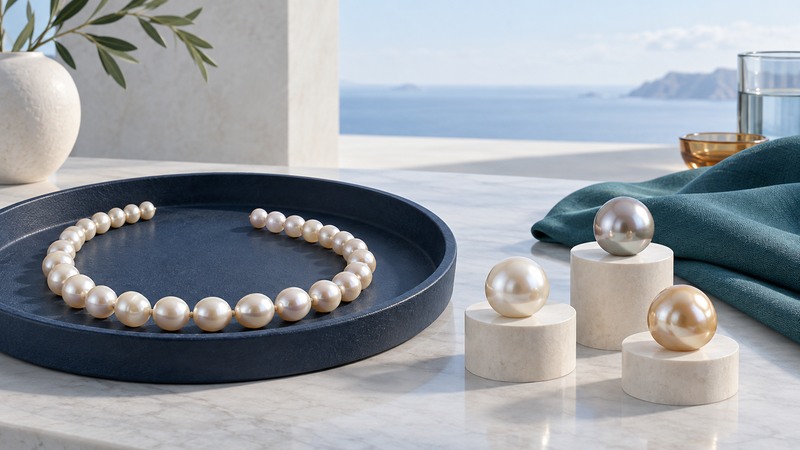
Choose pearls by how they look together, what the seller can document, and how you will wear them. Start with the pearl type, then compare luster, surface, shape, size, and matching under the same lighting. A single letter grade gives you much less information than that sequence.
Establish which pearls you are comparing
Natural pearls form without deliberate human initiation. Cultured pearls grow in living mollusks after human intervention, which can involve tissue and, depending on the method, a bead nucleus. Imitations reproduce the appearance using other materials. A cultured pearl's nucleus and nacre structure depend on its cultivation method; the blanket description “solid nacre” is insufficient. GIA's pearl overview explains the basic distinction.
Scroll horizontally to see all columns.
| Type | Typical shopping context | Useful question |
|---|---|---|
| Akoya | Often chosen for classic round strands and bright reflections. | How do luster, nacre quality, and matching compare between these strands? |
| Freshwater | A broad range of shapes, colors, and cultivation methods. | What is the growth method, and is the color natural or treated? |
| Tahitian | Often associated with darker body colors and varied overtones. | How do the actual colors look in diffuse light and against the wearer? |
| South Sea | Often larger white, silver, or golden pearls with a softer-looking glow. | Are we comparing the same size range and similar surface and nacre quality? |
These are typical characteristics, not a way to identify an unknown pearl by sight. Read GIA's comparison of pearl types for their cultivation and appearance. For a valuable unknown strand, ask a qualified gemologist whether laboratory examination is justified; household rubbing or scratching tests risk damage and provide weak evidence.
Compare actual pieces in a repeatable order
GIA evaluates pearls through seven factors: size, shape, color, luster, surface, nacre quality, and matching. Its pearl quality guide explains why stronger, sharper reflections and good nacre matter. Use those factors as a conversation framework, then judge the piece you will actually receive.
- Normalize the view. Ask to compare pieces against the same neutral background, in similar diffuse lighting, without relying entirely on intense display spotlights.
- Look for reflection quality. Observe the clarity and brightness of reflected shapes. Compare within a pearl type; different types can have different visual character.
- Rotate gently in the hand or tray. Examine several sides for pits, ridges, abrasion, cracks, or changes near drill holes. Ask which features affect durability and which are cosmetic.
- View the whole piece. Follow a strand from end to end. Look for a pearl that suddenly changes color, reflection, or apparent size. Deliberate graduated or mixed-color designs should have a coherent rhythm.
- Try the scale. Measure pearl diameter in millimeters and the necklace length, or check an earring's drop and weight. Consider collar height, clasp use, and comfort.
Surface and nacre questions deserve more than a quick glance. A seller should explain what is known and how it was assessed. A photograph cannot reliably reveal the internal construction of every pearl, and attractive reflections alone do not establish origin or treatment history.
Get the description and terms in writing
Request the natural/cultured/imitation description, pearl type where known, diameter or size range, strand length, metal details, and treatment disclosure. Ask about dyeing, coating, bleaching, or other processes and any resulting care requirements. The FTC Jewelry Guides address truthful product descriptions in the United States.
If a listing says AAA, premium, or another seller grade, ask for the seller's definition and compare it with observable characteristics. Record the definition rather than assuming that another store uses the same scale. A laboratory report, when supplied, should match the specific item and describe its actual scope.
Before paying, inspect the clasp, knots, thread, and earring backs with the jeweler. Clarify whether restringing or fitting is included, which alterations affect returns, and how long independent examination is allowed. For expensive or inherited pieces, the appraisal guide helps you frame the value question separately from gem identification.
Protect the surface, string, and setting
Pearls are relatively soft and sensitive to heat and chemicals. GIA's pearl care guidance advises a soft clean cloth after wear and rules out ultrasonic and steam cleaning. Apply cosmetics and fragrance before putting pearls on, and store them away from items that can scratch them.
For occasional cleaning, GIA permits warm soapy water and stresses that a strung piece must dry completely before wearing. Follow any additional instructions for its thread, adhesives, metal, treatments, or other gems. An old, damaged, or uncertain piece is a reason to ask a jeweler before cleaning.
Inspect for stretched or discolored thread, fraying near the clasp, insecure knots, and loose fittings. GIA's storage and restringing advice highlights the wear that can develop in silk over time. Have the strand checked when those signs appear; the right maintenance interval depends on wear and construction.
Keep the invoice, treatment information, and any repair or restringing record together. That small habit makes future cleaning, valuation, and replacement decisions much easier.