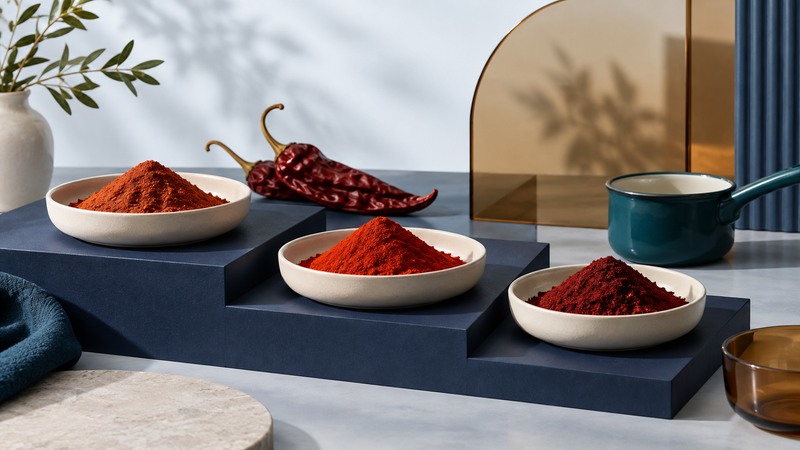
Choose paprika by two questions: how much chile heat do you want, and do you want smoke? Sweet, hot and smoked labels describe different aspects of flavor. Smoked paprika can itself be sweet or hot, so read the whole description before adding a recipe’s full quantity.
Read heat and smoke separately
On a narrow screen, scroll the table sideways. Keyboard users can focus it and use the arrow keys.
| Style | Flavor role | Useful application |
|---|---|---|
| Sweet, unsmoked | Pepper flavor and red color with little heat | A mild stew, egg garnish or everyday spice blend. |
| Hot, unsmoked | Pepper flavor plus chile heat | A dish where the recipe expects heat from paprika. |
| Smoked sweet | Smoke without the heat of a hot style | Beans, vegetables or a smoky sauce. |
| Smoked hot | Both smoke and heat | Use when both fit the recipe and the diners. |
The Spice House’s comparison identifies sweet and hot smoked products, including the label terms dulce and picante. An origin such as Hungarian or Spanish adds context; the particular product’s heat and smoke description still guides the purchase.
If the jar says only “paprika,” inspect its description and ingredient list. Avoid judging strength by redness. For an unfamiliar jar, try a small amount in food you can taste safely before using it in a large pot.
Decide what a swap will change
Match both dimensions for the closest substitute. Sweet unsmoked paprika can provide pepper flavor when you are out of smoked sweet, but the smoke will be missing. Smoked hot adds a second change: heat. Cayenne supplies heat with a different flavor balance and is unsuitable as an automatic equal-spoon replacement for mild paprika.
When a dish is defined by a particular paprika style, get that style or select another recipe. Keep Hungarian paprika and smoked paprika as distinct pantry choices. Their existing short profiles are useful starting references; this guide supplies the broader decision framework.
Bloom gently and have liquid ready
Heating paprika briefly in fat helps distribute its flavor. Excessive heat can make it bitter, as The Spice House’s cooking guidance explains. Treat blooming as a brief step within the recipe, with the next ingredients already prepared.
- Cook any onions or other base ingredients according to the recipe.
- Lower the heat or move the pan off the burner before adding paprika to the fat.
- Stir so the powder disperses and smells fragrant. Watch the pan rather than relying on a fixed timer for every stove.
- Add the recipe’s liquid or other moist ingredients promptly to continue cooking.
If the spice blackens or smells acrid, begin that step again with clean fat and fresh paprika. Diluting badly burned spice usually carries the bitterness into a larger batch. For a dry rub, follow the cooking method written for the rub; a dark exterior alone cannot tell you whether meat is cooked safely.
Adjust the right variable
- Too hot: combine with more unseasoned base. Additions such as yogurt may soften the eating experience but also change the recipe; they do not remove the pepper.
- Too smoky: dilute with the unsmoked base and use less smoked spice next time. Adding hot paprika increases another dimension instead.
- Dusty or weak: check the jar’s aroma and storage. Replacing faded spice is more useful than indefinitely increasing the dose.
- Clumps in a sauce: disperse a measured amount in a little of the recipe’s liquid before combining.
Keep the jar closed, cool and dry. McCormick’s product storage guidance emphasizes dry utensils and protection from humidity, heat and light. For a blend that lets you choose the paprika and cayenne separately, use the Cajun seasoning recipe.
Explore all seasoning and ingredient guides · Food, cooking and meal planning