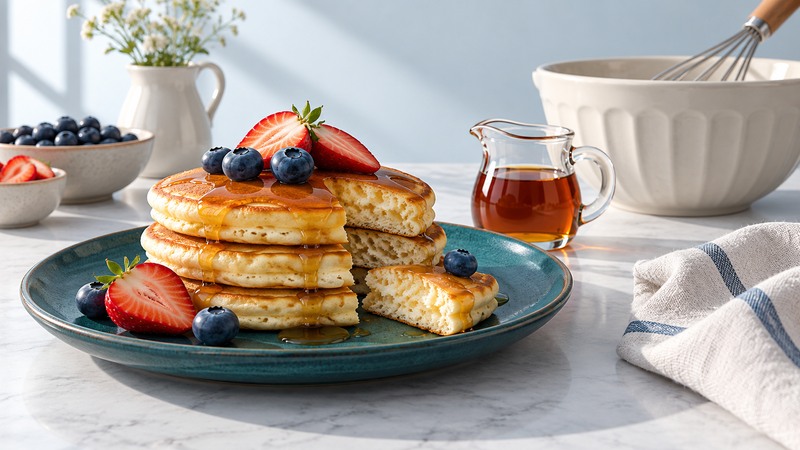
A measured batter and a test pancake make breakfast easier to repeat. Keep the batter lightly mixed, use consistent portions and adjust the pan after the first pancake. Put most juicy fruit on top so you can control its moisture separately.
Buttermilk base: 14–16 small pancakes
The base proportions and method are adapted in original wording from King Arthur Baking’s Buttermilk Pancakes recipe by Charlotte Rutledge. Plan about 45 minutes including a 15-minute batter rest. Have two bowls, a whisk, a spatula and a griddle or skillet.
Ingredients: 240 g all-purpose flour (2 cups); 35 g sugar (3 tablespoons); 1 teaspoon baking powder; 1 teaspoon baking soda; ½ teaspoon table salt; 1 large egg; 454 g buttermilk (2 cups); 28 g melted butter (2 tablespoons), slightly cooled; optional 1½ teaspoons vanilla. Have a little extra oil or butter for the cooking surface.
- Combine the dry ingredients in one bowl and the wet ingredients in another. Stir together just until combined; small lumps can remain. Rest 15 minutes.
- Heat a lightly greased griddle to about 350°F, or use a skillet over medium heat. Pour roughly ¼ cup batter per pancake.
- Cook until bubbles form and the underside is golden, about 1–2 minutes. Flip once and cook the other side, adjusting heat as needed.
Use the first pancake to set the heat
Choose one pancake as a test. Lift an edge to see the underside before flipping; the top should show bubbles and begin to set around the edge. After the second side cooks, cut into it with a clean utensil. The center should be set, with no wet batter. If the exterior is already dark and the middle remains wet, lower the heat and use a slightly smaller portion. If the pancake stays pale for a long time, raise the heat gradually.
Leave space to slide the spatula fully underneath. A crowded skillet makes turning awkward and can change the heat between batches. Note the pan, burner setting and portion size that worked so the next breakfast starts closer to the right conditions.
Flour and eggs are raw ingredients: avoid tasting uncooked batter and clean surfaces and utensils after mixing. FDA’s flour-handling guidance explains why batter needs thorough cooking. Visual cues guide the method; if the center is wet, keep cooking at gentler heat.
Add fruit with control over moisture
- Blueberries in the pancake: after pouring, place about 1 teaspoon of small fresh blueberries across each pancake and lightly cover exposed berries with a little batter. Start with one test pancake; a crowded layer of fruit makes the center harder to cook evenly.
- Strawberries on top: slice 1 cup washed, hulled berries for four ¼-cup toppings. Add them after cooking so their juice stays separate from the batter.
- Warm apple topping: soften small apple pieces separately in a little butter with cinnamon, adding a splash of water if the pan dries. Spoon over finished pancakes. Cook the apple to the texture you enjoy before the pancakes need serving.
For canned filling, preserves or sweetened frozen fruit, check sweetness before adding syrup. Follow frozen-fruit package cooking instructions. The base batch contains wheat, milk and egg; substitutions change structure and browning, so use a recipe designed for a required allergen substitution instead of assuming a direct swap.
Troubleshoot one variable at a time
Scroll the table sideways. With a keyboard, focus the table and use the arrow keys.
| Result | What to check next |
|---|---|
| Heavy or tough | Mix only until combined; measure flour by weight and check that leaveners are within their useful date. |
| Dark outside, wet inside | Lower the heat and reduce pancake size; cook fruit separately. |
| Uneven patches of browning | Spread a thin, even layer of fat and give the pan time to regain heat between batches. |
| Pancakes tear on turning | Let the first side set longer and slide the spatula fully underneath before lifting. |
Store extras for another breakfast
Cool extras promptly and refrigerate in a covered container within two hours, or one hour above 90°F. Use refrigerated leftovers within 3–4 days, or freeze with paper between pancakes so individual portions separate. Reheat leftovers thoroughly to 165°F under USDA’s leftover guidance. A covered skillet over gentle heat or a microwave can warm a small portion; check the center and adjust for your equipment.
The published base recipe and its quantities were checked against the source. Yenra has not kitchen-tested the base adaptation or fruit variations; use the test pancake to adjust for your pan and ingredients.