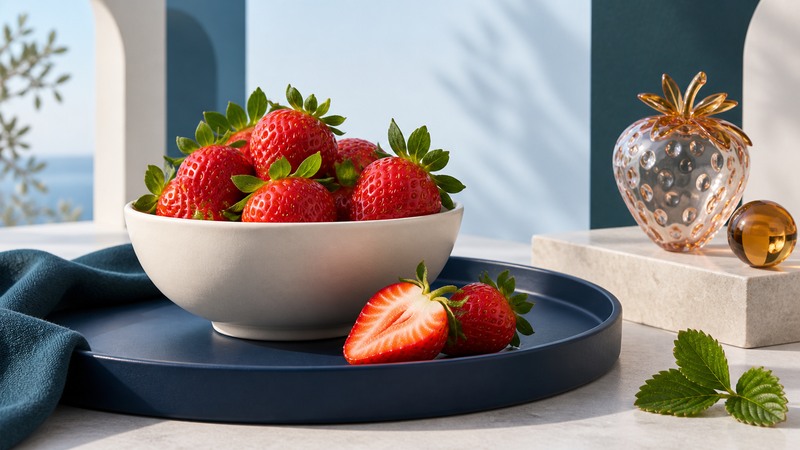
Strawberries offer fruit, fiber and vitamin C in an easy-to-use portion. Research on concentrated berry extracts and freeze-dried powders asks narrower questions than an everyday serving of fruit can answer. Looking at the study’s participants, dose and measured outcome makes the evidence easier to use.
Start with a defined portion
Scroll the table sideways. With a keyboard, focus the table and use the arrow keys.
| Nutrient | Amount |
|---|---|
| Energy | 50 calories |
| Carbohydrate | 11 g |
| Total sugars | 8 g |
| Dietary fiber | 2 g |
| Protein | 1 g |
These rounded values come from FDA’s raw-fruit nutrition table. Berry size and growing conditions vary, so a scale gives a more repeatable portion than counting fruit. The figures describe raw fruit without added sugar, syrup or toppings.
For a separate portion reference, NIH’s vitamin C food table lists 49 mg vitamin C in ½ cup of fresh sliced strawberries. Vitamin C supports collagen formation and normal immune function and improves absorption of iron from plant foods. This ½-cup entry uses a different portion from the 147 g FDA table; do not combine them as though they were the same serving.
What three kinds of evidence establish
Laboratory extract study, 2006. Seeram and colleagues studied extracts from six berries in cancer cell cultures, including strawberry extracts. Growth effects in isolated cells identify biological activity under laboratory conditions. The experiment did not feed strawberries to people or measure cancer prevention or treatment. Extract concentration and exposure conditions matter when interpreting the result.
Short human trial, 2021. A randomized crossover trial in 34 adults with moderately elevated cholesterol used 50 g freeze-dried strawberry powder daily for four weeks. It reported an acute vascular-function response but no significant improvement in fasting lipids or several other fasting markers. The participants, powder dose and short follow-up define what this result can tell us.
Longer human trial, 2025. A crossover trial in 25 adults with prediabetes evaluated 32 g freeze-dried strawberry powder daily during 12-week periods and reported improvements in some cardiometabolic measures. It was a small study in a specific population, measuring risk markers rather than long-term disease outcomes. Those findings need replication and do not establish a treatment dose for fresh fruit.
A useful evidence check: ask “Was this whole fruit, powder or an extract? Who received it? Compared with what? For how long? What actually changed?” A laboratory cell response, a blood measurement and a reduced disease rate answer different questions.
Choose and store fruit for how you will use it
- Look through the container for mold, leaking fruit and extensive damage. Buy an amount you can use while it remains in good condition.
- Refrigerate strawberries at 40°F or below. Keep raw meat and its juices away from fruit and the equipment you will use to prepare it.
- Before eating or preparing, rinse under running water and dry gently with a clean towel. Use clean hands and tools; skip soap and produce washes. Discard rotten fruit.
These steps follow FDA’s produce selection and handling guidance. Wash only the portion you are about to use so you can return the remaining fruit to cold storage without adding unnecessary handling. Follow storage instructions on packaged cut fruit.
Choose fresh or frozen by the job
Fresh berries hold their shape for a lunch bowl or topping. Frozen berries soften as they thaw and suit cooked sauces or a spoonable topping. Check the package for added sugar and for any instruction to cook before eating; follow that instruction even if you plan a cold dish. Keep frozen fruit frozen until use, or thaw it in the refrigerator.
Simple topping: slice 1 cup of washed, hulled fresh strawberries and serve over four pancakes or two bowls of yogurt. Add sweetness only after tasting. This yields four ¼-cup pancake toppings or two ½-cup yogurt toppings; the nutrition of the finished dish also depends on the pancakes, yogurt and any additions.
Use strawberries because you enjoy them and they fit your meals. Their place in a varied diet can be understood from ordinary food portions; a claim about treating or preventing disease requires evidence designed to answer that clinical question.