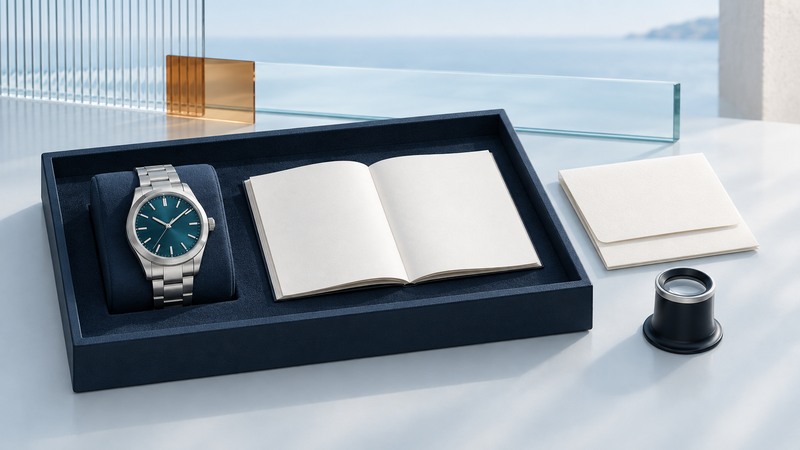
An Omega watch is easier to research and maintain when its reference, movement, paperwork, and service history are organized together. Begin with that record, then locate the matching manual and ask specific questions about condition. A recognizable dial or matching number is only one part of the evidence.
Build a watch record before ordering parts or service
Scroll horizontally to see all columns.
| Record | What it helps establish | Practical check |
|---|---|---|
| Reference | The particular model/configuration. | Compare the watch, paperwork, and official product or historical information. |
| Serial number | The individual watch or movement identifier in its documentation. | Ask an authorized service center about a model/number match and any remaining inspection needs. |
| Caliber | The movement and its operating instructions. | Match winding, setting, calendar, and chronograph instructions to this caliber. |
| Service invoices | Documented work, dates, and replaced parts. | Read the actual scope and any recommendations left outstanding. |
| Warranty and purchase records | Purchase details and the applicable terms. | Confirm the relevant dates, seller, and requirements for coverage. |
Omega's official customer-service FAQ explains that reference and serial information can appear on the warranty card, and that older watches may require professional access to internal markings. Photograph accessible details and let a qualified service professional open the case when necessary.
Use a private folder containing overview photographs, reference/serial notes, documents, and a dated list of known changes. Keep full serial details private when posting public photographs. If the watch belongs to a family member, record whether statements about age or ownership come from paperwork or recollection.
Find instructions for the watch you actually have
Use Omega's user-manual finder, accessible through Customer Service, or ask a boutique/service center using the reference. Regional sites may offer a different interface. As an example of the document format, this Omega manual is explicitly for reference 215.92.46.21.01.001; it is not a universal Omega manual.
- Confirm that the manual identifies the reference or the applicable caliber.
- Find the power and winding instructions, including what to do after the watch has stopped.
- Read time and calendar setting restrictions before moving the crown through its positions.
- For a chronograph, identify the start/stop and reset sequence and any conditions on operation.
- Read the water-use, crown, pusher, and care instructions for that watch.
Do not force a stiff crown or follow a setting demonstration simply because its dial resembles yours. The movement and fit guide explains the ownership differences between quartz, manual, and automatic watches.
If a control behaves differently from the manual, record what happened and stop the procedure. A watch may need inspection, or the model identification may be incomplete. Resolve the mismatch before trying more force or a different setting sequence.
Separate identification, authenticity, and condition
Identification asks what model an object resembles or corresponds to. Authenticity concerns its genuine manufacture and components. Condition concerns wear, damage, operation, and the effects of earlier work. These questions require different evidence.
Omega's FAQ on authenticity says an authorized service center or boutique may help check a current model against its serial number, while explicitly distinguishing that match from a guarantee of authenticity. A number lookup or a photograph alone leaves questions about the movement, parts, and alterations.
For a secondhand purchase, agree in writing on an independent inspection opportunity and return terms. Ask about replaced dials, hands, crowns, crystals, bracelet components, and case refinishing. Replacement parts may be legitimate service work; document them because originality, appearance, and serviceability are different buyer priorities.
Open the printable watch ownership record to organize identifiers, service history, functional observations, and unanswered seller questions. It is a record sheet rather than an authentication certificate.
Interpret performance documentation carefully
Where a watch is sold with Master Chronometer certification, ask for the matching documentation and results route. METAS explains the certification's scope: specified accuracy tests under different influences, power reserve, and water resistance. Apply the requirements relevant to that certification record; a collection name alone does not establish that every historical model has the same tests.
For a simple ownership observation, compare the watch against one reliable reference at a recorded start and finish. Note elapsed time, winding state, how it was worn, and any stop or reset. Report the observations as observations, without calling a short home check a certification test.
The tourbillon guide explains why orientation and test conditions matter when interpreting a rate figure. Accuracy, water resistance, and cosmetic condition should each be checked on their own evidence.
Agree on service scope before work begins
Request an assessment, written estimate, expected timing, and explanation of mandatory versus optional work. State preferences about polishing and retaining the appearance of older parts before authorizing the service. Ask which replaced parts can be returned and what documentation accompanies completion.
Service needs depend on the model, use, and environment. Use the current Omega customer-service route to obtain advice and a regional service-center contact. Condensation, damage, unreliable controls, or a change in behavior justify an inspection rather than waiting for a calendar interval.
At collection, compare the completed work with the estimate, confirm the controls and fit, and retain the invoice and test results. For insurance or a sale valuation, commission the appropriate separate assignment using the appraisal guide. A service invoice proves specified work; it does not establish every form of market value.