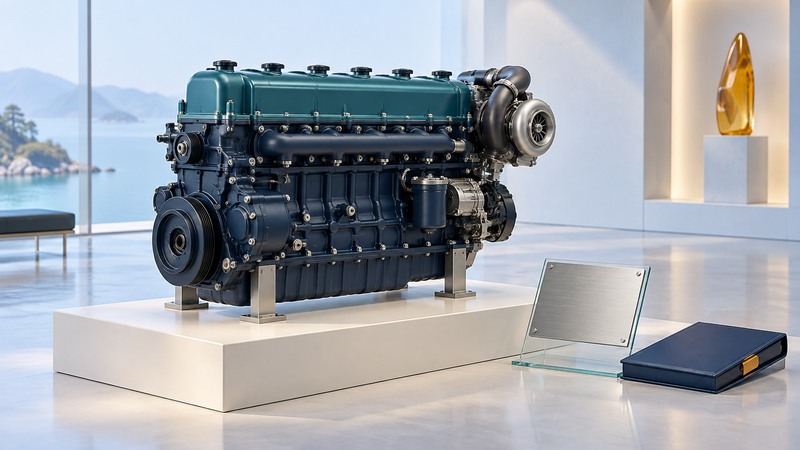
An off-highway engine decision starts with the machine, the installed engine and the job it performs. Record their identities separately. Then match the duty, rating, installation and emissions documentation before seeking a repair estimate or replacement proposal. A family name such as QSM11 supplies only part of that record.
Build an identity record before requesting parts
Photograph the machine identification, engine data plate and emissions label without removing guards or reaching into operating equipment. Record the manufacturer, model, engine serial number, rated power and speed, and the machine serial number. Ask the equipment supplier to resolve missing or illegible information.
Cummins' engine-identification guidance describes its engine serial number, usually eight digits, and data-plate information including the control parts list, model, horsepower and rpm. Use the serial number when locating applicable Cummins documentation. A machine's build date alone leaves open whether its engine has been replaced.
Collect the operator manual, engine manual, service invoices and any replacement-engine or installation records. List accessories driven by the engine and who supplied the cooling, intake, exhaust, controls and hydraulic equipment. This gives the service provider a defined configuration to investigate.
Read the rating in its working context
Swipe this table sideways, or focus it and use the arrow keys.
| Item | Record | Why it matters |
|---|---|---|
| Power and speed | kW or hp, rated rpm and document revision | Power numbers with different units or operating speeds need reconciliation |
| Duty and load | Application, hours, idle time, load changes and operating cycle | The proposed rating must suit the way the machine works |
| Installation | Mounts, cooling, intake, exhaust, controls and driven equipment | Physical fit is only one part of integration |
| Environment | Ambient conditions, altitude and site requirements | Ask the supplier to evaluate limits for the intended conditions |
Have the supplier identify the applicable rating definition and any installation-dependent limits in writing. Peak torque, rated power and a continuous operating allowance describe different aspects of performance. Ask for the relevant curves and application approval rather than selecting by the largest advertised number.
Keep engine standards tied to their category and era
The U.S. EPA's nonroad standards reference separates compression-ignition engines from other nonroad categories. Applicable requirements depend on the engine category and relevant specifications; “off-highway” by itself leaves important questions unanswered. Use the actual label and certification documents, with qualified supplier or regulatory guidance for the intended jurisdiction and application.
For historical context, Cummins' QSM industrial brochure describes a Tier 3/Stage IIIA offering with ratings from 290 to 400 hp and an in-cylinder combustion approach to those emissions requirements. It is evidence about that documented product generation. A contemporary machine, a different QSM configuration or a different market requires its own records.
Ask whether an offered replacement is the documented engine, an approved replacement configuration or a proposal requiring further review. Obtain the supplier's explanation of applicable requirements before committing. Keep required emissions components and controls intact; refer proposed changes to the manufacturer and the responsible authority.
Turn symptoms into a useful work request
Record what the operator observes, when it occurs and which warning or fault indications accompany it. Include the operating load, ambient conditions, maintenance performed and any recent changes to fuel, attachments or controls. Distinguish observed symptoms from diagnoses: “temperature warning during sustained loading” lets the technician investigate several systems.
Follow the machine's instructions for stopping and securing equipment when a warning or unsafe condition occurs. Have qualified personnel retrieve diagnostic information using supported tools. The engine and equipment manuals govern service procedures and intervals; the guide here helps assemble evidence for that work.
Request an estimate that identifies the diagnosis, proposed work, parts, checks after service, unresolved questions and downtime. For replacement proposals, add commissioning responsibilities, operator documentation and support arrangements. Keep the resulting record with the machine so its next owner can identify what is actually installed.
For a related lesson in interpreting design specifications, see Ducati's early MotoGP engine project. Its competition setting differs, but the distinction between a proposed specification and demonstrated operation remains useful.
Download the industrial-engine brief to keep your findings and next actions together.
Researched and updated September 20, 2026. Use the linked sources for applicable documents and current service, access or event information.
Explore all motorsports guides.