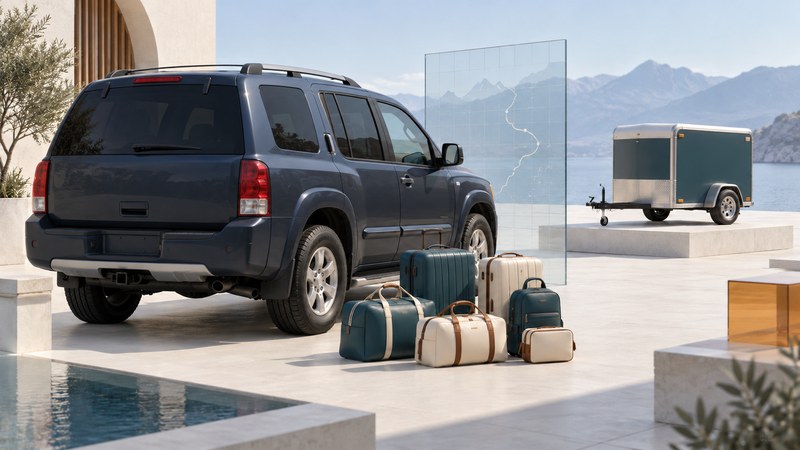
Start with one realistic trip
Choose a 2008 Armada by testing the whole journey you need it to make. Write down who will travel, which seats and restraints they require, what luggage must come, where you will park and whether a trailer is part of the plan. Then assess one identified vehicle against that list.
Nissan’s 2008 Armada press kit describes a 5.6-liter V8 SUV with three-row seating and equipment that varies by trim and options. Record the VIN, SE or LE configuration, two- or four-wheel drive, actual seating layout and documented towing equipment. Have uncertain details checked against the vehicle’s build information.
Use the third row before packing
Set the driver’s seat first, then have the intended passengers try the second and third rows. Check access, foot space, normal belt use and the route out. Follow the vehicle and child-restraint instructions for any installation. Repeat access checks with those restraints installed as they would be on the trip.
Load your real stroller, cases, cooler or mobility equipment while every required seat remains upright. Try reaching an item during a stop without unloading the whole cargo area. Folding a seat changes the passenger plan, so record that configuration as a separate use case.
On a narrow screen, scroll the table sideways. Keyboard users can focus the table region and use the arrow keys.
| Need | Parked check | Decision to record |
|---|---|---|
| Required passengers | Seat positions, restraint installation and third-row access | Can everyone use the intended place with normal access and belt fit? |
| Luggage and equipment | Fit actual objects behind occupied seats and identify securing arrangements | What fits, what is accessible and what must be left behind? |
| Everyday parking | Measure space, door access and liftgate clearance | Can the trip start and finish at the places you need to use? |
| Trailer, if planned | Verify labels, equipment, loaded weights and applicable manual limits | What evidence is complete, and what still needs weighing or specialist advice? |
Demonstrate fitted seat-folding controls, rear climate, keys, liftgate and parking equipment with the manual. Test old entertainment features with the media you intend to use. An attractive equipment list is useful only when its important functions have been demonstrated.
Count people and luggage before the trailer
Use the official 2008 Armada owner manual (PDF), particularly Vehicle Loading Information and Towing a Trailer in chapter 9. It identifies the vehicle’s occupant-and-cargo label, gross vehicle and axle ratings, combined rating and trailer limits. Trailer tongue weight uses part of the vehicle’s load allowance.
Read the labels on the actual vehicle, account for added equipment, and obtain loaded weights for the intended trip. Check the vehicle, each axle, the combination and hitch against their applicable limits. The advertised maximum trailer rating is conditional on configuration and loading. The Titan guide’s weight-limit framework explains how these checks relate; use Armada documentation for the numbers.
Have the planned use shape the inspection
Tell the inspector the intended passenger load, trailer details and expected journeys. Ask them to assess the vehicle and any towing installation within a written scope, including tires, brakes, suspension, cooling, visible structure and relevant electrical connections. Supply maintenance invoices and installation records. Ask for measured findings, exclusions and follow-up estimates.
Resolve missing label information, unexplained modifications or uncertain hitch ratings before relying on a towing plan. A hitch on the back establishes the presence of that hardware; the complete vehicle and trailer requirements still need verification. Use the inspection guide to brief the provider and retain the report.
Check campaigns with Nissan for the VIN and save a dated US recall lookup result. Ask Nissan about older or completed campaigns outside the lookup’s coverage.
Keep the family-trip decision explicit
A useful result might be “fits our passengers and bags for trips without a trailer,” or “physical fit confirmed; towing remains unresolved pending loaded weights and equipment verification.” Keep those conclusions separate so a successful seating trial does not become a general approval of every journey.
Record fuel, servicing access and parking convenience alongside the fit check. If you are comparing another Nissan SUV, the 2008 Pathfinder guide approaches its V6 and V8 choices separately. Reuse your trip requirements, then verify each candidate’s own limits and condition.
Save the working record
Download the worksheet (plain text). Record the evidence and unresolved questions, and keep it with the vehicle documents, manuals and inspection quotations.
Explore Autos: vehicle guides, technology and design · Cars: buying, maintenance and ownership