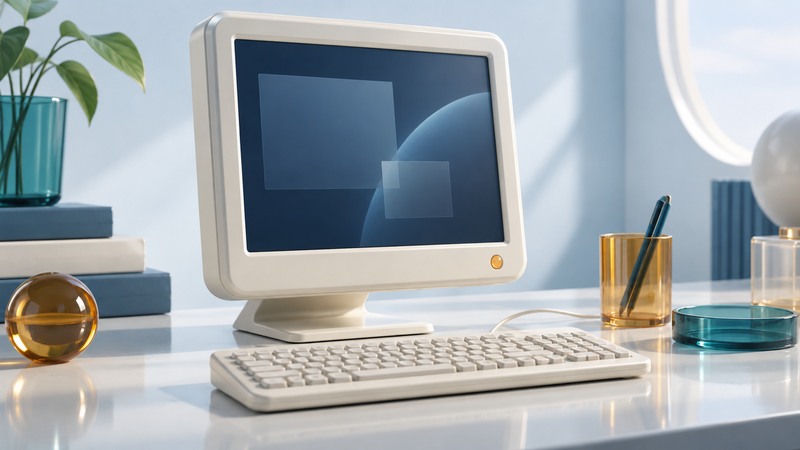
The Netpliance i-opener is a useful case study in an Internet appliance whose everyday experience depended on an online service. Preserving one means documenting the physical machine, its local software and the service it expected to reach. Those are related pieces of history, and each can survive in a different condition.
Place the appliance in its service history
Netpliance’s 2000 annual report, filed in 2001 says the company began offering the i-opener in November 1999. It changed business direction in November 2000 and stopped marketing and selling the appliance in January 2001 while continuing service for existing customers.
The filing records an agreement with EarthLink in February 2001 and a transfer of about 50,000 customers on March 12. About 6,000 customers remained with Netpliance at that point. The report discussed future service and warranty obligations. Those statements document the company’s position at the time; present-day restoration resources need separate verification.
This timeline makes service dependencies central to preservation. Record the terminal, subscription model and infrastructure separately. Retain period account instructions and provider names as historical documentation, and verify any present-day restoration resources independently.
Identify the surviving configuration
Start with external photographs and a written inventory. Capture model and serial labels, power-supply ratings, keyboard and pointing accessories, ports, cables and any packaging or printed instructions. Keep serial numbers private when publishing photographs. Record the condition before cleaning or opening the enclosure.
If it is appropriate to power the unit, first confirm the supply and inspect the equipment. Photograph startup screens and record the displayed firmware or software version. Avoid changing settings merely to make the screen look more familiar. Previous owners may have modified the machine, so the branding on the case does not prove which software or storage is inside.
On narrow screens, focus the table and use the arrow keys or swipe to see every column.
| Goal | Useful evidence | A sensible success criterion |
|---|---|---|
| Preserve the object | Photographs, labels, accessories and condition record | The original configuration is documented and parts remain associated. |
| Preserve local behavior | Firmware and storage records, startup video, software versions | A repeatable local demonstration is described, with missing dependencies identified. |
| Study a modification | Before-and-after records, exact board revision and original backups | The alteration is reproducible and clearly distinguished from the original appliance. |
Describe what the service contributed
Treat the appliance as a chain: input hardware, display, local software, connection, remote service and user account. For each visible function, ask which part supplies it. A local startup screen may work while sign-in, mail or web access fails because a remote dependency is absent. That observation alone does not diagnose a broken display, keyboard or processor.
If an independently developed recreation is used, identify it as a recreation and record its version and dependencies. Keep original software and images separate from experimental copies. A video of a working session, with dates and setup notes, can preserve behavior that a photograph of the enclosure cannot.
Make a record another collector can understand
- List each component and its condition, including missing accessories.
- Record exact hardware and software identifiers instead of assuming every i-opener is the same revision.
- Keep photographs, manuals, source URLs and acquisition notes together.
- For storage images, record the acquisition method, file size and checksum, plus any read errors.
- Describe modifications and reversible changes, including which original parts remain.
- State what was actually demonstrated and what remains untested.
A checksum helps establish that a saved image has not changed; it does not prove that the acquisition captured every readable part of the original medium. Keep a second copy and the acquisition log. Before sharing images, consider whether they contain former owners’ messages, credentials or personal files.
Use the i-opener preservation record as a starting inventory. The most useful record distinguishes observed facts, information from documentation and uncertain inferences. That gives a future owner a clear starting point without promising that a discontinued service can be restored.