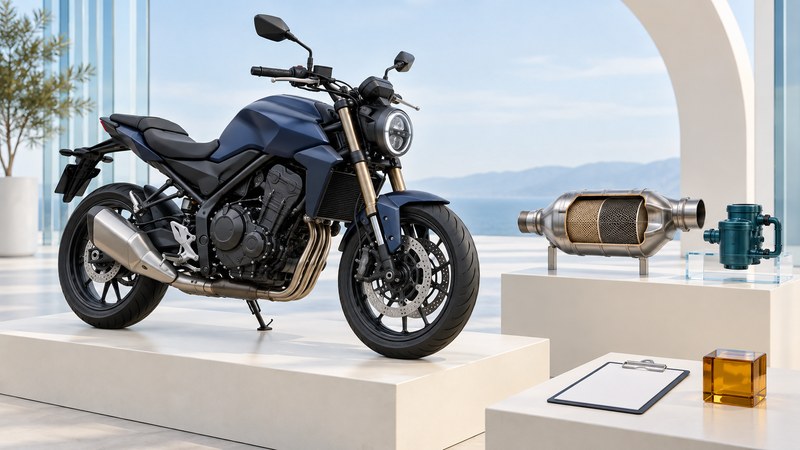
To assess a motorcycle emissions claim, identify the pollutant, the exact vehicle and the test behind the number. Fuel economy, exhaust pollution, fuel evaporation and noise describe different things. A useful comparison keeps those measures separate and checks the motorcycle’s model year and market.
This guide focuses on finding and interpreting U.S. highway-motorcycle evidence. Start with the vehicle’s emissions label, manufacturer documentation and any record of modifications. A model name alone can cover different engines, years and certification families.
Identify what is being measured
Combustion can produce hydrocarbons, carbon monoxide and nitrogen oxides; fuel can also escape as vapor from the fuel system. Carbon dioxide accounting asks a different question about fuel use and climate. A good miles-per-gallon figure gives you one useful measure, while a pollutant test describes another.
EPA’s motorcycle regulations index provides the starting point for applicable federal standards. Check the actual model year, vehicle class, pollutant and test procedure before comparing a limit with a result.
On a narrow screen, scroll the table sideways. Keyboard users can focus it and use the arrow keys.
| Question | Evidence to seek | Comparison check |
|---|---|---|
| Exhaust pollution | Named pollutant and certification test result | Same pollutant grouping, distance unit and test procedure. |
| Fuel evaporation | Evaporative or permeation record for the relevant system | Check whether the measure is mass per test, per day or per area. |
| Fuel use and climate | Measured fuel quantity, distance and a stated emissions boundary | Separate fuel burned on the road from production and energy-supply impacts. |
| Noise | A separately specified sound test | Keep sound level, test conditions and jurisdiction with the result. |
Hydrocarbon-plus-NOx is a combined measure. Comparing it directly with a NOx-only figure loses that distinction. Likewise, grams per kilometer and grams per mile require conversion before any ranking is meaningful.
Find the record that matches the motorcycle
- Record the identity. Note manufacturer, model year, engine size and the emissions family or test-group identifier shown in the relevant documents. Distinguish model year from purchase or registration year.
- Choose the correct dataset. EPA’s annual certification data separates highway motorcycles, electric motorcycles and off-road/recreational vehicles. Its interactive certificate view helps identify certified products; the detailed files contain additional test information.
- Match the identifiers. Search the relevant year and family, then retain the record’s date and exact row. Read accompanying notes about units, standards and certification arrangements.
- Resolve gaps before concluding. If the label is missing or a seller’s description disagrees with the record, ask the manufacturer or the appropriate regulator to identify the vehicle. A failed text search is an unresolved identification problem.
A certification result represents a defined test and configuration. Maintenance, temperature, riding conditions and modifications affect what an individual motorcycle emits in use. For California or another country, consult the relevant authority’s requirements alongside the federal record; a U.S. record alone does not settle another jurisdiction’s question.
Compare two figures on the same basis
Write a finding that carries its context: “For this pollutant, on this procedure, this certified family has this reported result.” Keep the standard, test result and real-world estimate in separate fields.
Keep the evidence connected to the vehicle
Ask for the manufacturer’s maintenance schedule and records for emissions-related repairs. Have a qualified technician investigate warning indicators, fuel-system problems or uncertain modifications using the exact model’s service information. An exhaust’s appearance or loudness is a poor substitute for a documented configuration.
EPA explains the U.S. Clean Air Act prohibitions on tampering and defeat devices. Avoid modifications that disable emissions controls; obtain model-specific compliance information before purchasing replacement control-system parts or tuning software.
For a broader transport decision, compare the travel service you need using the whole-transportation comparison guide. For local ambient conditions, use the AQI guide: a vehicle’s emissions rate and the air concentration at a monitoring station answer different questions.
Motorcycle emissions evidence record
Download the motorcycle emissions evidence record (plain text). Save a copy, fill it in with your own sources and retain the unresolved questions for follow-up.