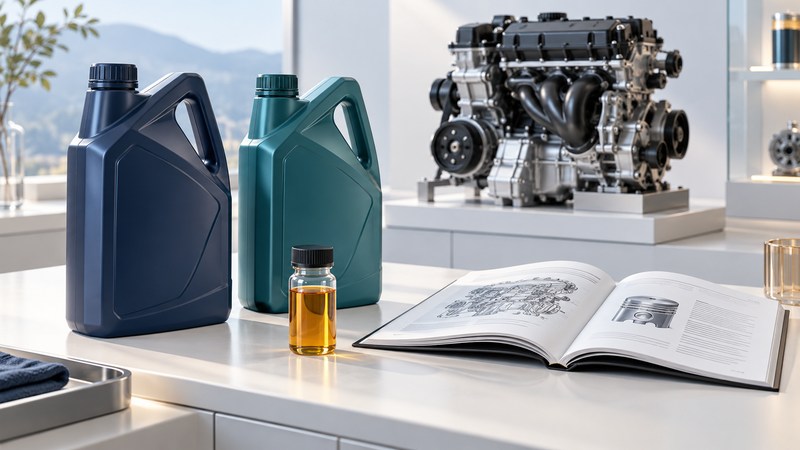
Choose motor oil by matching the exact vehicle's requirements to the exact product. Start with the engine and owner manual, then check viscosity, performance category and any manufacturer specification or approval. Keep the product identity on the service record.
This is a selection and recordkeeping guide for passenger-car engine oil. Diesel, modified, historic and specialist engines can have additional requirements. A brand's reputation or an attractive “high mileage” label is only a starting point for finding the relevant product data.
Make a short specification from the manual
Find the manual for the model year, engine and original sales market. Read the oil recommendation and service schedule together. Record the viscosity grade, the required performance wording, any manufacturer approval and any qualifications. A filler-cap marking can be a useful cross-check; the manual supplies the fuller context.
For example, the 2026 Honda Civic Sedan specifications list 0W-20 and API SN or higher for the engine covered by that manual. This is a documented example of a two-part requirement, not a recommendation for every Civic or every engine. Verify that a manual actually covers your configuration before using its figures.
If the vehicle has a replacement engine or a documented modification, obtain the applicable builder/manufacturer guidance. Record who supplied it and which engine it applies to. Resolve conflicting advice before selecting the oil.
Read the label in separate layers
On a narrow screen, scroll the table sideways. Keyboard users can focus the table region and use the arrow keys.
| Layer | Your check | Record |
|---|---|---|
| SAE viscosity | Match the permitted grade and any stated conditions. | The complete grade, such as 0W-20. |
| Performance classification | Check the required API/ILSAC or other specified standard and applicable replacement guidance. | The full designation, not just “premium.” |
| Manufacturer requirement | If the manual specifies an approval or standard, verify the exact product against it. | The approval/specification and supporting current product document. |
| Product identity | Match the product name, grade and regional formulation in the data sheet to the container. | Brand, product, date and receipt or invoice. |
API's Motor Oil Guide explains viscosity, service categories and its certification marks. Its current guide describes API SQ and ILSAC GF-7A/GF-7B; GF-7B is specific to 0W-16. Consult the current chart when an older manual names an earlier category, while retaining the engine's viscosity and other requirements. Diesel category substitutions have their own rules.
The API licensing program provides a route to its licensee directory. Use the exact product and grade when checking a licensing claim. A licensed category and a separate vehicle-maker approval answer different questions; collect the evidence for each requirement that applies.
Compare candidates without guessing
For a workshop oil change, ask which exact oil will be used and have it identified on the invoice. If the answer is only “full synthetic,” request the grade and specification details. If products change between visits, repeat the match rather than assuming a familiar bottle name represents the same formulation everywhere.
Set the interval from the vehicle's schedule
Record the relevant mileage, time limit and operating-condition instructions from the manual. Vehicles with oil-life displays can also have time-based requirements. For example, the 2026 Civic Sedan Maintenance Minder instructions include an annual oil-change provision when no message appears within the stated period. Apply your own manual's rule, including its regional and powertrain distinctions.
Keep oil level checks, oil-change reminders and warning messages as separate tasks. Use the manual's method for checking level and its immediate instructions for an oil-pressure warning. An oil-change reminder alone does not diagnose a leak, consumption problem or pressure fault.
Ask for the date, odometer units, oil identity, work performed and next service basis on the invoice. If you change oil yourself, arrange an appropriate used-oil collection point; API's program links recycling resources. The broader car maintenance planning guide helps integrate this record with other services.
Keep a specification and service record
Download the oil specification record. Complete its requirements side from the correct manual, then its product side from the label and supporting documents. Leave a disputed match unresolved until you have evidence.
Explore Autos: vehicle guides, technology and design · Cars: buying, maintenance and ownership