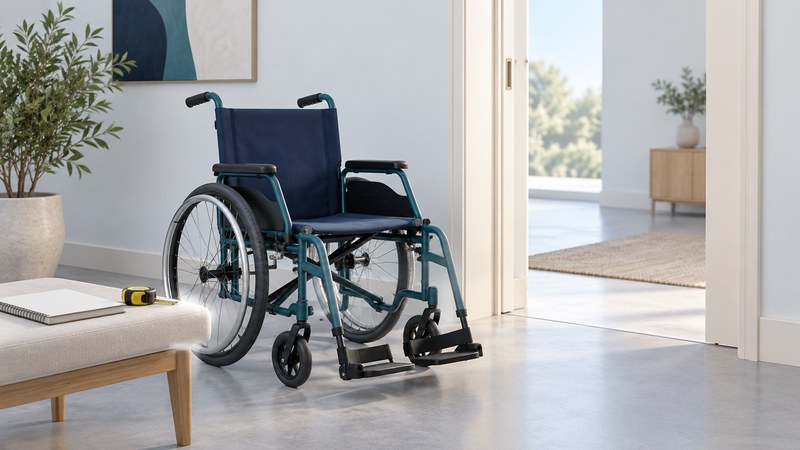
A wheelchair or scooter works as part of a daily routine: moving through the home, getting to work or school, transferring, traveling and maintaining the equipment. Prepare for an assessment by describing those tasks and the barriers you encounter.
The WHO wheelchair provision guidelines emphasize individual assessment, fitting, training and follow-up with trained personnel. This guide helps you prepare for that process. Seating, posture, transfer technique and equipment prescription need an individual assessment.
Describe three activities that matter most
Start with the activity, not a product name. “Reach the kitchen and prepare breakfast,” “move between classrooms,” and “travel from home to the workplace” give an assessor more useful information than a general request for a lightweight chair.
For each activity, record where it happens, how often, which parts are difficult, what help is available and how the difficulty changes over the day. Mention fatigue, discomfort, changes in function and existing equipment. Bring the information to your clinician or wheelchair service so it can inform their assessment.
Download the mobility assessment preparation sheet to organize those observations. It is a discussion aid, with space for questions and follow-up, rather than a self-prescription form.
Bring the environment into the discussion
- Home: doorway openings, turning spaces, floor surfaces, thresholds, bathroom access and storage.
- Work or school: routes between rooms, desk access, elevators, long distances and the ability to participate in the intended activity.
- Travel: vehicle access, loading, storage, public-transport arrangements and assistance available at each stage.
- Powered equipment: a suitable charging location, approved charger, power access and who can manage the routine.
- Support: who can assist, what they can comfortably do, and how that changes if a regular helper is unavailable.
If useful, bring photographs or measurements, identifying the location and units. An opening measurement is only one part of access: approach angle, obstacles and turning space also matter. Ask the assessment team which measurements they need and whether a home or workplace visit is appropriate.
Compare options through questions
| Option | What the assessment should explore |
|---|---|
| Manual wheelchair | Self-propulsion or assistance, posture and seating, effort over the actual route, handling and transport |
| Powered wheelchair | Suitable controls, seating needs, maneuvering, charging, transport and training |
| Scooter | Transfer and seated-position needs, control access, turning space, intended surfaces and transport |
| Power assistance or other adaptations | Approved compatibility with the existing equipment, new handling demands and service responsibility |
A lightweight label, advertised range or compact turning figure addresses only part of the decision. Ask the supplier to identify the exact configuration and the conditions behind each specification. Request the manual and a clear explanation of the model's limits; avoid modifying equipment outside its approved instructions.
Plan a supervised trial around a real task
Ask the service to define a safe trial and provide the necessary fitting and training. A demonstration should help answer your own questions about access and use. Save advanced maneuvers, slopes and transfers for instruction appropriate to the person and equipment.
Record what worked, where help was needed, what felt difficult and which adjustment should be evaluated next. Agree on who makes adjustments and when the next review occurs. If discomfort or another problem develops, report it to the assessment team rather than trying to solve a seating issue through an unrelated accessory.
Ask about trials, funding and service separately
In the United States, ACL's State Assistive Technology Program information links to state programs that offer activities such as device demonstrations, short-term loans, reuse and financing support. Ask the local program which mobility devices and services are available; a directory listing is not a promise of a particular item or funding.
Medicare's wheelchair and scooter coverage page explains its medical-necessity and provider requirements. Power equipment requires a face-to-face examination and written prescription under the stated rules. Confirm coverage, any authorization, supplier participation and your costs before ordering. Work, education and community needs may involve additional programs with different eligibility.
Before accepting equipment, identify the repair contact, routine maintenance responsibilities, warranty terms, parts availability and a plan for periods when the device is unavailable. Confirm delivery includes the agreed setup and training. Book follow-up so the assessment continues into actual daily use.
Explore the library
Assistive Technology: Practical Guides for Everyday Access
Source links appear beside the topics they support. Product instructions and service arrangements were reviewed on October 4, 2026. Check the linked documentation for your exact version, device and location.