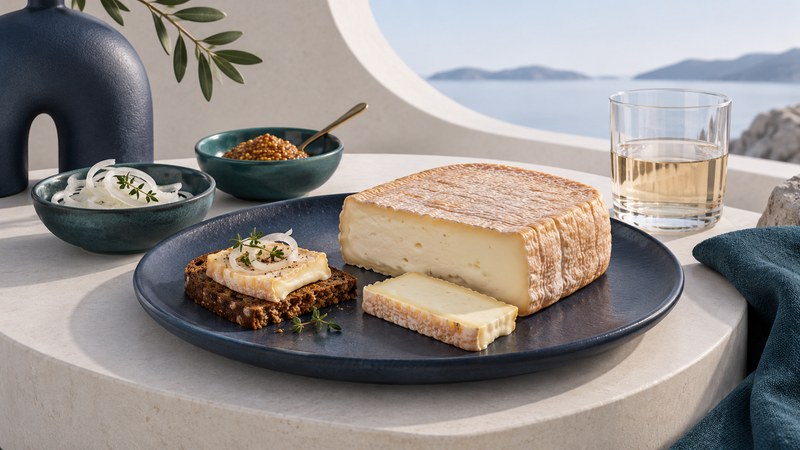
Approach Limburger through texture as well as aroma. Tell the seller whether you want a piece that cuts neatly or one that spreads, buy a small portion, and taste it with simple bread before adding stronger accompaniments.
Ask what stage you are buying
Chalet Cheese’s Limburger description describes its cheese as made from pasteurized cow’s milk and ripened through surface washing. Its account moves from a firmer, more crumbly first month toward a smoother, creamier texture after about two months, with the characteristic strong aroma developing around three months. Those are the maker’s maturation descriptions, not a timetable for aging a purchased piece on the kitchen counter.
The same producer describes a pale orange-brown rind and a mild, buttery flavor beneath the aroma. Use that as context, then check the exact product’s stage and instructions. Strong smell and strong taste are separate observations; neither establishes food safety.
Make a useful request at the counter
On a narrow screen, focus the table and use the arrow keys to scroll.
| Ask | Why it matters | What to take home |
|---|---|---|
| Will this slice or spread today? | Texture determines the easiest serving method | A portion matched to your planned meal |
| What is the maker’s maturation description? | A date alone gives limited information about eating character | Producer name and exact product details |
| How should this opened piece be stored? | Cut pieces and sealed packages may have different instructions | The label and any opened-storage advice |
| Can I buy a small piece or try a sample? | A first tasting is easier to plan with a modest amount | Enough to compare, with a use for the rest |
Check milk and other dietary requirements before purchasing. If you are shopping for someone else, ask whether they enjoy washed-rind cheeses. A large gift selected for novelty can leave the recipient with more than they want.
Build a first tasting with three bites
Illustrative tasting for two: allow 20 g per person, or 40 g total, with small pieces of rye bread. Put a few thin onion slices and a little mustard in separate dishes. This is a tasting exercise, not a full meal or a nutrition target.
- Try a small piece of cheese on plain rye and describe the texture and finish.
- Add a little onion to the next bite and see whether you prefer the contrast.
- Add a small dab of mustard to a third bite. Keep the amount small enough to taste the cheese.
Use a knife for a firmer piece and a spreader for a yielding one. Thin layers let you adjust the balance without building a large sandwich immediately. If the combination feels too intense, use less cheese or omit one accompaniment on the next bite. Record the combination you enjoyed.
Plan the rest of the purchase
For a sandwich, distribute the cheese in an even layer and keep onion or mustard quantities under your control. For a warm preparation, choose a complete producer or recipe-author method suited to the actual cheese; a small toast is a useful preliminary flavor trial. Buy for the meals you intend to make rather than assuming maturation will solve a mismatch.
A covered container helps keep an opened package separate from other foods. Follow its wrapping and refrigeration instructions, retaining the label. FDA refrigerator guidance recommends a refrigerator temperature of 40°F (4°C) or below. Keep the reserve cold and set out only the tasting portion.
Use handling history as well as your senses
Follow FDA serving and time limits for total time without temperature control: discard perishables after more than two hours, or one hour above 90°F. For higher-risk guests, consult CDC’s safer food choices before choosing foods. If a stored piece develops unexpected growth, use the mold-handling guide and the producer’s advice; an aroma associated with the style is not permission to disregard a storage problem.