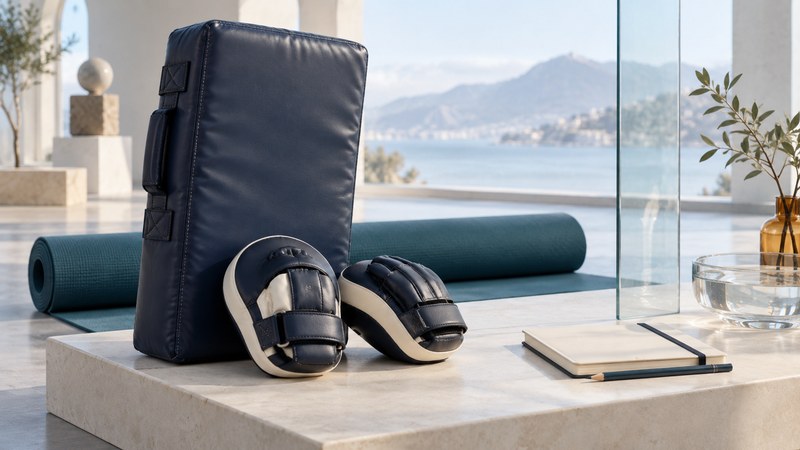
Choose a beginner Krav Maga class by the instruction you can verify and the practice you can observe. Start with a named instructor, a clearly described introductory course and an explanation of how contact is managed. Then compare the schedule and complete cost.
Krav Maga programs teach self-defense skills. Krav Maga Worldwide describes its approach in terms of practical movements and scenario training. Treat that as a provider's description of its curriculum. Your useful next question is what a new student actually does in the first few sessions.
Identify the program you are buying
Ask whether the advertised session is an ongoing beginner course, a fitness workout, a short self-defense seminar or an advanced workshop. Record the exact name, intended experience level and what happens after the introduction. A photograph of advanced training tells you little about the entry course.
Request a simple outline: how time is divided between explanation, individual practice, pad work and partner exercises; when the instructor introduces more demanding practice; and how they decide a student is ready. Ask how awareness, communication and leaving a situation are addressed alongside physical skills. These are questions for the provider, not a universal class timetable.
Check the person and the claimed affiliation
Get the instructor's full name and the organization that issued the teaching qualification. Ask which level or syllabus it covers and how to confirm its current status. A student grade, a seminar certificate and a teaching qualification answer different questions.
The Krav Maga Worldwide school finder distinguishes licensed training centers, regional centers and territory reservations. A reservation is a stage toward licensing; it should not be read as confirmation that a licensed school is already operating. KMW also describes separate phases of instructor certification. Match the claim to the named instructor and the course being offered.
For a school claiming Krav Maga Global affiliation, use KMG's own directory of instructors, centers and representatives. These are two organizational examples, not a ranking or a complete register of Krav Maga. If a listing is unclear or missing, ask the organization directly before treating the claim as verified.
Record the source and date of your check. Then observe teaching: whether explanations are understandable, questions receive specific answers, and new students get feedback. A directory entry establishes a documented relationship; those classroom observations help you assess the learning experience.
Observe how practice is organized
Watch an ordinary beginner session, with permission, and ask about the following distinctions. The descriptions are a way to organize your observations; each school should explain its own format and progression.
On small screens, scroll the table sideways. Keyboard users can focus it and use the arrow keys.
| Practice format | What to establish | Useful evidence |
|---|---|---|
| Individual or pad practice | How are the movement and equipment use introduced? | The teacher demonstrates, watches attempts and gives corrections. |
| Partner drills | What is agreed in advance, and how does either person stop? | Partners understand their roles, contact limits and stop signal. |
| Variable or scenario practice | What choices may change, and who is ready to take part? | The instructor explains the purpose, boundaries and supervision. |
| Sparring, if offered | When does it begin, is it optional, and what rules apply? | A specific answer about contact, equipment and partner matching. |
Ask how the class accommodates a student who needs a slower pace, a different partner or a break. Notice the response to an ordinary request to pause. If an exercise exceeds your agreed limits, stop and speak with the instructor before continuing. Resolve unclear contact expectations before joining in.
For weapons-related workshops, ask about prerequisites and the instructor's qualifications for that specific material. A demonstration or short course cannot establish that someone can handle an armed confrontation. This guide helps you assess a course; physical techniques require supervised teaching.
Compare the whole commitment
Request a written quote for the same period at each school. Include the trial, enrollment, membership, required uniform or protective equipment, grading charges and any minimum term. Ask which items are required immediately and which are optional. Clarify freezes, missed sessions, renewal and cancellation before paying.
Put unresolved charges in a separate column instead of assuming they are zero. A convenient schedule can matter more than an attractive monthly rate if you can seldom attend.
Prepare for the first visit
- Confirm the session. Check its level, arrival time, clothing and equipment with the school. Ask before buying a kit.
- Explain your starting point. Tell the instructor you are a beginner and discuss any adjustments you need through the school's appropriate private process.
- Agree on participation. Clarify partner contact, stopping and the option to observe an exercise before taking part.
- Review afterward. Write down what you understood, the feedback you received and anything still unclear. Use those notes when comparing a second school.
For a child's class, also ask about supervision, adult-to-child communication and reporting concerns. The U.S. Center for SafeSport's parent resources explain why clear, consistently applied conduct policies matter. Check which organization and reporting process actually cover the club.
Use the class-comparison worksheet (plain text) to keep your questions and written answers together.
Continue exploring
Explore the Martial Arts class-selection guide, or compare the learning formats in karate and aikido demonstrations.