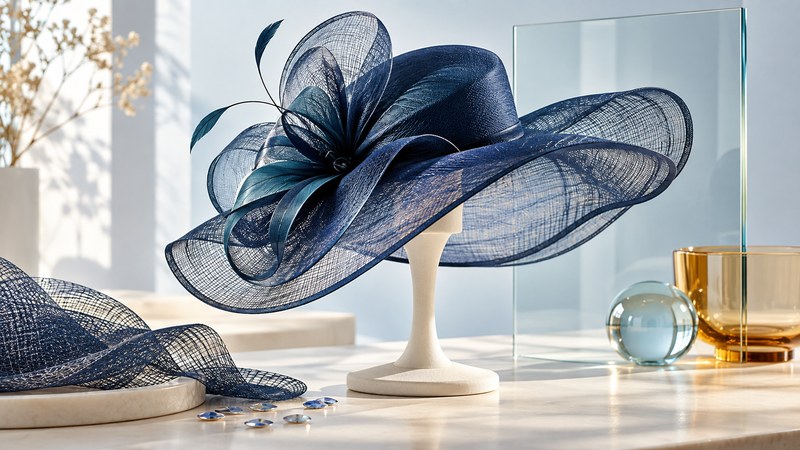
The blue Eric Javits hat worn by Jamie-Lynn DiScala at the 2005 Kentucky Derby is a small but revealing fashion-history subject. A commissioned hat can combine a dramatic silhouette, a sponsor’s visual identity, celebrity appearance and a charitable sale. Each part of that story deserves its own evidence.
The documented event and materials
In its contemporary “Hats off” item, Beverage Industry reported that Grey Goose and Eric Javits collaborated on the hat worn by DiScala at the Derby. The report described blue nylon horsehair, silk-thread embroidery and paillettes, and said the signed hat was sold through eBay for the benefit of the Elizabeth Glaser Pediatric AIDS Foundation.
That account supplies the connection among wearer, designer, sponsor and beneficiary. It does not give a supported final auction price in the cited passage. A bid total, sale amount or actual donation received would need its own auction or charity record, so no such amount is asserted here.
The material wording is also specific: “nylon horsehair” identifies the synthetic material described for this object. Preserve the full phrase rather than inferring an animal fiber from the shortened name.
Read the hat’s design in parts
Start with the crown, the portion that sits over the head; then examine the brim’s outline and how it changes when viewed from the side. A flowing brim can create a large silhouette without reading as a solid disk. Use photographs of the actual hat to judge its particular curves and proportions.
Next, look at the surface. Open structure lets light and background show through; embroidery adds line and texture; paillettes provide small reflective accents. These are different visual effects even when they share a blue palette. In a photograph, lighting and angle can make the same trim look bright or subdued.
Finally, separate the event’s visual theme from the construction. A sponsor-associated color describes part of the commission’s message. The maker’s choices about shape, textile and trim describe how the object presents that message.
Use present-day references carefully
Eric Javits’s current Giant Floppy HH product page provides a modern example of a sheer occasion hat and specifically cautions that its sheer material is not a sun-protective fabrication. This is a separate product, not an identification of the 2005 commission. It illustrates why a broad brim and a sun-protection claim require separate checks.
For a hat you own, follow that exact item’s instructions. The designer’s care guidance emphasizes supporting the crown and avoiding pressure that distorts the brim; it also offers a route for assessing stains and damage. A delicate historical or embellished object may need individual advice before cleaning or reshaping.
When comparing photographs, note whether they show a hat being worn, resting on a stand or compressed during storage. Support and camera angle can change the apparent outline. The conceptual illustration above explains the subject visually but supplies no evidence about the original hat’s dimensions.
Keep a clear event record
A useful record of a commissioned charity item includes the event and year, wearer as named in the contemporary source, designer, material description, photographer credit where available, and the stated beneficiary. Keep copies or citations for the evidence supporting each field.
The value of this story is the relationship between millinery design and a particular public event. Keeping the verified details together preserves that history without turning a short press account into an appraisal or a promise about the condition of a surviving object.