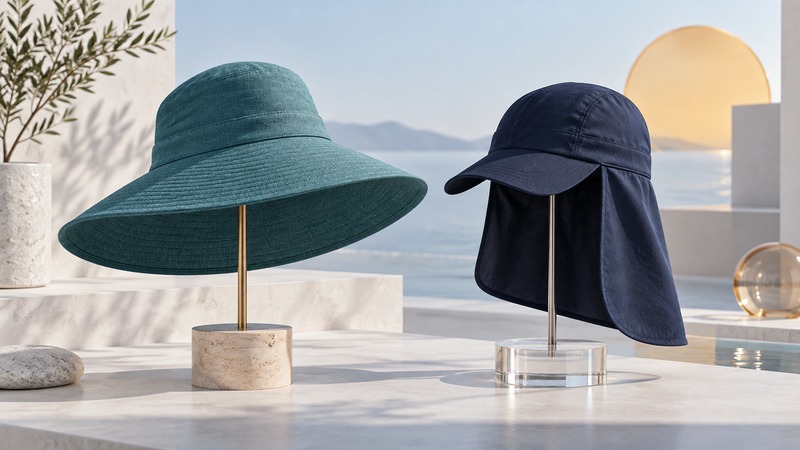
Choose a sun hat by the skin it covers when you move, the protection information supplied for its material, and whether you can comfortably keep it on. A high fabric rating is useful evidence, while the hat design determines where that fabric and shade reach.
Compare the whole shape
The American Academy of Dermatology recommends a wide-brimmed hat to help cover the head, ears and neck. A front visor leaves substantial areas at the sides and back exposed. A cap with a properly deployed neck flap can add coverage, but inspect the ears, cheeks and the gap between flap and collar.
| Design | What to inspect | Practical tradeoff |
|---|---|---|
| All-around brim | Sides, ears, face and back of neck as the head turns | A soft brim may fold in wind or against a backpack. |
| Cap with neck flap | Flap width, ear coverage and the gap at the collar | A rear flap can still leave side-face areas exposed. |
| Short visor or plain baseball cap | Exposed ears and neck | Plan additional protection for uncovered areas. |
Try the hat with the glasses, hairstyle and clothing you will actually use. Look down as if gardening, turn sideways, and raise your arms. Check that the brim remains useful and that the hat does not block vision. A mirror helps inspect coverage; it cannot measure UV transmission.
Read the UPF claim in context
UPF describes ultraviolet protection provided by a textile under a test method. ARPANSA explains clothing protection and UPF ratings, including why coverage and the condition of the material matter. A UPF of 50 corresponds to about one-fiftieth, or 2%, of the test's effective UV passing through the material. That is a textile result, not a percentage reduction in the wearer's total exposure or a promise about safe time outside.
Look for a stated rating, the rated material or product, care instructions and the supplier's testing information. Inspect mesh panels and openings separately. An attractive dark underside, a cooling claim or a thick-looking fabric supplies different information from a tested UPF rating.
Stretching, wetness, wear and changes to the fabric can affect protection. Follow the product's care and replacement guidance. If a seller supplies only vague sun-protection wording, choose a product with clearer evidence or ask for the missing documentation.
Make a short wearing check
- Adjust the hat to stay secure without painful pressure. Open any intended neck flap and check its fasteners.
- Wear it with your normal glasses and backpack. Turn, bend and look upward to find interference.
- Consider heat and ventilation alongside coverage. Identify exactly where a vent exposes skin.
- Check whether you can wash, dry and store it as directed, and whether packing damages the brim.
Use the hat within a sun-protection routine
Combine clothing and a hat with shade, UV-protective sunglasses, and sunscreen for exposed skin. The AAD recommends broad-spectrum, water-resistant SPF 30 or higher; follow the product directions and reapply at least every two hours outdoors and after swimming or sweating. See its sunscreen guidance for application details.
Check the local UV forecast when planning an outing and arrange breaks in useful shade. Shade quality and reflected light vary with the surroundings. If sun sensitivity, a skin condition or a medicine changes your protection needs, ask your clinician for advice specific to you.
Keep the hat near the activity gear, with its flap ready to use. Recheck stretched seams, damaged panels and distorted brims after washing or a season of use. A comfortable hat that is actually worn consistently is the aim of the fit check.