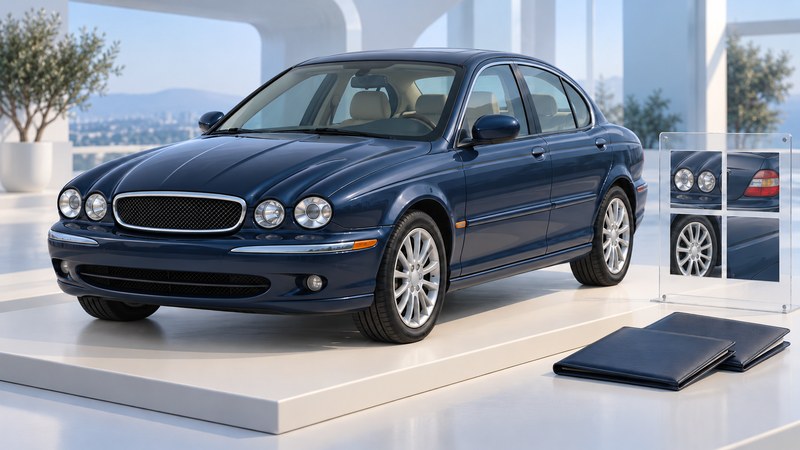
A useful Jaguar X-Type assessment starts with an identified car and ends with specific findings. Establish its market, model year, engine and gearbox; then ask a specialist to connect the service history with the condition of the body, underside and drivetrain.
The reference here is the 2004 US-market X-Type sedan. Other markets and later body styles need their own documents. Gather the VIN, ownership records, service invoices and permission for an independent inspection before comparing candidates.
Make the model and equipment record first
Jaguar’s 2004 US brochure, printed pages 10–15, presents X-Type 2.5 and 3.0 models with permanent all-wheel drive. The same brochure covers XJ, S-Type and XK models in separate sections. Keep the X-Type section attached to your record so equipment from another Jaguar does not enter the comparison.
Confirm engine and gearbox against VIN-linked equipment information and the car itself. Ask the workshop to identify any replaced major assembly. If the paperwork and installed components differ, record both and find the invoice explaining the change before ordering parts.
On a narrow screen, scroll the table sideways. Keyboard users can focus the table region and use the arrow keys.
| Configuration or claim | What to establish | Useful evidence |
|---|---|---|
| “2004 X-Type” | Model year, original market and sedan identity. | Vehicle labels, VIN-linked records and matching owner literature. |
| “2.5” or “3.0” | Factory engine and the unit installed today. | Build information, physical identification and replacement records if applicable. |
| Gearbox and AWD | Exact fitted transmission and driveline condition. | Workshop identification, service details and inspection findings. |
| “Full service history” | Dated, itemized work with mileage and unresolved recommendations. | Invoices arranged in order, checked against matching maintenance requirements. |
| “Excellent condition” | Body, underside, mechanical and cabin findings. | Independent written report with photographs and specific estimates. |
Give body condition its own inspection section
Ask for an underside and body assessment on suitable workshop equipment. Request photographs of corrosion, damaged mounting areas, fluid leaks or previous repairs the technician finds significant. Have the report distinguish appearance from structural or mechanical concerns and explain what needs further investigation.
During the viewing, note panel alignment, evidence of water entry and differences between the seller’s description and what you observe. Avoid probing or removing trim without permission. A clean cabin is pleasant to use; the inspection still needs to reach areas hidden during a walk-around.
Include brakes, tires, steering and suspension, plus the complete fitted AWD driveline. Record a vibration or noise with its speed, temperature and driving conditions. Ask the technician to diagnose the source before assigning a repair. The vehicle-inspection guide helps organize the written scope.
Read the service history as a sequence
Put invoices in date order and record the mileage units. Separate routine work, repairs and recommendations that were left open. For engine cooling, transmission or driveline work, note the complaint, parts used and any follow-up. Ask the workshop to reconcile the record against the maintenance information for this vehicle.
Make a separate parked demonstration list for climate control, windows, seat adjustments, locks and fitted audio or navigation. The period brochure describes optional equipment as well as standard features; record what this car actually has and whether it works. Keep modern phone compatibility as a demonstration question.
An old brand-wide satisfaction result describes a past survey population. For a present-day X-Type decision, give weight to this car’s identification, service evidence and current inspection. The diagnostics guide explains how observations and fault information lead to a testable question.
Check the VIN through NHTSA’s recall lookup and ask the manufacturer for campaign and completion records. NHTSA explains that VIN results omit completed recalls and may omit recalls more than 15 years old. Save the dated result alongside repair evidence.
Example: compare evidence quality
Fictional shortlist. Candidate A has a folder of oil-change receipts and an unexplained driveline noise. Candidate B has fewer invoices but a recent independent report identifying specific body repairs. Record A’s noise as needing diagnosis and B’s repairs as documented findings requiring an assessment of quality and extent. Ask for the missing evidence on both; document count alone cannot settle the comparison.
Use three decision columns: work needed before use, work to plan, and questions still open. Attach the professional explanation to each entry. This makes the next step concrete: commission a diagnostic check, obtain repair documentation, or move on because an important requirement remains unresolved.
Save the inspection record
Download the X-Type inspection record. Complete the identity section first, use the body and service sections at the appointment, and retain the final report with the car’s records.
Explore Autos: vehicle guides, technology and design · Cars: buying, maintenance and ownership