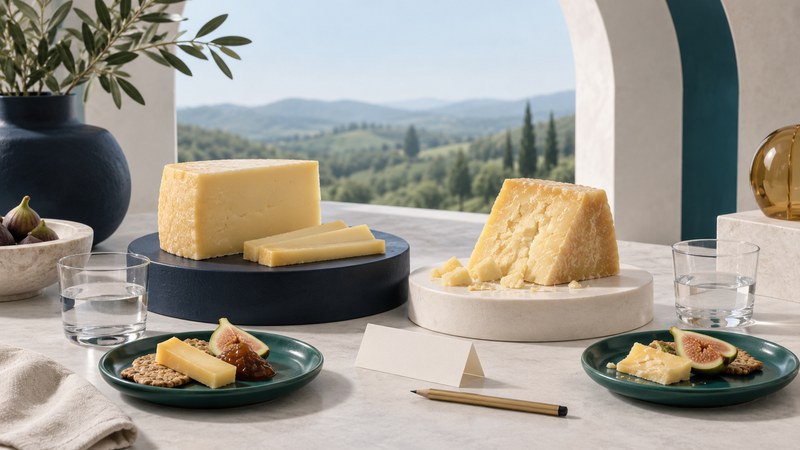
An Irish cheddar tasting works best when you compare two identified products. Keep the producer, stated age and ingredients beside each sample, then decide which cheese you would buy for a sandwich, cooking or a small tasting plate.
Collect the facts before the impressions
Read the country of production and the full cheese name, then look for a stated maturation period. Record the milk treatment, ingredients, net weight and price per unit of weight. If a counter label gives only a brand, ask to see the original package. Keep nutrition comparisons on the same weight basis and distinguish them from the smaller portion you intend to eat.
Producer descriptions offer useful examples. Kerrygold Aged Cheddar is described as a pasteurized cow’s-milk cheese matured for one year. Kerrygold Reserve Cheddar is described as having an additional year of aging and a stronger flavor. These statements concern those products; other makers use their own age ranges and names. Copy an explicit age when supplied and write “not stated” when it is absent.
A pasture or grass-fed claim belongs to the producer and product that makes it. It does not by itself tell you how firm the cheese will be, whether it suits your sauce, or whether another Irish cheese tastes similar. Put the factual label information and your sensory notes in separate columns.
Set up a fair, modest comparison
- Choose two cheddars with a clear reason for comparison: different stated ages from one maker, or similarly aged cheeses from two makers.
- Cut comparable portions using a clean board and knife. Keep each original label matched to its plate.
- Provide plain bread or crackers and water; add fruit or chutney after the first comparison.
- Taste one, take water, then taste the other. Try the reverse order on a second small bite.
Illustrative quantity: four people tasting 15 g of each of two cheeses need 4 × 2 × 15 = 120 g total. Each cheese contributes 60 g. This is a small tasting alongside other food, with extra appetite and whole-package leftovers planned separately.
Use a short tasting worksheet
Copy these prompts into a notebook, with a column headed A and a column headed B. Complete the label facts first. Use your own descriptive words and finish with an actual use or buying decision.
On a narrow screen, focus the table and use the arrow keys to scroll.
| Record | What to write | How it helps |
|---|---|---|
| Identity | Producer, full name, origin and stated age | Lets you find the same product again |
| Texture | Clean slice, springy bite, firm bite or crumble | Connects the cheese to preparation |
| Flavor | Your observations of salt, tang, sweetness and finish | Separates personal experience from package language |
| With bread | What changes when tasted with plain bread | Makes the comparison relevant to a snack or sandwich |
| Decision | Preferred use, portion and whether to buy again | Turns tasting notes into a practical choice |
Turn the result into a meal
A cheese that crumbles pleasantly on its own may be awkward for an even sandwich layer. Cut or crumble it in the form the meal needs. A stronger-tasting cheddar can work as a small finishing accent, while your preferred everyday slice may earn a larger share of the next shopping trip.
For melting, try a small portion in a measured method before committing a whole block. The cheddar cooking guide explains sauce choice and heat control. Taste preference and melting performance answer different questions, so record both if cooking matters to you.
Keep the unused portions wrapped and refrigerated according to the label and FDA refrigerator guidance. When hosting, follow FDA serving and time limits: keep cold reserves refrigerated and count all time out toward the two-hour limit, or one hour above 90°F. For a wider selection, the board guide adds quantity planning and serving organization.