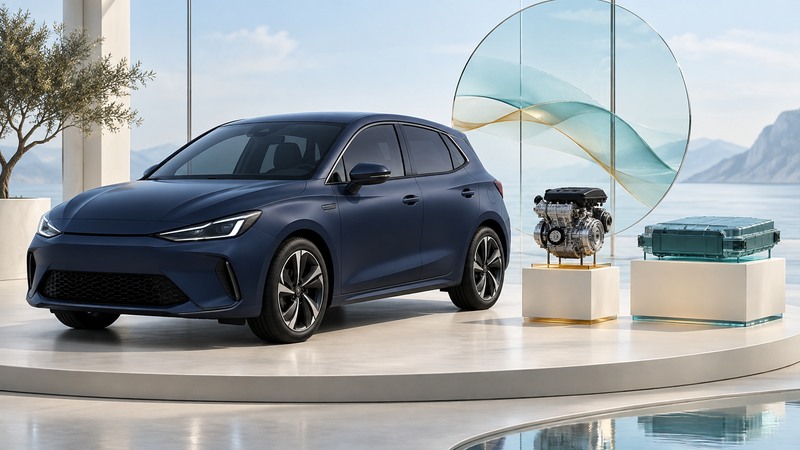
A hybrid combines an engine with electric drive components. The name leaves practical questions open: whether it can plug in, when the engine runs and how much fuel it uses on your journeys. Begin with driving patterns and charging access, then compare specific models.
Record annual mileage, typical daily trips, longer journeys, passenger or cargo needs and parking arrangements. For a used vehicle, add service history and a qualified inspection. This gives the comparison a purpose beyond the badge.
Identify the kind of hybrid
DOE’s hybrid-electric overview explains that a conventional HEV charges through its engine and regenerative braking. Its plug-in hybrid overview describes PHEVs that also accept external electricity.
On a narrow screen, scroll the table sideways. Keyboard users can focus it and use the arrow keys.
| Type | General distinction | Question for the exact model |
|---|---|---|
| Mild hybrid | Electric assistance supports engine operation. | Which functions does the system provide? |
| Full hybrid (HEV) | Engine and electric drive work together without plug-in charging. | What fuel use fits the intended driving? |
| Plug-in hybrid (PHEV) | A rechargeable battery supports more driving on stored electricity. | Where will it charge, and when does the engine run? |
Regenerative braking recovers some energy during slowing. Traffic, speed, temperature, heating demand and battery state affect operation. Read the manual for engine-start conditions, including when the display still shows electric range.
Make charging access part of the plan
For a PHEV, identify a dependable charging place, access hours and cost basis. Check the car’s connector and charging capability, then confirm suitable equipment and supply. A space near an outlet is only a starting point; installation and building permissions may need attention.
Estimate distance between charging opportunities, including errands. Separate long trips from routine days. Estimate the electric share of annual mileage from rated range together with those charging and journey assumptions. Conditions and accessory use can change the result.
For an HEV, compare fuel economy in a similar mix of driving. A test drive helps assess comfort and engine transitions; its displayed trip average depends on the starting conditions.
Compare energy use with compatible units
Use FuelEconomy.gov’s side-by-side comparison to locate the exact model year and configuration. Read gasoline-mode economy and electricity consumption separately where supplied. MPG, MPGe and kWh per distance express different quantities. EPA explains MPGe as an energy-equivalence rating; electricity cost also requires consumption and price.
Check ownership details before deciding
Compare similar equipment, size and capability. Ask for the applicable battery and powertrain warranty by model year, market and ownership status. Confirm exclusions and transfer conditions with the manufacturer.
For a used hybrid, have a qualified inspector review the vehicle, diagnostic information and service history. A short drive or absence of warning lights offers limited evidence about long-term battery condition. Check recalls using the vehicle identifier and appropriate national authority.
High-voltage components require trained service. NHTSA’s electric and hybrid safety information helps identify battery and charging questions for a seller or workshop.
Record the assumptions behind the choice
Keep the model, annual miles, electric share, energy prices and source of each efficiency figure together. Test lower charging frequency or higher prices before relying on a saving. The resulting range reveals which assumptions matter most.
Energy costs describe only part of the environmental comparison. Tailpipe emissions, electricity production, manufacturing and vehicle life have different boundaries. The sustainability planning guide explains how to tie a result to its evidence.
Hybrid comparison worksheet
Hybrid comparison worksheet — plain-text download. Save a copy and fill it in with your own information. It includes instructions, example assumptions and source references.