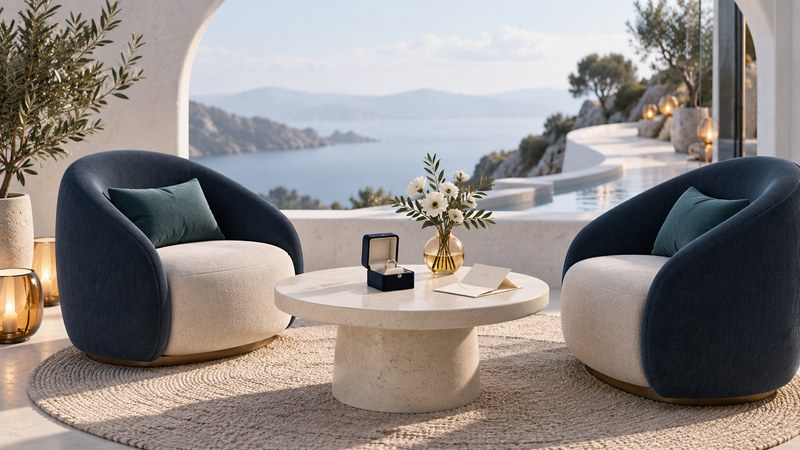
A personal proposal starts with what you know about your partner: the places they enjoy, the attention they welcome and the future you have already talked about. A familiar room, a letter or a favorite walk can give you a meaningful setting with little or no extra spending.
Use this guide to choose an idea, prepare your words and make a plan that can change gracefully. The suggestions are original planning examples; adapt them to your relationship and circumstances.
Agree on the future; leave room for a surprise
Before arranging the moment, talk together about marriage, timing and what commitment means to each of you. A surprise can be the exact day or the words you choose. Your partner should have space to answer honestly.
Learn whether they would prefer a private conversation, a few loved ones nearby or a larger celebration. Ask about photographs and online sharing separately: enjoying a photo does not automatically mean wanting it posted. When you are unsure, choose a quiet setting and decide together how to tell others afterward.
- Budget: choose an amount you can comfortably spend, including travel and any food or materials.
- Comfort: consider seating, step-free access, temperature, noise and the length of the outing.
- Timing: choose a moment when neither person needs to rush to work, caregiving or another commitment.
- Ring preference: you can propose without a ring or choose one together later. Avoid guessing an expensive purchase when preferences are unknown.
Six ideas you can make your own
Here, free means no additional purchase when you already have the materials and access. Check transport, admission and other costs before describing an outing as free.
A letter at home
Extra cost: none with paper already on hand. Write about one shared memory, something you value now and a future you hope to build. Set aside a quiet time to read it aloud or let your partner read it. Keep your question for the end. If the day becomes stressful, keep the letter for another evening.
Your familiar walk
Extra cost: none if the route is accessible on foot and free to enter. Choose a comfortable stopping place with room to talk. Check opening hours and the weather. An indoor conversation at home is a complete backup; a memorable proposal does not depend on reaching a viewpoint.
A small collection of memories
Extra cost: none with existing photographs or keepsakes; optional printing costs extra. Choose three objects and explain why each matters to you. Place them together on a table rather than making your partner complete a long puzzle. Finish with what you hope comes next.
A favorite meal together
Extra cost: ingredients or takeout, unless already part of your plans. Make something familiar so the cooking leaves you time to be present. Ask at a comfortable pause. Keep any ring in its box, separate from food and drinks. See the shared-meal guide for adaptable menu ideas.
A place with personal meaning
Extra cost: transport, parking or admission may apply. Return to a place tied to a good memory and explain the connection. Confirm access with the venue; organized photography or decorations may have their own rules. Have a nearby, comfortable alternative if the spot is crowded or closed.
A shared creative evening
Extra cost: none with materials you own; optional craft supplies cost extra. Make a small album, sketch favorite places or write a list of hopes together. Let the activity remain enjoyable in its own right, then ask your question in your own words. Keep any ring safely away from loose materials.
Use a memory, a quality and a hope
A short, specific message gives the moment a personal shape. Choose one thing you have experienced together, one quality you appreciate and one hope for your life together. Write a few sentences, say them aloud and remove anything that sounds unlike you.
Illustrative wording
“I still think about the afternoons we spent making this place our home. I love how much care you bring to ordinary days. I want to keep building a life with you. Will you marry me?”
You can read from a note. After asking, pause and listen. If your partner needs time, allow that time without an audience, repeated asking or a demand for an immediate decision.
Make a simple plan you can change
- Choose one idea. Write down why it suits your partner. Remove an element if it mainly serves an audience or a social-media post.
- Confirm the practical details. Check access, hours, transport, seating and weather. If anyone is helping, give them a clear role and an easy way to cancel.
- Prepare the objects. Put a ring, if using one, in a secure box or pocket you can check. Keep it out of food, glasses, water and places where it could fall.
- Prepare the words. Carry a short note if it helps. A few sincere sentences are enough.
- Leave time afterward. Decide together whether to call family, take a photograph, celebrate quietly or have more conversation.
Download the proposal planner (plain text) to fill in privately on your device or copy into a notebook. It contains prompts for preferences, costs, access, words and a backup plan; nothing you write in your own copy is submitted to Yenra.
Illustrative plan: a letter and a walk
You have discussed marriage and both prefer privacy. You write a letter with paper you own, choose a familiar free route and plan to ask while seated at a quiet stopping point. Rain changes the setting to your living room. A ring is optional, and photographs wait until you have both agreed. The meaningful parts—the words, attention and room to respond—survive the change.
Choose another thoughtful gesture
If flowers suit the occasion, use Tulips as a Gift to choose and care for a bouquet. Explore the Love guides for flowers, sourcing and meals.