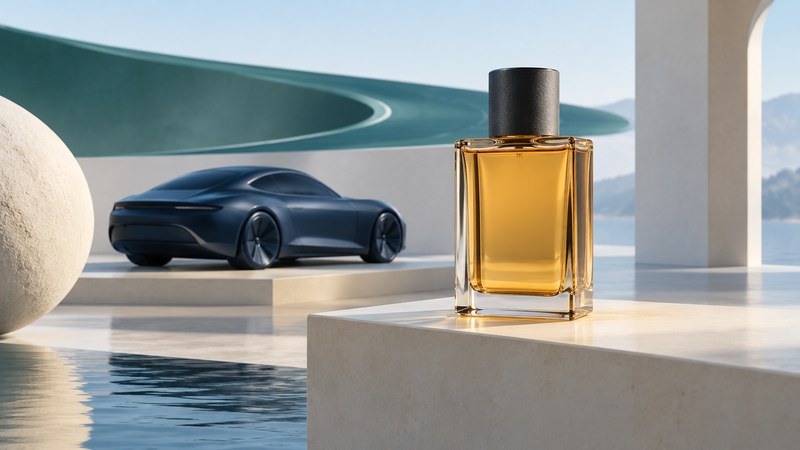
The Mustang fragrance belongs to the history of extending an automotive identity into a consumer product. Its 2007 launch involved established fragrance businesses as well as the Mustang name. To understand a bottle or listing, start with the exact product identity and dated records rather than the name alone.
What the corporate record establishes
Sarantis Group’s nine-month 2007 results analysis (PDF, printed page 10) records an April 20 announcement of its partnership with Aramis and Designer Fragrances, a division of an Estée Lauder subsidiary, to introduce Mustang fragrance to North America. It separately records a May 10 announcement that the first orders had shipped to the United States.
Those entries establish two distinct milestones: the announced business relationship and a later shipment report. Neither is a promise about availability today. Keeping the event and the date together prevents a 2007 launch statement from becoming an undated shopping recommendation.
Scroll horizontally to read the table. Keyboard: focus the table region and use the arrow keys.
| Date of announcement | Recorded event | What it establishes |
|---|---|---|
| April 20 | Sarantis partnership with Aramis and Designer Fragrances | The companies named in the North American launch. |
| May 10 | First orders reported shipped to the United States | An initial shipment milestone, not nationwide stock at every retailer. |
Separate brand identity from the fragrance business
Contemporary reporting on Ford’s licensing program describes the Mustang name entering fragrance through the Estée Lauder/Aramis relationship and identifies Beanstalk as the licensing agency involved. Sarantis and the Estée Lauder fragrance organization are the businesses documented in the launch record. This distinction helps explain licensed products: the familiar name on the front and the company responsible for a fragrance can play different roles.
For a researcher or collector, record both. A useful entry includes the full product name, concentration or product type, size, label photographs, company information and a dated source. Describing an item only as “Mustang cologne” loses details needed to compare it with another bottle.
Basenotes’ 2007 launch coverage describes a graphite collector’s tin and notes including lemon, lavender, ginger, fir balsam, cedar, patchouli, amber and pipe tobacco. Read these as the launch-era presentation and scent description. A shared automotive name alone cannot establish the same formula, packaging generation or manufacturer.
Read a current listing as a separate claim
- Read the full name. Include any added word and the stated product type, such as an eau de toilette or aftershave.
- Compare actual photographs. Ask for the bottle and box labels rather than relying solely on a catalog image.
- Record company and quantity information. Keep the details exactly as printed, including units.
- Keep condition separate. Ask about seals, leakage and known storage history; an old launch article cannot establish these.
- Retain the evidence. Save the listing date and distinguish the seller’s statements from facts supported by the historical record.
This is a documentation method, not an authentication service or resale valuation. An unanswered question can remain unanswered rather than being filled with an assumption from another product.
Treat scent language as description
Fragrance notes describe an intended smell. They are not a complete ingredient declaration or a reliable forecast of how a stored bottle will perform. The FDA’s explanation of fragrance labeling notes that fragrance ingredients may be identified collectively as “fragrance” on a cosmetic label in the United States.
For a sensitivity concern, use the actual label and manufacturer information rather than a list of imagined aromas. If your interest is collecting, keep sensory observations clearly labeled as your own impressions and tied to the bottle you examined.
For another example of distinguishing products under a shared licensed name, see Donald Trump, The Fragrance and Success.
Explore Bath guides
Browse personal care, bathroom equipment and fragrance histories.