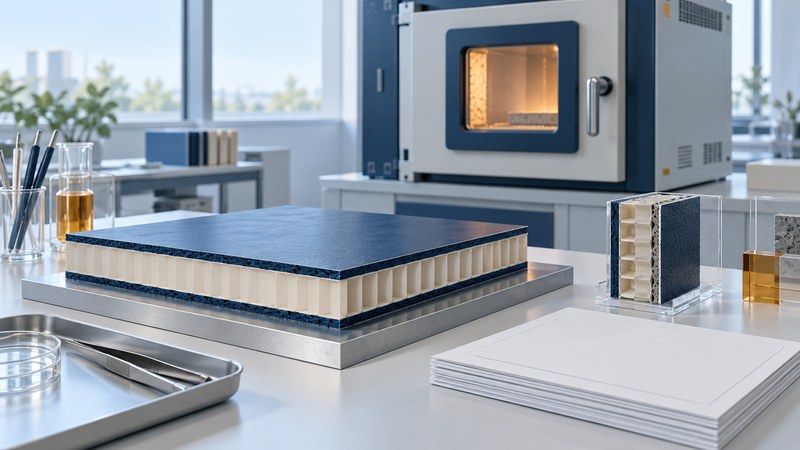
A useful fire-performance claim names the test, the specimen or assembly, and the result. When evaluating a composite, begin with its intended application and required performance, then check whether the supplied evidence covers the construction you plan to use. The word “fireproof” alone supplies none of those boundaries.
Identify which fire question is being answered
Reaction-to-fire tests examine aspects of how a product contributes to fire, such as ignition, burning or smoke under defined conditions. Fire-resistance tests examine how a building element or assembly maintains specified functions during a prescribed exposure. The exact criteria and classification depend on the standard and application.
For a U.S. example, the published UL 94 scope concerns small-scale flammability testing of plastic materials for parts in equipment. It expressly separates those results from hourly fire resistance, flame spread, smoke characterization and heat release. A UL 94 classification therefore answers a different question from a fire-rated wall or door assessment. Use the applicable current edition for the actual project.
On a narrow screen, scroll the table horizontally. Keyboard users can focus it and use the arrow keys.
| Evidence supplied | What to identify | Question still to resolve |
|---|---|---|
| Material flammability result | Exact formulation, specimen thickness and test method | Does the intended product require other tests? |
| Smoke or heat-release data | Exposure, measurement, units and specimen construction | Which acceptance rule applies to this use? |
| Assembly fire-test result | Complete construction and stated classification | Are the proposed dimensions, joints and components covered? |
| Certification or listing | Current reference and installation conditions | Does the delivered construction match the listed system? |
Read the composite as a construction
Record resin chemistry, reinforcement, core, adhesive, facing and surface finish, with thickness and density where relevant. A low-burning constituent can sit inside a construction whose other layers, joints or fixings determine the observed result. Ask for the full report and applicable classification or listing rather than relying on a product brochure.
UL's door and hardware application guide treats the door, frame, glazing and hardware as parts of an assembly and explains the relevant certification categories. This illustrates why an assembly result must remain tied to its configuration. Requirements for other uses or jurisdictions need their own applicable evidence.
Work through a proposed change
Fictional review: a report describes a 90-minute door-assembly result with a specified composite layer, frame and hardware. A designer proposes a thinner layer and different edge joints for another panel. Record both changes against the tested construction. The report by itself provides no rating for that proposed panel.
Ask the responsible laboratory, certification body or qualified fire specialist whether the changes fall within the evidence's stated field of application. Obtain a written assessment identifying the basis and any further testing. Keep the approval authority involved where the application requires it. Avoid filling a missing result with an assumption about the resin's behavior.
Make the decision traceable
Build a short matrix containing the required property, supporting document, covered construction and unresolved difference. Preserve document revisions and the supplier's exact part specification. Separate a missing report from a demonstrated failure: each calls for a different response. Release a material or assembly only through the project's applicable review and approval process, with every relied-upon condition carried into purchasing and installation records.
Use the working record
Download the editable composite fire evidence review. Save a copy, complete the actual requirements and evidence fields, and review open issues with the responsible owner. The plain-text record includes instructions, units where needed, the fictional example, and source references.