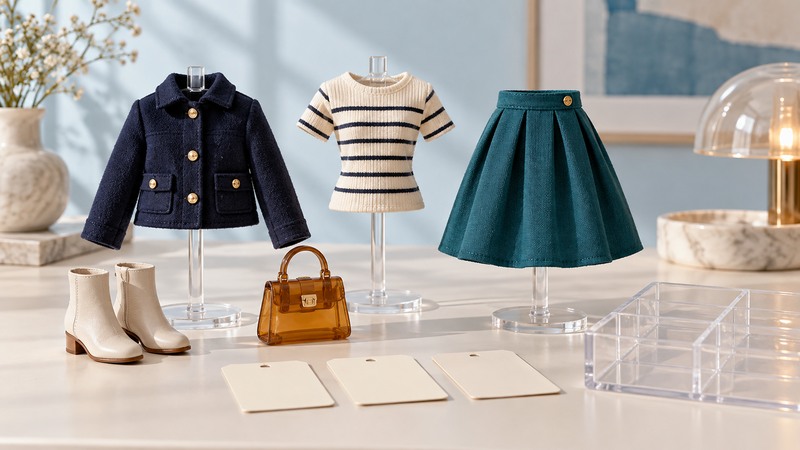
Hilary Duff’s association with Barbie includes doll fashions and a doll bearing her name. A useful collector description identifies which kind of item is present, the product number where available, the pieces included and the evidence behind the match. A doll wearing a related outfit is not automatically the same product as a boxed Hilary Duff doll.
Separate the collection story from product records
The collaboration’s fashion collection was promoted in 2006; a contemporary reproduction of the launch announcement describes doll fashions and accessories. Mattel’s own service archive is the stronger starting point for individual product identities. It records the following examples as released in 2007, so a launch-year reference should not be substituted for every item’s recorded release year.
On small screens, scroll the table horizontally. Keyboard users can focus the table area and use the arrow keys.
| Product number | Archive identity | What it establishes |
|---|---|---|
| K2896 | Red Carpet Glam Hilary Duff Doll | Mattel describes a doll in a dot-print dress with a red sash and additional accessories; released 2007. |
| K2897 | Fashion Fever Hilary Duff Fashions Assortment | Mattel describes fashion packs with coordinating accessories, sold separately; released 2007. |
The 2006 announcement distinguishes dressed Fashion Fever dolls, multi-outfit Closet packs, and outfits displayed on miniature mannequins. Those formats answer different collecting needs: a doll, a wardrobe to mix, or a single displayed look. Record the format before comparing listings. These archive records are examples, not a complete checklist. An assortment number can group several outfits; it does not by itself identify every loose skirt or shoe. Follow the exact package and product record before assigning a narrower name.
Work from the package to the loose pieces
If packaging survives, photograph every panel, the product number, barcode, collection wording and the contents as found. Keep the number printed on the package separate from dates molded onto a doll body or printed in a copyright line. Record each in its own field rather than treating every date as a retail release date.
For loose items, begin with a clear photograph of each piece separately. Show front, back, closure and internal labels where present. Compare cut, fabric pattern, trim and accessory shape with a documented package image. Color alone is a weak match: lighting, fading and reused colors can make different items look similar.
Use a confidence description that matches the evidence: “matched to this product record,” “consistent with this package photograph,” or “unidentified piece included in the lot.” Ask a seller for missing views instead of using a confident collection name to fill the gap.
Describe exactly what is included
Make a piece-by-piece list: doll, each garment, shoes, bag, jewelry, stand, display piece, package and paper inserts. Compare that list with the reference for the specific product. Keep an unfamiliar extra separate until it can be matched. A seller’s “complete” label is only as useful as the reference behind it.
Mattel’s archived description of a set documents what was marketed; a resale photograph documents what is being offered now. Preserve both sources in your notes. If the comparison cannot account for an accessory, ask before buying rather than assuming it is hidden in the box.
Record condition before attempting restoration
Check clothing seams, fastening tabs, elastic, stains, fading and peeling surface finishes. Inspect small accessories for cracks, missing parts and bends. For a doll, request clear views of hair, face, limbs and joints. Ask about odors, repairs and repainting without assuming that a boxed item has escaped aging.
Photograph the item as received and retain the listing while checking it against the description. Keep fragile pieces separate from rough closures and avoid forcing an outfit onto a different doll body. For cleaning or repair, establish the material and an appropriate method first; aggressive solvents, heat or adhesive can permanently change an object.
Download the doll-fashion collection record to keep product evidence, included pieces, condition and unanswered questions together. It is an inventory aid rather than an authenticity certificate or valuation.
For a price comparison, look for genuinely comparable completed sales with similar packaging, completeness and condition. Asking prices and the adjective “rare” cannot establish what a buyer will pay. When an item is intended for play, follow the exact product’s age and safety information; the two Mattel records above specify ages five and up.