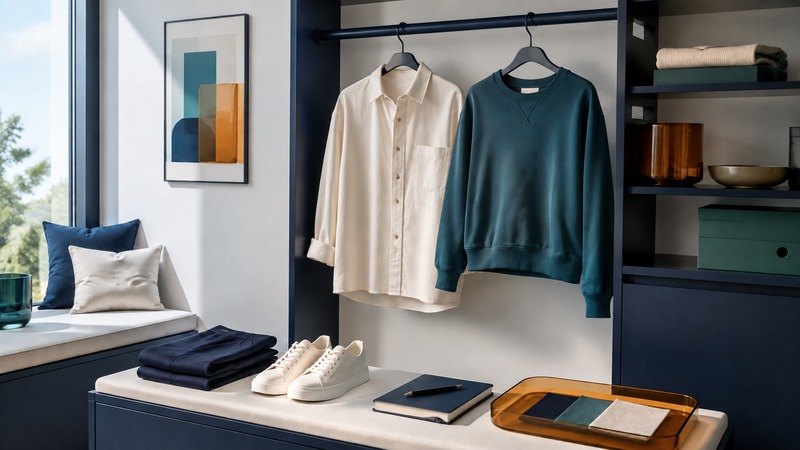
A tween wardrobe works best when the young person has a real say and the adults make the practical limits clear. The aim is enough comfortable clothing for ordinary life, with room to try a style and change their mind.
Begin with what is already being worn. A drawer can be full while the same two outfits do all the work. Finding out why those outfits feel right is more useful than starting with a list of seasonal trends.
Agree on the plan before shopping
Ask the tween to choose a few favorites and explain what they like: a color, roomy sleeve, soft waistband, pocket, or connection to a hobby. Keep the conversation about the garment and the activity. “This waistband feels tight when you sit” gives useful information without judging a body.
Adults can set the total spending limit, laundry constraints, and actual school requirements. Read the school’s current written policy together rather than relying on an old rule or another family’s interpretation. If a requirement is unclear or creates an accessibility problem, ask the school about options before buying replacements.
Separate essentials from experiments. A needed pair of shoes should not compete invisibly with a novelty accessory in an unexplained budget. Agree which purchases the shared budget covers and whether there is a small amount for a personal choice. A preference does not need to be fashionable to count.
Use fit as information, not a target
Sizes are shopping labels. Check the particular brand’s chart and whether it describes body measurements or the garment itself. Trying on a different size is a way to find comfortable clothing, not a measure of progress. Avoid buying something uncomfortable in the hope that the wearer will change to fit it.
Test ordinary movements: sitting at a desk, reaching overhead, bending, and putting on a backpack. Check seams, labels, sleeve openings, and fasteners. An outfit that feels fine while standing in front of a mirror may be distracting through a school day. Let the wearer say when a texture or shape is not working.
Leave reasonable room where growth and movement need it, but do not buy every item oversized. Loose hems can drag; an unmanageable fastening can make an otherwise suitable garment frustrating. Sleepwear has additional fit and labeling considerations covered in the children’s clothing guide.
A small, explicit budget is easier to share
Invented planning example: a family sets aside $150 for an initial school-clothing refresh. A coat and several tops still fit. These are fictional amounts, not current store prices or a recommended allowance.
On a small screen, scroll the table sideways to read all columns.
| Decision | Planned amount | Reason in this example |
|---|---|---|
| Two everyday tops | $30 | Fill gaps between laundry days. |
| One pair of trousers | $35 | Replace an uncomfortable pair. |
| Shoes | $45 | The existing pair no longer fits. |
| Repair supplies or alteration | $10 | Keep a usable item in rotation. |
| One personal accessory | $15 | Allow a choice within an agreed limit. |
| Unspent reserve | $15 | Keep room for a missed need or added cost. |
The planned purchases total $135, leaving $15: $30 + $35 + $45 + $10 + $15 + $15 = $150. Shipping and tax, if applicable, must fit inside that same limit; they are not extra money. If checkout adds $8 to the $135 purchases, the reserve falls to $7. If the total exceeds the limit, change the plan before paying.
The reserve is not an invitation to find another item immediately. Wear the additions first. A short trial may reveal that another pair of socks matters more than the second accessory originally considered.
Download the shared wardrobe planning sheet (CSV) and the fictional budget example (CSV). The blank sheet records what already works, a specific gap, a proposed action, its cost, and who will check it.
Make advertising part of the conversation
A catalog, outfit video, game promotion, or creator’s recommendation can be enjoyable and still be trying to sell something. The FTC’s Admongo advertising-literacy materials were designed for tweens. Their useful starting point is to notice who made a message, what it is saying, and what response it wants.
In a clothing post, look for the sponsor, gifted items, discount code, and purchase link. The FTC’s influencer disclosure guide explains that a brand relationship can involve free products as well as payment. A disclosure helps identify a commercial connection; it does not establish fit, comfort, or quality.
Try a neutral question: would this still appeal if the familiar creator were not wearing it? Compare the garment with the existing wardrobe, not the model’s appearance. Photographs and virtual try-on previews cannot establish how a fabric feels or how the actual garment moves.
Build combinations, then revisit the plan
Put possible outfits together at home before shopping. Repeat colors if that makes combining clothes easier, but do not impose a universal “capsule” palette. A favorite print can be the starting point. A borrowed or secondhand item can be a low-cost way to try an idea if its condition, fit, and care needs work.
Set aside clothes that need repair and choose a realistic next step: sew a button, ask about an alteration, pass an item on, or stop counting it as usable. “We can fix it someday” does not put it into tomorrow’s outfit.
Review after a few weeks. Ask what gets worn, what stays untouched, and whether laundry or weather changed the need. The useful outcome is a wardrobe the tween can manage and enjoy, along with practice making choices within clear limits.
Related resources
- Children’s clothing: fit, comfort, and safety
- Choose practical phone cases and carriers
- Understand how a fashion launch is marketed
- Explore all fashion resources
Researched and updated September 6, 2026. Sources are linked beside the relevant information. Brand examples illustrate specific features or care instructions; they are not product rankings.