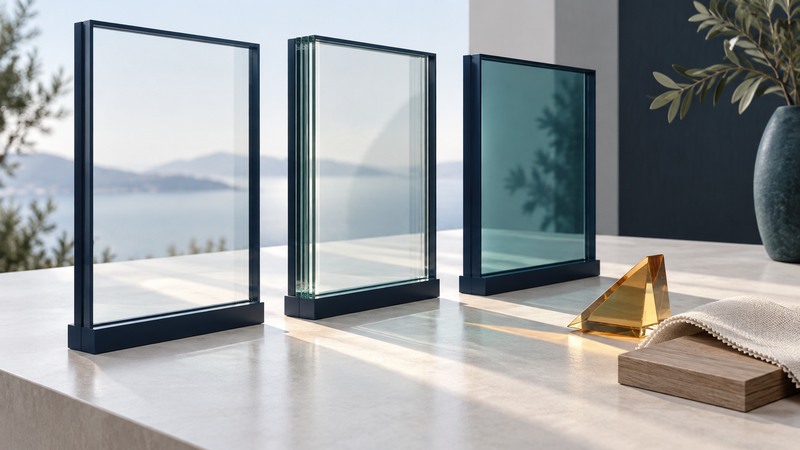
UV-protective glazing can reduce one important source of damage to furnishings. Choose it by comparing ultraviolet transmission alongside daylight, solar heat gain, appearance and compatibility with the existing window. The useful question is which complete glazing option meets the room's needs.
Start with the object or problem you want to address: fading fabric, a sunlit wood floor, afternoon overheating, screen glare or several of these together. Note orientation, hours of direct sun, existing shading and the window's construction. Those observations determine which specifications matter most.
Understand what a fading claim establishes
Fading depends on exposure and the material being exposed. In Vitro's technical document on solar radiation and furnishing degradation, UV and part of the visible spectrum both contribute to damage. The document discusses damage-weighted transmission as a way of comparing glazing across relevant wavelengths.
Ask what wavelength range and test basis sit behind a UV-blocking percentage, and which glass configuration was measured. A result for a particular pane or film does not automatically describe a different insulated-glass assembly. Treat a percentage as a specification to investigate, not a prediction of how many years a sofa will keep its color.
For sensitive furnishings, pair glazing selection with exposure management: review object placement, direct-sun hours and shading. Valuable artwork may need advice specific to its materials. A glazing upgrade can be part of that plan while daylight exposure remains a maintenance consideration.
Keep the performance measures separate
| Measure | What it helps answer | Comparison check |
|---|---|---|
| UV transmission | How much radiation in the stated UV band passes through? | Same wavelength range, method and glazing configuration. |
| Visible transmittance (VT) | How much visible light passes through? | Compare equivalent product ratings and review a sample in the room. |
| Solar heat gain coefficient (SHGC) | How much solar heat enters through the product? | Match the climate, orientation, shading and cooling/heating goals. |
| U-factor | How readily does heat pass through the product? | Compare the same rating basis, especially whole-window versus glass-only values. |
| Appearance and compatibility | What changes in tint, reflection and supported use? | Named glass, coating location, film and warranty terms. |
The NFRC label explanation distinguishes U-factor, SHGC and visible transmittance. Use those values to compare energy and daylight performance; obtain the supplier's separate UV evidence for the fading question.
Compare the three practical routes
Factory-coated glazing
Consider this route when specifying replacement glass or windows. Request the exact coating and glass build-up, including which surface carries the coating. Ask for the relevant performance data for that combination and a sample showing color and reflectance. A generic low-emissivity description leaves the UV question unresolved.
Laminated glazing
A laminated option introduces an interlayer between glass layers. Ask which interlayer is proposed and request its documented spectral performance in the full assembly. Have the window supplier confirm thickness, weight and suitability for the frame. If safety or security performance is also required, obtain the relevant tested configuration and rating separately.
Retrofit film
Film can be considered when the existing window is serviceable. Identify the glass type, existing coatings, insulated-unit construction and warranty first. LLumar's architectural-film FAQ directs customers to product selection compatible with their glass and explains that films differ in appearance and performance. Request written confirmation for the proposed pairing and responsibility for any affected glass or seal warranty.
For every route, compare installed scope as well as material price: preparation, access, removal, disposal, finishing, warranty and future maintenance. Ask how the selected option will look from outside during the day and from inside at night.
Example: two options with different daylight tradeoffs
The same discipline applies when a salesperson supplies only “99% UV protection.” Ask for the missing daylight, heat, appearance and compatibility evidence rather than filling the gaps with assumptions.
Make the final choice traceable
- Write the room's priorities in order: furnishing exposure, glare, temperature, view and appearance.
- Record the existing window and the exact proposed glazing or film configuration.
- Collect comparable ratings and supporting documents.
- Inspect a representative sample under relevant lighting.
- Confirm installation scope, compatibility, care instructions and warranty.
Keep the specification with the home's records. When another window needs replacement, match the documented assembly and appearance rather than relying on a remembered brand name.