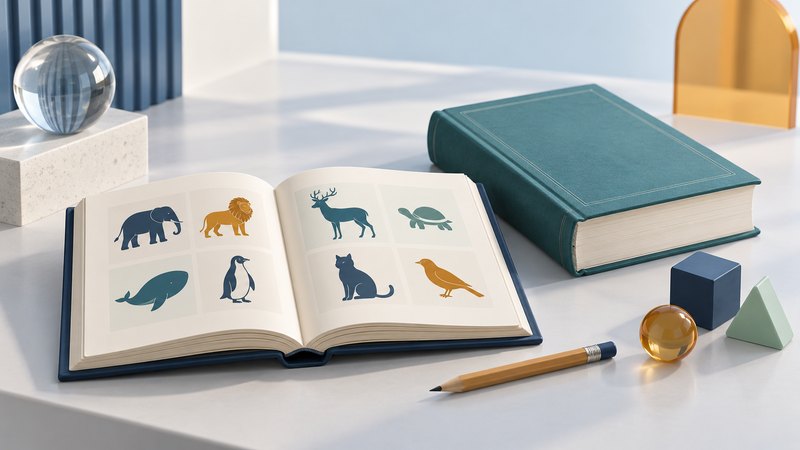
The most useful children’s dictionary is one the child can navigate and understand. Start with a book they are reading, choose a few unfamiliar words, and try the dictionary together. The goal is a successful lookup followed by a clearer understanding of the original sentence.
Choose for the reading task
| Reading task | Useful features | A practical trial |
|---|---|---|
| Exploring words with an adult | Clear pictures, familiar objects, short explanations | Find an object, name it, and use it in conversation. |
| Beginning independent lookup | Large type, simple navigation, concrete definitions | Find a word and explain it without reading the definition aloud. |
| Reading longer stories | Multiple meanings, parts of speech, example sentences | Choose the meaning that fits a sentence from the book. |
| Learning through two languages | Clear language direction and usable examples | Explain the idea in either language, then check the target sentence. |
Age and grade labels provide a starting point. Reading experience, vocabulary, interests, and the amount of adult support affect the actual fit. A child may use a picture dictionary for one activity and a fuller dictionary for another.
Run a ten-minute trial
- Choose three words. Use one concrete word, one word with more than one meaning, and one word from the child's current reading.
- Let the child search. Notice whether alphabet order, spelling, screen controls, or page density causes the difficulty.
- Ask for an explanation. “What does it mean here?” tests understanding better than copying the entry.
- Return to the sentence. Read it again using the new meaning.
- Make a new example. Invite a spoken sentence, drawing, or brief written sentence.
Record which stage needed help. If the child finds the word but encounters three more unfamiliar words in its definition, try a simpler explanation or more visual resource. If every entry is too brief to distinguish meanings, try a more detailed dictionary.
Use the trial as a conversation rather than a timed score. A slow lookup can still be successful when the child understands the result and feels able to try again.
Practice with a word that changes meaning
A drawing can support a concrete meaning, while an example sentence can help with an abstract one. When choosing between dictionaries, inspect actual pages containing the kinds of words the child meets.
Inspect an actual edition before buying
For a concrete publisher example, Merriam-Webster's Elementary Dictionary, ISBN 9780877797470, is listed as a 2024 edition for ages 8–11 and grades 3–5. Those are publisher audience labels, not a guarantee of fit for an individual reader. Match the ISBN and sample pages when comparing listings.
Borrow a copy or inspect a sample when possible. Check legibility, page layout, illustrations, treatment of multiple meanings, and whether the child can hold or operate it comfortably. For a website or app, also try spelling mistakes, audio controls, distracting elements, and the route back to the entry.
After a week of ordinary reading, revisit the choice. A useful dictionary earns its place through completed lookups. Keep a small word notebook with the word, its meaning in context, and the child's own example.