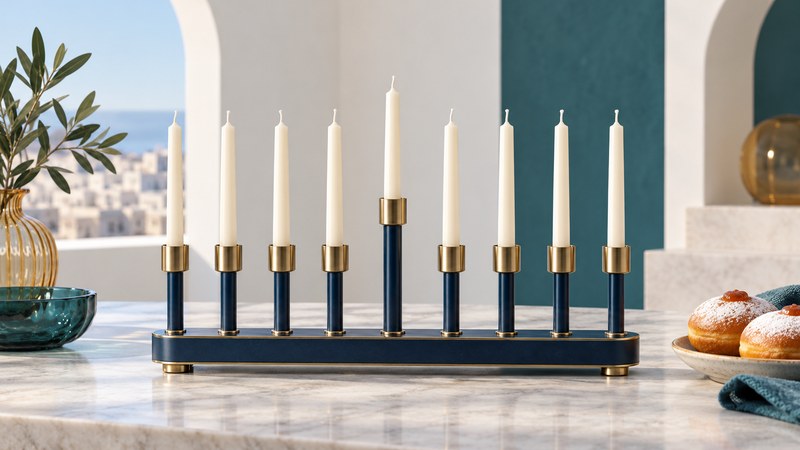
Hanukkah, also spelled Chanukah, is the eight-day Jewish festival associated with the rededication of the Temple in Jerusalem. Its most recognizable practice is lighting an increasing number of lights over eight nights. Understanding the calendar, the lamp, and the stories behind the festival makes a family gathering or community celebration easier to appreciate.
Hanukkah dates: check the year and the evening
Hanukkah 2026: begins at sundown on Friday, December 4, and ends at nightfall on Saturday, December 12. The first night’s lighting is on Friday before sundown because of Shabbat. These dates are for 2026; use Hebcal’s Hanukkah calendar for another year and local timing information.
The festival begins on 25 Kislev in the Jewish calendar. Its Gregorian dates change from year to year. An evening event belongs to the night beginning then: the first lighting in 2026 is on December 4, even though much of the first daytime observance falls on December 5. Recording “starts at sundown” avoids that common scheduling ambiguity.
Exact candle-lighting times depend on location, weekday, and community custom. When planning to join someone’s observance, use the host’s time. The Jewish holiday calendar guide explains evening beginnings and the wider annual cycle.
Historical setting and religious memory
Hanukkah recalls the Maccabean revolt against Seleucid rule in the second century BCE and the rededication of the Jerusalem Temple. Jewish religious tradition also tells of a small supply of ritually suitable oil that lasted eight days. Historical accounts of the conflict and the later religious account of the oil answer different questions: one concerns events and power, while the other shapes the festival’s ritual memory and meaning.
The Pluralism Project’s Hanukkah introduction describes the themes of rededication, religious freedom, and the miracle of the oil. Families and teachers emphasize these themes in different ways. When hearing an explanation, notice whether the speaker is recounting history, teaching a religious tradition, or reflecting on its meaning today.
Hanukkah’s visibility in December can make it seem representative of the whole Jewish year. Its place becomes clearer alongside Shabbat, the High Holidays, Passover, and other observances. Its religious work restrictions also differ from those of major festivals, though Shabbat retains its own requirements when it falls during Hanukkah.
Understand the Hanukkah lamp
A Hanukkah lamp, often called a hanukkiah or Hanukkah menorah, has eight festival lights and a separate helper light, the shamash. One festival light is kindled on the first night, two on the second, and so on. The shamash is additional to that count. This differs from the seven-branched Temple menorah.
| Night | Evening date | Festival lights | Timing note |
|---|---|---|---|
| 1 | Friday, December 4 | 1 | Before sundown; confirm the local pre-Shabbat time. |
| 2 | Saturday, December 5 | 2 | After Shabbat ends; follow community guidance. |
| 3 | Sunday, December 6 | 3 | Evening, according to custom. |
| 4 | Monday, December 7 | 4 | Evening, according to custom. |
| 5 | Tuesday, December 8 | 5 | Evening, according to custom. |
| 6 | Wednesday, December 9 | 6 | Evening, according to custom. |
| 7 | Thursday, December 10 | 7 | Evening, according to custom. |
| 8 | Friday, December 11 | 8 | Before sundown; festival continues through Saturday nightfall. |
Use the table to understand the sequence; obtain ritual instructions from the tradition you follow. Chabad’s menorah-lighting guide gives a detailed Orthodox/Chabad explanation, including blessings and special Shabbat considerations. Other communities may follow different timing or household customs.
Foods, games, and family customs
Foods cooked in oil, such as potato latkes and filled doughnuts called sufganiyot, recall the oil tradition. Dreidel is a spinning-top game, and gelt refers to money or, commonly in celebrations, chocolate coins. Gift-giving, songs, and family gatherings vary. The Pluralism Project’s account of contemporary observance gives examples of these practices.
A helpful way to learn is to ask about a particular object or recipe: “Who taught you this song?” or “Is this a family recipe?” An answer may connect a present celebration with migration, a grandparent, a local congregation, or a new family custom. Avoid assuming that an example stands for every Jewish household.
If you are organizing an educational activity, choose one clear aim: recognize the lamp’s eight-plus-one structure, understand the calendar, or explore the meaning of rededication. Give the activity’s source and describe whose custom it illustrates. A focused explanation is more useful than blending unrelated traditions into a generic winter celebration.
Join a celebration considerately
- Confirm the invitation: is this a home lighting, dinner, synagogue program, or public event? Ask when to arrive and how long to allow.
- Ask about food: check dietary needs before bringing homemade food or sweets. A host may prefer a particular packaged item or no contribution.
- Follow the host during blessings: observation can be a respectful way to participate. Ask questions at a suitable pause.
- Ask before photographing: especially during prayer or when children and guests are present.
- Keep the greeting simple: “Happy Hanukkah” is a warm starting point; let the host introduce any Hebrew wording they prefer.
Before an event: record its year, date, location, arrival time, and host contact. A copied calendar entry without its year or evening start is incomplete planning information.
Continue with Jewish holidays throughout the year, Jewish American heritage, or the religion library.