Memory determines how smoothly a mobile device switches applications, captures computational photographs, runs local artificial intelligence and preserves years of personal data. A current smartphone does not contain one undifferentiated pool of memory. It combines several technologies with different jobs: tiny processor caches, high-bandwidth working memory, persistent flash storage, secure storage and, on some devices, removable cards.
The distinction matters. Adding storage does not increase the fast working memory available to an application, and advertising part of storage as “virtual RAM” does not turn flash into physical RAM. Performance depends on capacity, bandwidth, latency, software behavior, thermal limits and the storage controller—not simply the largest number on a specification sheet.
The mobile memory hierarchy
| Layer | Purpose | Important characteristics |
|---|---|---|
| Registers and processor cache | Keep immediately needed instructions and data near CPU, GPU and AI engines | Extremely fast and small; managed mostly by hardware |
| System RAM | Holds active applications, operating-system services, camera buffers and model data | Fast, volatile and power-sensitive |
| Internal flash storage | Preserves the operating system, applications, photographs, video and documents | Nonvolatile, much larger and slower than RAM |
| Removable or external storage | Adds portable capacity for media, downloads and backups | Performance and support vary by device and card |
| Cloud storage | Synchronizes, backs up or offloads data to remote systems | Depends on network access, policy, cost, privacy and provider availability |
Data moves repeatedly through this hierarchy. Opening a game reads code and assets from flash into RAM; the processor then pulls small working sets into cache. A camera may stream sensor frames into RAM, combine them with image-processing accelerators and encode the finished photograph or video back to flash. A bottleneck at any layer can interrupt the experience.
LPDDR working memory
Phones and tablets generally use low-power double-data-rate synchronous dynamic RAM, or LPDDR. It is related to computer DDR memory but optimized for mobile power, compact packaging and high bandwidth. Modern generations improve signaling rates and introduce finer power controls, allowing the memory to sleep or lower its operating state when full performance is unnecessary.
For worked calculations that separate chip density, bus width, and package construction, continue with Inside Mobile RAM.
System-on-chip designs share this RAM among CPU cores, the graphics processor, image signal processor, neural processing unit, modem and other accelerators. Unified access avoids copying large camera frames or machine-learning tensors between separate pools, but those clients compete for bandwidth. A device can therefore have ample RAM capacity and still slow down when several engines saturate the memory interface.
Manufacturers often mount LPDDR packages above or very near the application processor using package-on-package construction. Short connections save board area and energy. Larger tablets, foldables and performance-oriented devices may use other arrangements to spread packages around the processor or improve thermal design. Unlike a laptop DIMM, mobile RAM is almost always soldered and cannot be upgraded.
How much RAM is useful?
Required capacity depends on the operating system, application mix and expected service life. Basic communication and streaming need less than high-resolution gaming, desktop-style multitasking, professional video editing or large on-device AI models. The operating system also uses spare RAM as a file cache, so “free memory” is not necessarily wasted memory.
When pressure rises, software may compress inactive pages, discard reconstructible data, suspend applications or terminate background processes. Swap can move memory pages to flash, but it has far higher latency and consumes storage bandwidth. Android marketing terms such as RAM expansion, memory extension or virtual RAM generally describe this swap-like use of internal storage. It may keep more processes from closing, but it cannot match physical LPDDR and may make a heavily swapping device feel less responsive.
Consumers should prioritize enough physical RAM for the intended workload, then consider software support and thermal performance. More RAM will not compensate for an underpowered processor, aggressive background-management policy or poorly optimized applications. Conversely, an efficient operating system can deliver a good experience with less memory.
Internal flash: NAND plus an intelligent controller
Persistent phone storage is built from NAND flash. Each memory cell stores charge, and increasingly dense designs encode multiple bits per cell. Single-level-cell flash offers exceptional endurance but low density; consumer devices more commonly use triple-level-cell NAND, while higher-density designs may use four bits per cell in some products. Manufacturers also stack many layers vertically, increasing capacity without expanding the package footprint.
Raw NAND cannot behave like a simple disk by itself. A controller corrects bit errors, maps logical addresses to physical cells, spreads writes through wear leveling, replaces failing blocks, performs garbage collection and manages a fast write cache. Spare area gives the controller room to work. As a drive fills, reduced free space and background cleanup can lower sustained performance.
Flash has finite program-and-erase endurance, but a good controller distributes normal phone workloads across many cells. Heavy continuous recording, repeated large downloads, swap activity and nearly full storage create more stress. Temperature also influences retention and aging. Backups remain essential because neither high endurance nor error correction protects against loss, impact, liquid damage, theft or controller failure.
UFS and other embedded interfaces
Universal Flash Storage, or UFS, is the dominant high-performance embedded-storage family in contemporary phones. It uses full-duplex serial links and a command queue, allowing reads and writes to proceed efficiently in parallel. Newer generations increase link speed and refine power, thermal, reliability and management features. Actual phone results remain below a headline interface maximum and depend on the NAND, controller, channel count, firmware, capacity and temperature.
Lower-cost phones, wearables and small connected devices may use embedded MultiMediaCard (eMMC), which is mature and economical but has a less capable interface. Some compact products use raw serial NAND or NOR flash for firmware. Apple and other vertically integrated manufacturers may describe storage by capacity rather than interface, but the underlying principles—managed NAND, parallelism, caching, encryption and wear management—remain similar.
| Storage choice | Strength | Typical limitation |
|---|---|---|
| UFS | High sequential and random performance, command queuing and mobile power management | Soldered capacity cannot be replaced by the user |
| eMMC | Low cost, compact integration and mature support | Lower concurrency and performance than current UFS implementations |
| microSD | Inexpensive, removable and easy to transfer or replace | Slot availability, card quality and application support vary |
| USB-C storage | Portable high capacity and useful backup or production workflows | Cable, power, file-system and physical-handling tradeoffs |
Performance is more than sequential speed
Large sequential transfers matter when recording or copying high-resolution video. Random input/output matters when launching applications, loading databases and updating many small files. Latency affects how quickly work begins, while queue depth describes how many requests are outstanding. A benchmark that writes one large file cannot predict application installation, camera capture and multitasking equally well.
Fast flash may use a portion of NAND as a pseudo-single-level-cell cache. Short bursts can look spectacular, then slow after the cache fills during a long recording or file transfer. Controllers may also throttle to protect a hot device. Meaningful testing distinguishes burst from sustained results, reads from writes, empty from nearly full storage and cool from heat-soaked operation.
Capacity itself can affect speed. A higher-capacity model may contain more NAND dies and operate across them in parallel, although manufacturers are not obliged to use identical components across every capacity or production run. Buyers should not assume that two phones with the same storage label have identical sustained behavior.
Camera, gaming and on-device AI workloads
Computational photography is memory-intensive. Multi-frame noise reduction, high dynamic range, portrait segmentation and night modes may retain several full-resolution frames in RAM. Burst photography and high-bitrate video require fast sustained writes. ProRes, RAW, 8K and high-frame-rate modes can consume storage rapidly, and some devices restrict their most demanding formats to particular capacities or external drives.
Games stream textures, geometry and shaders while maintaining large working sets in shared RAM. Fast storage shortens loading, but GPU capability and memory bandwidth determine how rapidly assets can be used. Texture compression and asset streaming allow developers to balance quality against capacity.
On-device generative AI adds model weights, key-value caches and temporary tensors. Quantization reduces the number of bits used for weights and can make a model smaller and faster. Distillation, sparsity and mixture-of-experts routing reduce other costs. Even so, large language, image and multimodal models increase pressure on both RAM capacity and bandwidth. Systems may divide work between local accelerators and cloud services based on model size, latency, privacy, connectivity and energy.
Removable memory after RS-MMC
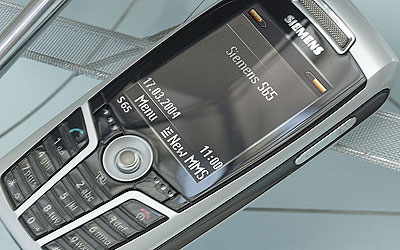
The original version of this article described a 32-megabyte Reduced Size MultiMediaCard bundled with the Siemens S65 in 2004. RS-MMC and its successors disappeared as microSD became the dominant removable format. At the same time, many flagship phones removed card slots to save internal volume, simplify waterproofing, encourage fixed-capacity sales and guarantee a known storage-performance envelope. Cards remain common in some budget phones, rugged devices, cameras, gaming handhelds and specialized equipment.
For a practical card choice and read-back procedure, see phones with microSD: compatibility and file checks.
Capacity markings describe addressable space, while speed markings describe different guarantees. Traditional Speed Class, UHS Speed Class and Video Speed Class focus on minimum sustained sequential writing. Application Performance classes add minimum random-input/output requirements. A fast card cannot exceed the phone's host interface, and counterfeit cards may report a capacity they do not physically contain.
SD Association capacity standards define SDXC above 32 GB through 2 TB and SDUC above 2 TB through 128 TB; those are format limits, not a promise that every capacity is commercially available or supported by a particular phone. The host, operating system and file system must all support the card.
microSD Express brings PCI Express and NVMe concepts to the removable form factor. Current specifications provide speed classes for minimum read/write performance and retain a legacy path for compatibility in appropriate implementations. The SD Association's current technical papers describe removable-NVMe use in mobile computing. Adoption in mainstream phones depends on controller cost, power, heat, physical space and manufacturer priorities; specification capability should not be mistaken for widespread handset support.
Security and privacy
Mobile operating systems encrypt user data, commonly with keys protected by secure hardware and the user's credential. File-based encryption can assign different keys or availability rules to different data classes. Secure elements, trusted execution environments and replay-protected storage support device credentials, biometrics, payment tokens and rollback protection. The exact architecture varies by platform.
Encryption protects a locked device, but it does not replace access control, updates or backups. Malware running with permission can read data after unlock. A factory reset typically destroys encryption keys and makes ordinary recovery impractical, though organizations handling sensitive material may require documented sanitization or physical destruction. Removing a microSD card can expose its contents unless the card was encrypted in a portable or device-bound mode.
Storage also holds security-sensitive metadata such as boot verification state, rollback counters and authentication secrets. Standards include replay-protected memory blocks for authenticated, freshness-protected records. Consumers normally do not interact with these regions, but their correct implementation helps prevent an attacker from restoring an older vulnerable state.
Reliability, repair and data retention
Modern flash continuously corrects errors, yet retention is not infinite. A powered controller can refresh weak data; a phone left unpowered for years in heat is a poor archive. Important photographs should exist in at least two independent places, with one copy outside the phone. Cloud synchronization is convenient but can propagate accidental deletion, so a separate versioned backup is valuable.
Use the phone-data inventory and transfer checks to confirm what has been copied and what still needs a recoverable backup.
Soldered storage makes compact, fast designs possible but complicates repair. When the main board fails, encrypted NAND often cannot simply be moved to another board because its keys are bound to secure hardware. Regular backup is far more dependable than post-failure recovery. Removable storage improves replacement and transfer, although the card slot itself does not make application data portable across every device.
Choosing capacity intelligently
| Use pattern | Memory pressure | Planning consideration |
|---|---|---|
| Calls, messaging, web and streaming | Moderate RAM; modest local storage | Allow room for updates, caches and several years of photos |
| Frequent photography and offline media | Storage capacity and sustained write speed | Estimate annual capture, downloads and backup habits |
| Gaming and heavy multitasking | RAM capacity, bandwidth, random storage and cooling | Check sustained performance, not only peak benchmarks |
| Professional video and RAW capture | Very high capacity and sustained throughput | Confirm format-specific limits and external-storage support |
| Local AI and long service life | Growing RAM and storage requirements | Leave headroom for larger models, applications and operating systems |
Advertised capacity is not wholly available to the user: decimal marketing units, formatting, the operating system, recovery partitions and preinstalled applications consume space. Updates and temporary files need working room. Keeping a reasonable free-space margin helps flash management and avoids failed camera captures or system upgrades.
For a device expected to last many years, buy for future software and personal-data growth rather than today's minimum. Confirm whether the model supports removable or USB storage, which file systems and capacities it accepts, and whether applications can actually use external media. Physical RAM, internal-storage capacity and cloud allowance solve different problems and should be evaluated separately.
Where mobile memory is heading
The direction is toward higher LPDDR bandwidth, denser vertically stacked NAND, faster managed storage and tighter integration around the application processor. Controllers are using stronger error correction and more sophisticated workload management as cells store more bits. Chiplet and advanced-package techniques may eventually give high-performance mobile computers new ways to place memory near accelerators, while efficient compression and software scheduling remain essential to control energy.
For a contrasting historical storage design, explore the Samsung V5400 and its miniature hard drive. The example separates a capacity figure from the mechanical system that supplies it.
AI will increase demand but also help manage it: operating systems can predict which applications and files to retain, compress or prefetch. Storage-class innovations and removable NVMe formats may widen design choices, though power and thermal budgets will continue to distinguish phones from desktop computers.
The extraordinary change since the 32 MB RS-MMC is not capacity alone. Mobile devices now treat memory as a coordinated system serving cameras, radios, graphics, security and machine intelligence. The best design balances speed, endurance, energy, repairability, privacy and cost across the entire hierarchy.