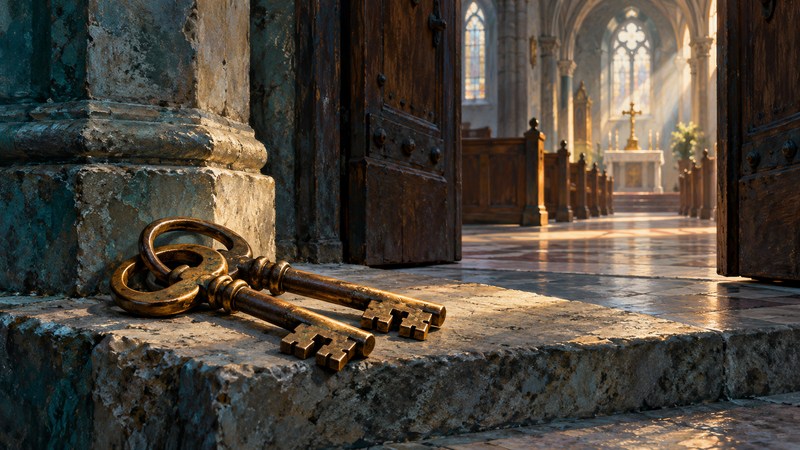
There is no doubt, and in fact it has been known in all ages, that the holy and most blessed Peter, prince and head of the Apostles, pillar of the faith, and foundation of the Catholic Church, received the keys of the kingdom from our Lord Jesus Christ, the Savior and Redeemer of the human race, and that to him was given the power of loosing and binding sins: who down even to today and forever both lives and judges in his successors. The holy and most blessed pope Celestine, according to due order, is his successor and holds his place, and us he sent to supply his place in this holy synod, which the most humane and Christian Emperors have commanded to assemble, bearing in mind and continually watching over the Catholic faith. For they both have kept and are now keeping intact the apostolic doctrine handed down to them from their most pious and humane grandfathers and fathers of holy memory down to the present time.
Council of Ephesus (431) - the opening words of Philip, the papal legate
Further reading
Philip’s speech at Ephesus connects Peter’s role with the succession of the bishop of Rome. Stephen K. Ray’s Upon This Rock offers a Catholic study of the scriptural and early Christian evidence for that connection.