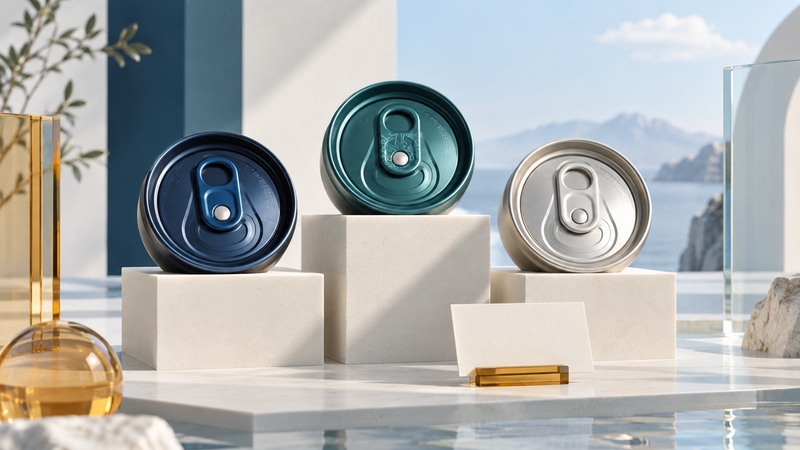
A promotional can tab gives a beverage brand a small, highly constrained place for color, a symbol or a code. Begin with the desired action—recognition, a short message or participation in an offer—then ask the supplier which decoration process and can-end system can deliver it reliably.
Choose the message before the process
Ball’s beverage ends and tabs range includes colored, punched and laser-marked options, including codes beneath tabs. These are supplier capabilities to discuss for a particular order; the page supplies no universal minimum artwork size, production quantity or compatibility guarantee.
On narrow screens, scroll the table sideways. Keyboard: focus the table and use the arrow keys.
| Format | Useful purpose | Question for the supplier |
|---|---|---|
| Colored tab or end | Carry a recognizable color through the package | Which colors and finishes are available for this end family? |
| Punched tab design | Present a simple shape within the tab | Which geometry preserves the required functional areas? |
| Laser-marked symbol or text | Add a compact mark or short message | What detail remains legible on the production material? |
| Code under the tab | Reveal an identifier after opening | How are code generation, placement and readability verified? |
Choose one primary purpose. A tab that tries to carry a logo, instructions and a long code may leave all three difficult to read. Put supporting explanations on the can body or another suitable surface and reserve the small area for the element that needs to be there.
Start the brief with the actual package
Identify the can size, end specification, filling partner and intended market. Ask the end supplier and filler to confirm compatibility with the planned production line. A visually similar tab can belong to a different assembly, so artwork approval and functional approval need their own evidence.
Provide the artwork in the supplier’s requested format and ask for the allowed decoration boundary. Include orientation: what should face the consumer before opening, and what should become visible afterward? State whether a symbol must remain recognizable when rotated and how it relates to the main label.
Request the actual production limits for line thickness, character size, spacing and contrast. Keep those written requirements with the approved file version. Generic dimensions taken from another supplier can cause a preventable redesign.
Review samples as a user would encounter them
Evaluate supplier-approved samples on the intended can end and finish. Look under ordinary lighting, at the viewing angle expected during use, and with realistic condensation. Check the mark before and after opening. Record which sample and artwork revision each observation refers to.
For functional performance, ask the supplier and filler what tests and acceptance criteria apply to the complete end assembly. The brief should require confirmation of opening performance and production suitability; an attractive mockup establishes visual intent only.
Separate a readable code from a workable participation route. Someone must be able to find the instructions, enter the code, understand an error and complete the intended action. Test ambiguous characters, damaged codes, repeated submissions and the support route. Provide a practical alternative when a consumer cannot read or use the tiny marking.
Design the code experience before ordering
Decide whether codes are shared campaign identifiers or unique tokens. A shared code can direct people to information; a unique code may support a redemption workflow but introduces generation, validation and duplicate-handling work. Specify who owns each step and how sample codes are kept out of the live campaign.
Write the opening and closing dates, eligibility, redemption conditions and any data collection clearly in the appropriate campaign materials. Have the responsible team review the offer for its market. Confirm that the landing page and support process will remain available for the stated period, including a useful message after the offer ends.
Measure the action you actually observed
Fictional example: a campaign distributes 12,000 coded cans, records 900 landing-page visits and completes 180 redemptions. Visits divided by cans is 7.5%. Redemptions divided by visits is 20%; redemptions divided by cans is 1.5%.
Those denominators tell different stories. Visits may include repeat visitors, and distributed cans may include unsold or unopened stock. Label the measures exactly as collected before calling them participation or conversion rates. To attribute an improvement to the tab itself, plan a suitable comparison instead of relying only on a campaign total.
Use the can-tab production brief to capture package identity, artwork, sample approval, functional evidence and campaign ownership. For a broader example of interactive package design, continue with programmable beverage containers.