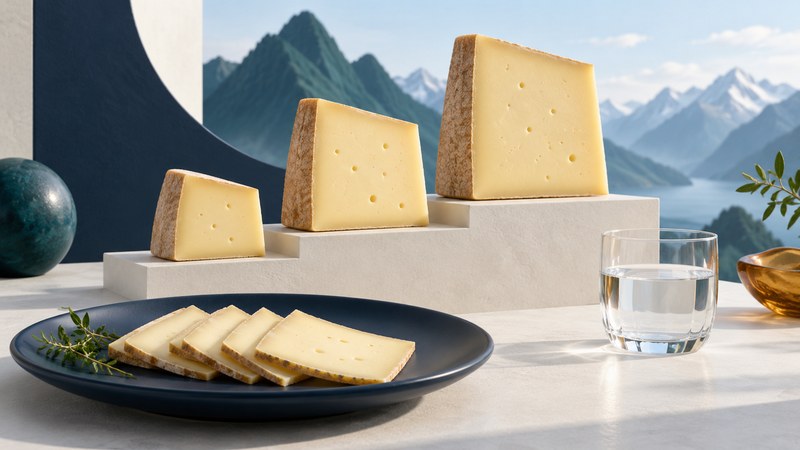
Choose Appenzeller by the named product and maturation information on the piece you can buy. A label color can help identify a range, but the full description is the useful starting point for a tasting, sandwich or cooked dish.
Identify the cheese behind the label
the Silver Label factsheet (PDF) places the production area in the two Appenzell cantons and parts of St. Gallen and Thurgau in northeastern Switzerland. It describes a hard cheese made from raw cow’s milk, with a natural rind and a few small holes. The factsheet also explains that the wheel’s casein mark carries traceability details, including the dairy and production date. Ask to see the original identification when buying a cut piece.
The maker attributes Appenzeller’s character to repeated care with an herbal brine during maturation. The exact product name and age matter more to a shopper than attempting to guess that proprietary recipe from the aroma.
Use the range as a comparison guide
On a narrow screen, focus the table and use the arrow keys to scroll.
| Label | Stated maturation | A question for your tasting |
|---|---|---|
| Silver | 3 months | Does this give the gentler everyday bite you want? |
| Gold | 4–5 months | How does the longer finish compare with Silver? |
| Black | 6–8 months | Would you prefer smaller, more assertive bites? |
| Purple | 9–12 months | Does the complexity suit a tasting or finishing accent? |
The ages above come from Appenzeller’s English range guide (PDF), consulted October 4, 2026. Product sheets and market ranges can use different age presentations; use your actual package for the cheese in front of you. The questions are tasting prompts, not a guarantee of your preference. Specialty products, including the maker’s raclette cheese, should be identified separately from the classic range.
Compare two pieces before buying a large wedge
Choose two named products with a useful contrast. Cut similarly sized pieces, keep their labels matched and begin with plain bread and water. Describe firmness, how easily a slice bends or breaks, the first flavor and the aftertaste. Then decide which one you would put in a sandwich and which you would serve in small bites.
Illustrative three-person tasting: 15 g of each of two cheeses per person uses 90 g total: 3 × 2 × 15 g. Buy practical counter portions and plan any excess separately. A smaller tasting can answer the question just as well if the shop sells limited sizes.
Choose a method that fits the product
For a cold sandwich, try thin, even slices on the bread you intend to use. For a cooked dish, follow a recipe written for Appenzeller or the specifically named product, keeping the cheese quantity and preparation form intact on the first attempt. The official range brochure includes cooking ideas; check the complete ingredient list and method before shopping.
Substituting a different Swiss cheese changes flavor, moisture and handling. Decide which property matters: a clean slice, a robust finishing taste or melting in a specified method. Test a small serving before adapting the whole dish. The fondue guide explains why a measured cheese blend, liquid and heat sequence belong together.
Keep the next use in view
Ask the seller about rind treatment and remove any nonfood identification material before serving. Keep the original label with the remaining portion and follow its storage directions. FDA refrigerator guidance recommends 40°F (4°C) or below for refrigerated food.
Because the maker identifies Appenzeller as a raw-milk cheese, readers planning food for people at increased risk of Listeria should consult CDC’s safer food choices. The guidance includes pasteurized hard cheeses among safer choices and advises avoiding unheated raw-milk cheeses. Choose for the people at the table as well as the flavor you want.