Micro-fabrication process control in 2026 is still semiconductor-led. That is where the public tooling, papers, and case studies are richest, and where the cost of nanometer-level drift is high enough to justify extremely sophisticated control loops. But the same patterns increasingly matter across MEMS, photonics, advanced packaging, microfluidics, and other precision manufacturing domains where feature sizes are tiny and process windows are unforgiving.
The important shift is not that AI has replaced statistical process control or classical APC. It has become an additional modeling layer on top of them: estimating metrology results without measuring every wafer, detecting drift earlier, ranking likely root causes, improving inspection and wafer-map analysis, and accelerating recipe development and simulation. The stronger systems are narrow, data-rich, and tightly connected to real process constraints.
This update reflects the category as of March 15, 2026. It focuses on the parts of the stack that are actually shaping modern micro-fabrication control: advanced process control, virtual metrology, inspection AI, lithography alignment, equipment analytics, fab scheduling, and digital twins for faster what-if analysis.
1. Real-time Adaptive Process Control
The strongest 2026 pattern is AI augmenting, not replacing, classical control. In fine-feature manufacturing, process windows are too tight to rely only on fixed recipes or simple linear adjustments. Modern advanced process control layers increasingly use machine learning to estimate nonlinear process behavior, update setpoints faster, and keep the line closer to target as material, chamber, or tool conditions shift.
The clearest public signal here is that AI is being used to extend established control practice where nonlinear effects matter most. IEEE work on neural-network APC showed better modeling of complex process behavior than older linear approaches, and the 2023 Nature paper on human-machine collaboration in semiconductor process development showed a hybrid strategy could cut cost-to-target by half. Inference: the 2026 win condition is tighter, faster control and tuning, not autonomy for its own sake.
2. Predictive Yield Optimization
Yield work is moving upstream. Instead of waiting for end-of-line results to confirm that something went wrong, fabs increasingly use predictive analytics to estimate yield risk earlier from process, metrology, and contextual signals. The practical value is not just forecasting a bad outcome. It is surfacing enough lead time to change sampling, inspect the right lots, or tune the process before the loss spreads.

Lee and Roh's explainable yield-prediction framework explicitly combines diverse fabrication data with XAI so teams can see which signals are driving the forecast, while Nakata and coauthors showed how fab-scale data monitoring can support yield enhancement across semiconductor processes. Together they capture the modern pattern: yield improvement is less reactive than it used to be because prediction and explanation are happening earlier in the flow.
3. Defect Detection and Classification
Inspection AI is no longer only about finding a bad site. It is about identifying the defect type quickly enough to influence process control while the signal is still useful. That is why computer vision and learned wafer-pattern representations matter so much in micro-fabrication: they help connect visual symptoms to likely process causes instead of treating inspection as a disconnected downstream gate.

Recent literature on semiconductor defect classification and wafer-pattern representation points in the same direction: inspection is becoming more data-rich, more automated, and more tightly linked to yield learning. My inference from the 2025 review and newer representation-learning work is that inspection AI is increasingly acting as a front-end to process control rather than as a separate quality function.
4. Virtual Metrology and Reduced Measurement Overhead
Virtual metrology remains one of the clearest examples of AI adding immediate operational value. Instead of measuring every wafer or every lot physically, the fab uses process and equipment data to estimate likely metrology results and then decides where direct measurement is still worth the time, tool capacity, and interruption. The goal is not to eliminate measurement. It is to spend it more intelligently.
The virtual metrology literature is mature enough to show the operational pattern clearly. Kang and colleagues framed virtual metrology as a way to predict wafer measurements from process data, and later IEEE work used it to guide sampling decisions instead of measuring everything. That remains the 2026 point: not removing metrology, but deciding when the model is trustworthy enough to reduce measurement load without losing control.
5. Automated Parameter Optimization
Parameter optimization is where AI is especially useful because modern micro-fabrication recipes can involve too many interacting variables for clean one-factor-at-a-time tuning. Instead of brute-force experimentation, teams increasingly use optimization algorithms to search promising regions of the recipe space, learn from limited trial data, and converge faster on acceptable windows for yield, uniformity, and throughput.

The 2023 Nature paper on semiconductor process development is still one of the clearest public demonstrations here. Its result was not that the algorithm outperformed human engineers at every stage. It was that humans and algorithms were strong at different stages, and a human-first/computer-last strategy reduced the cost of reaching the target by about half. That is a much more believable model for 2026 process optimization than the story of fully automated discovery.
6. Predictive Maintenance of Equipment
Public fab evidence is richer on yield and inspection than on predictive maintenance, but the analytic direction is still clear. The same sensor-rich monitoring layers used for process control are increasingly used to watch equipment state, distinguish tool changes from normal variation, and plan intervention before a fault becomes a yield excursion. In fabs, maintenance analytics and process analytics are converging.
Although the public record is lighter on fab-specific maintenance metrics, Nakata's comprehensive monitoring system and earlier machine-learning fault detection in semiconductor processes show how multi-signal models can detect abnormal behavior before it becomes a major process event. My inference is that predictive maintenance in micro-fabrication is becoming less of a separate discipline and more of an extension of fab-wide anomaly and drift monitoring.
7. Intelligent Job Scheduling and Resource Allocation
Micro-fabrication control does not stop at the chamber wall. In high-volume fabs, dispatching, queue control, tool sharing, and re-entrant flows have a major effect on cycle time and capacity. AI scheduling matters because it helps the fab react to congestion, tool availability, and changing priorities without relying only on static dispatch rules that can leave hidden bottlenecks untouched.

IEEE conference work on optimized scheduling in complex semiconductor equipment and machine-learning productivity opportunities in fabs makes the same point from two angles: scheduling remains a real leverage point even in mature facilities. The key 2026 insight is that dispatching, queue control, and tool-level constraints are now part of the AI control conversation, not just separate manufacturing-execution logic.
8. Early Process Drift Detection
Process drift rarely shows up first as one dramatic failure. It more often appears as a small deviation distributed across sensor traces, metrology estimates, and output quality. That is why model monitoring and drift monitoring matter so much in micro-fabrication. The aim is to catch weak signals early enough that the fab can respond before a large excursion forces scrap or rework.

The combination of fab-wide monitoring and semiconductor fault-detection methods is useful here because it helps distinguish genuine drift from transient noise. Inference: drift detection has become a model-monitoring problem as much as an equipment problem. As fabs add more virtual metrology, APC, and learned inspection layers, staying aligned to changing physical reality becomes part of the core control task.
9. Rapid Root Cause Analysis
When yield drops or patterned defects appear, the problem is not only detecting the issue. It is shrinking the search space fast enough that engineers can act while the evidence is still fresh. AI helps root-cause analysis by connecting wafer-map patterns, equipment histories, process context, and prior excursions so engineers can move from symptom to likely cause more quickly.

Wafer-map failure pattern recognition and fab-wide monitoring are especially powerful together because they connect spatial symptom patterns to likely process context. Instead of starting from scratch after a yield excursion, engineers can search known map patterns and connected equipment data much faster. That is a more credible 2026 root-cause story than the old promise of total visibility from one interface.
10. Equipment Health Monitoring
Classic equipment health monitoring in fabs often centered on threshold alarms and handcrafted rules. AI changes that by learning richer multivariate signatures of normal and abnormal behavior. In practice, that means tool health models can become more contextual, more classification-oriented, and more useful for separating noise from real tool-state changes that need intervention.

The older k-nearest-neighbor fault-detection work still matters because it captures the core promise of AI-enhanced equipment analytics in semiconductor manufacturing: learn normal multivariate behavior, then classify deviations earlier. What has changed by 2026 is scale and integration. Those same ideas now live inside larger monitoring systems with better fab context and faster feedback.
11. Cleanroom Environmental Control
Facility conditions are not background noise in micro-fabrication. Temperature stability, humidity, particle load, vibration, and airflow can all leak into process outcomes once features and tolerances get small enough. AI becomes useful here when the fab stops treating environmental systems as a separate facilities story and starts modeling them as inputs to process quality, metrology stability, and yield risk.

Lee and Roh explicitly include environmental and process data in yield prediction, which is a useful reminder that facility conditions are part of the manufacturing data picture rather than outside it. Combined with fab-wide monitoring work, my inference is that environmental control is becoming more model-based in advanced fabs because the signal is too consequential to treat as a separate dashboard.
12. Overlay and Alignment Enhancement in Lithography
Lithography is one of the clearest places where AI and model-based control show up in practice because alignment, imaging, and overlay errors compound so quickly at advanced nodes. The important 2026 shift is that overlay control is increasingly feedback-rich and model-heavy. Computational models, correction loops, and run-to-run adjustments all work together to hold alignment tighter as the process window narrows.
ASML positions computational lithography as a core part of pattern fidelity at advanced nodes, and IEEE work on run-to-run overlay control shows how iterative correction is used in high-volume manufacturing. Taken together, these sources show that lithography control in 2026 is increasingly model-heavy and feedback-rich, not just a one-shot exposure problem.
13. Advanced Wafer Map Pattern Recognition
Wafer maps are increasingly treated as structured process signals rather than static pictures of bad outcomes. That makes AI valuable not only for classifying known spatial patterns, but for ranking similarity, learning new representations, and feeding those patterns back into yield and root-cause workflows. In other words, wafer maps are becoming part of the fab's reasoning system.

The literature here is moving from handcrafted pattern libraries to learned representations and similarity ranking at scale. The IEEE papers on wafer-map failure recognition and representation learning, plus the 2025 review, show that wafer maps are now being treated as structured visual and process signals that can feed yield, classification, and root-cause loops.
14. Neural Network-Based APC (Advanced Process Control)
Neural models matter in APC because many micro-fabrication processes are multistep, nonlinear, and history-dependent in ways that simple models flatten too aggressively. That does not mean every control loop becomes a deep net. It means fabs increasingly borrow from modern ML when conventional controllers or linear surrogates stop describing the process well enough to hold tight targets.

The IEEE APC paper and the 2022 sequential residual learning paper both show why neural methods matter in semiconductor manufacturing: they capture nonlinear interactions and accumulated error better than simpler one-step approximations. The practical implication is not that fabs abandon process engineering. It is that APC layers are drawing more from modern ML where the physical process is too coupled or too deep for older abstractions.
15. Accelerated Process Simulation
Simulation is becoming more central to micro-fabrication control because recipe development, process windows, and lithography behavior are too expensive to explore only with physical wafers. AI helps when it makes those simulations faster, more interactive, or easier to connect to engineering workflows. That often means using learned surrogates, more selective experimentation, and richer digital-twin interfaces instead of waiting on long standalone simulation cycles.

NVIDIA's Blackwell announcement and Siemens' Teamcenter Digital Reality Viewer both point to the same structural change: higher-fidelity simulation and digital-twin interaction are becoming fast enough to sit closer to working engineering loops. NIST's digital-twin framework and credibility paper are the necessary counterweight. Faster simulation is useful only if teams remain explicit about validation and uncertainty.
16. Cross-Parameter Correlation Discovery
Some of the highest-value gains in micro-fabrication come from finding which small signals matter together. AI is good at this because it can search relationships among process variables, metrology features, and environmental inputs that are too numerous or too weak to isolate cleanly by hand. That makes it easier to find the combinations worth controlling instead of chasing one variable at a time.

Explainable yield prediction and fab-scale monitoring make it easier to identify which variables matter together rather than only in isolation. That is one reason cross-parameter discovery is becoming more operational: engineers can move from "the model predicted a problem" to "these signals are interacting in a way worth controlling." The technical shift is as much about explanation as prediction.
17. Self-Calibration of Metrology Tools
Metrology is part of the control loop, so better measurement is itself a process-control improvement. As features shrink, fabs need not only more measurement but more trustworthy measurement. AI becomes useful here when it improves imaging, positioning, reconstruction, or calibration quality enough that the metrology layer can stay accurate without as much manual intervention or guesswork.
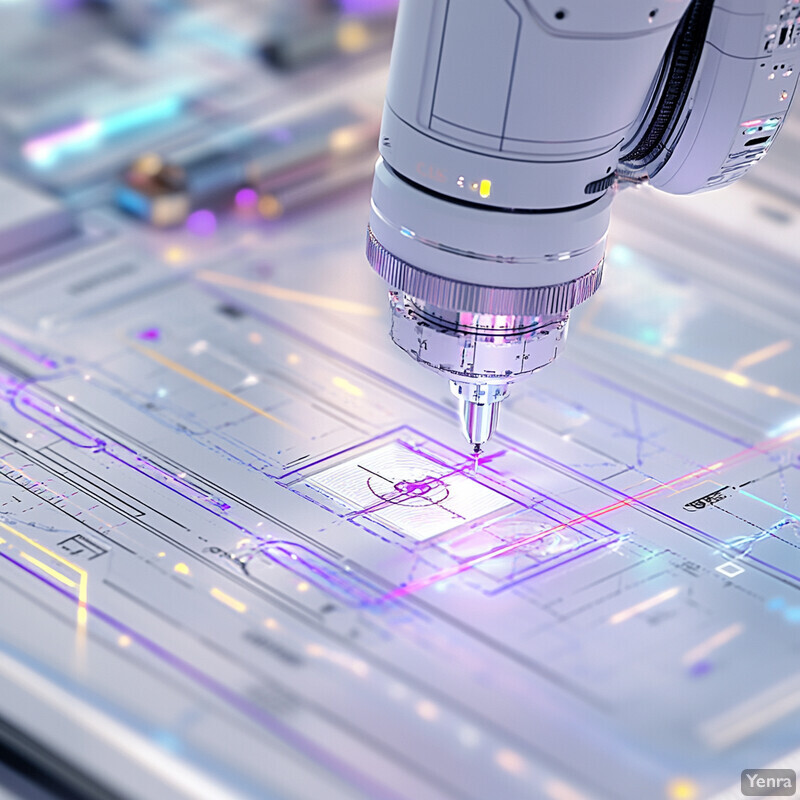
Recent SPIE work on AI-powered deconvolution and precise stage positioning for semiconductor OCD metrology shows that AI is now affecting the metrology layer itself, not just the process layer around it. The takeaway is important: as dimensions tighten, micro-fabrication control depends just as much on trustworthy measurement as on better recipes.
18. Enhanced Fault Detection and Classification (FDC)
Traditional FDC in fabs is often rule-heavy and threshold-heavy. AI-enhanced FDC becomes more useful when it learns multivariate normal behavior, detects deviations earlier, and suggests which class of fault is most likely. That reduces the number of noisy alerts operators have to ignore and increases the chance that a real fault is caught before it becomes a large excursion.

The classic 2007 k-nearest-neighbor paper still captures the core promise of AI-enhanced FDC in semiconductor manufacturing: model normal multivariate behavior, then classify deviations earlier. What changes by 2026 is the surrounding context. Those ideas now sit inside larger fab monitoring systems that combine more sources and shorten the time from alert to likely diagnosis.
19. Dynamic Recipe Tuning
Dynamic recipe tuning is a more believable description of modern AI control than "self-driving fabs." Good systems do not reinvent the process from scratch on every lot. They make bounded adjustments when fresh measurements, overlay results, or model state suggest that the baseline recipe is no longer ideal. In tight micro-fabrication windows, those small corrections can matter a great deal.
Run-to-run overlay control in high-volume manufacturing and the Nature human-machine collaboration paper both support a more grounded recipe-tuning story. The best systems do not guess wildly. They use tight feedback, constrained optimization, and targeted adjustments where new data suggests the current settings are drifting away from the desired outcome.
20. Integration with Digital Twins
Digital twins are becoming more relevant to micro-fabrication not because fabs suddenly have perfect virtual replicas of everything, but because simulation, process data, and what-if analysis are moving closer together. When recipe changes, scheduling rules, or equipment strategies can be tested in a more credible virtual environment first, the fab can learn faster with less production risk.
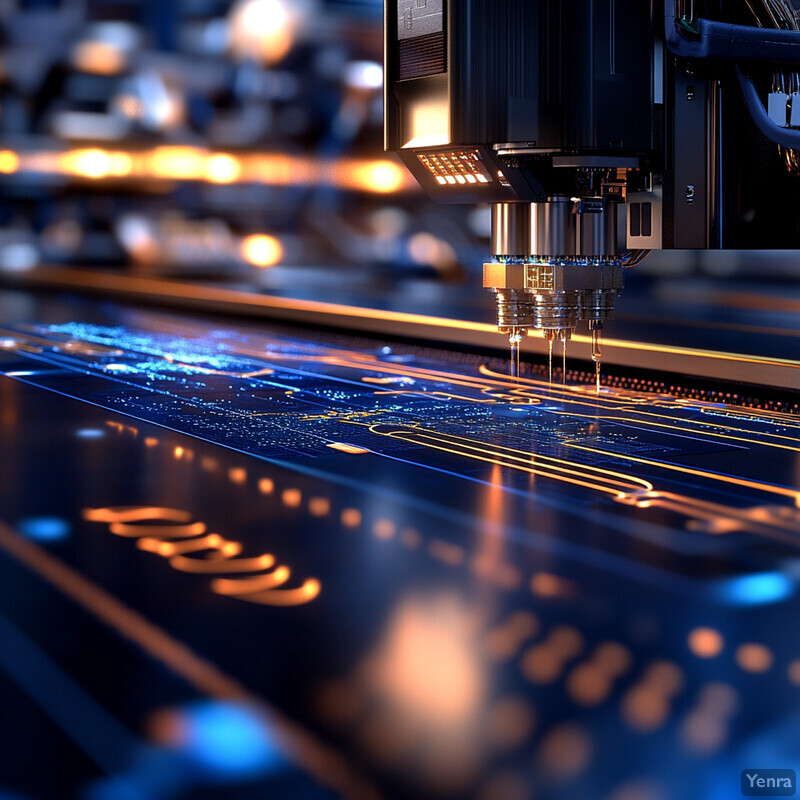
NIST's manufacturing digital-twin work, Siemens' digital-twin releases, and NVIDIA's real-time digital-twin push together suggest where advanced fabs are headed: tighter coupling between process data, simulation, and what-if analysis. The meaningful shift is not a perfect virtual fab. It is faster validation of scheduling, recipe, and equipment decisions before they hit expensive production.
Sources and 2026 References
- Nature: Human-machine collaboration for improving semiconductor process development.
- IEEE: Neural Network Modeling for Advanced Process Control Using Production Data.
- MDPI: An Expandable Yield Prediction Framework Using Explainable Artificial Intelligence for Semiconductor Manufacturing.
- IEEE: A Comprehensive Big-Data-Based Monitoring System for Yield Enhancement in Semiconductor Manufacturing.
- Elsevier: A virtual metrology system for semiconductor manufacturing.
- IEEE: Sampling Decision System in semiconductor manufacturing using Virtual Metrology.
- IEEE: Fault Detection Using the k-Nearest Neighbor Rule for Semiconductor Manufacturing Processes.
- IEEE: Machine Learning for Optimized Scheduling in Complex Semiconductor Equipment.
- IEEE: The productivity opportunities by applying machine learning algorithms in a fab.
- ASML: Computational lithography.
- IEEE: CPE run-to-run overlay control for High Volume Manufacturing.
- IEEE: Wafer Map Failure Pattern Recognition and Similarity Ranking for Large-Scale Data Sets.
- IEEE: Representation Learning for Wafer Pattern Recognition in Semiconductor Manufacturing Process.
- Elsevier: Review: Application and development of machine learning in semiconductor manufacturing for automated wafer map pattern recognition and classification.
- IEEE: Sequential Residual Learning for Multistep Processes in Semiconductor Manufacturing.
- SPIE: AI-powered deconvolution-based super-resolution imaging for semiconductor OCD metrology and precise stage positioning.
- NIST: Framework for a Digital Twin in Manufacturing.
- NIST: Credibility Consideration for Digital Twins in Manufacturing.
- Siemens: Siemens to deliver photorealism-enhanced digital twin with NVIDIA Omniverse and Teamcenter Digital Reality Viewer.
- Siemens: Siemens unveils technologies to accelerate the industrial AI revolution at CES 2026.
- NVIDIA: NVIDIA Blackwell Accelerates Computer-Aided Engineering Software by Orders of Magnitude for Real-Time Digital Twins.
Related Yenra Articles
- Semiconductor Defect Detection goes deeper on the inspection and pattern-recognition side of process control.
- Digital Twin Modeling in Manufacturing extends this topic into virtual validation, simulation, and plant-level what-if analysis.
- Industrial Robotics adds the automation layer that increasingly executes and validates many of these control decisions.
- Predictive Maintenance for Wind Turbines shows the same monitoring and drift-detection logic in another high-value industrial setting.