Generative design in architecture gets stronger when it is treated as bounded option generation rather than automatic authorship. In 2026, the most credible systems help architects define goals, constraints, and site rules, then explore many viable options without breaking the link to buildability, carbon, code, coordination, or user experience.
That matters because early architectural decisions now carry more downstream consequence than ever. Massing, circulation, facade logic, structure, material assemblies, and program placement all shape energy use, permitting, cost, and construction complexity. AI helps by compressing search, surfacing tradeoffs faster, and keeping more of the workflow connected to parametric design, building information modeling, and performance review.
This update reflects the field as of March 21, 2026. It focuses on the parts of the category that feel most real now: many-objective search, context-aware layouts, early code triage, BIM handoff, facade and material optimization, reuse-first workflows, human-centered evaluation, and immersive review that still behaves like a decision-support system rather than a one-click building generator.
1. Parametric Form Generation
AI-supported form generation is strongest when it works through editable relationships rather than frozen images. The point is not to let software invent arbitrary shape, but to let architects explore more geometric options inside a clear parametric design framework.

Ko, Ajibefun, and Yan showed that large-language-model assistance can speed scripting and 3D option generation inside parametric and BIM workflows, while Autodesk's current architecture guidance still centers editable model-based design rather than image-only ideation. Inference: the strongest form generators in 2026 are the ones that keep geometry rule-driven and revisable after the first prompt, because that is what makes the output useful for actual design development.
2. Multi-Objective Optimization
Generative design becomes meaningfully architectural when it balances several goals at once instead of maximizing one metric in isolation. Teams need options that trade off daylight, adjacency, views, circulation, privacy, density, and cost together.

Project Discover remains one of the clearest architectural examples of multi-objective generative search, and Autodesk's 2024 quality-diversity plus language-model work shows the field moving toward diverse datasets that still obey textual and geometric constraints. Inference: the category is strongest where architects can navigate good tradeoff sets rather than accept a single optimized answer.
3. Context-Aware Design
Context-aware generation matters because a building is never designed on a blank page. Site geometry, climate, neighboring massing, access, and zoning rules all need to shape the option space from the beginning.

Autodesk's current schematic-design and environmental-analysis tooling emphasizes terrain, solar exposure, roads, surroundings, and early performance context inside concept workflows, while recent reviews identify site layout and exterior design as major application areas for generative AI in the built environment. Inference: context-aware design is now strongest when environmental and regulatory inputs define the search space before design options multiply.
4. Automated Code Compliance
Code automation gets stronger when it works as early screening, cited retrieval, and checklist support instead of pretending AI has become an authority having jurisdiction. The practical win is earlier detection of issues in egress, envelope, accessibility, or area logic.

UpCodes is now explicitly positioning Copilot around cited building-code research, while ARCEAK shows how LLM-driven rule extraction and verification can be structured around architectural knowledge. Inference: the near-term value is not autonomous permitting but AI-assisted code triage that helps architects see likely issues sooner and document their reasoning more clearly.
5. Rapid Iteration and Feedback Loops
Rapid iteration matters because concept design quality usually depends on how many options a team can compare before the project hardens. AI helps when it shortens the loop between sketch, option generation, evaluation, and revision.

DreamSketch showed the value of sketch-plus-generation interfaces well before today's GenAI wave, and current schematic-design tooling continues to emphasize quick comparison and concept revision rather than one-shot generation. Inference: what changed by 2026 is not just speed, but continuity between idea capture, option ranking, and editable model updates.
6. Building Information Modeling (BIM) Integration
Generative architecture gets much stronger when options stay attached to structured building data. If geometry cannot flow into BIM, scheduling, quantities, or downstream analysis, the workflow breaks right when a design starts becoming real.
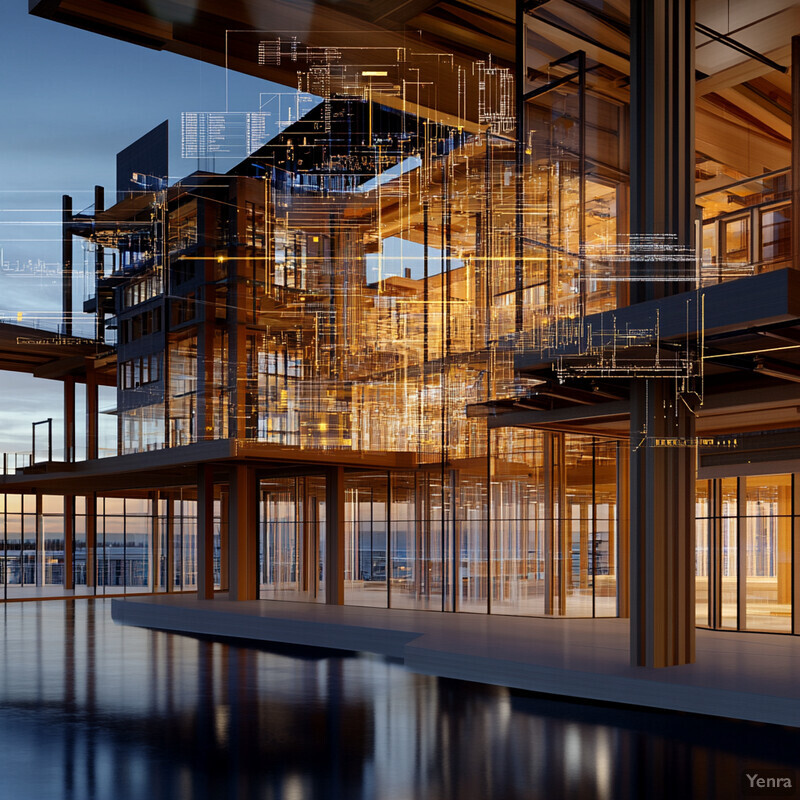
Ko et al. tie generative AI directly to parametric modeling and BIM, while buildingSMART's openBIM work remains central to keeping project data portable across applications and disciplines. Inference: BIM integration is no longer a nice-to-have; it is the difference between an inspiring option generator and a workflow that can survive coordination, documentation, and construction handoff.
7. Performance-Driven Simulations
Performance-aware generation matters because massing and planning choices affect energy, daylight, ventilation, and comfort long before specialists run a full study. AI helps by making simulation feedback available often enough to shape concept design.
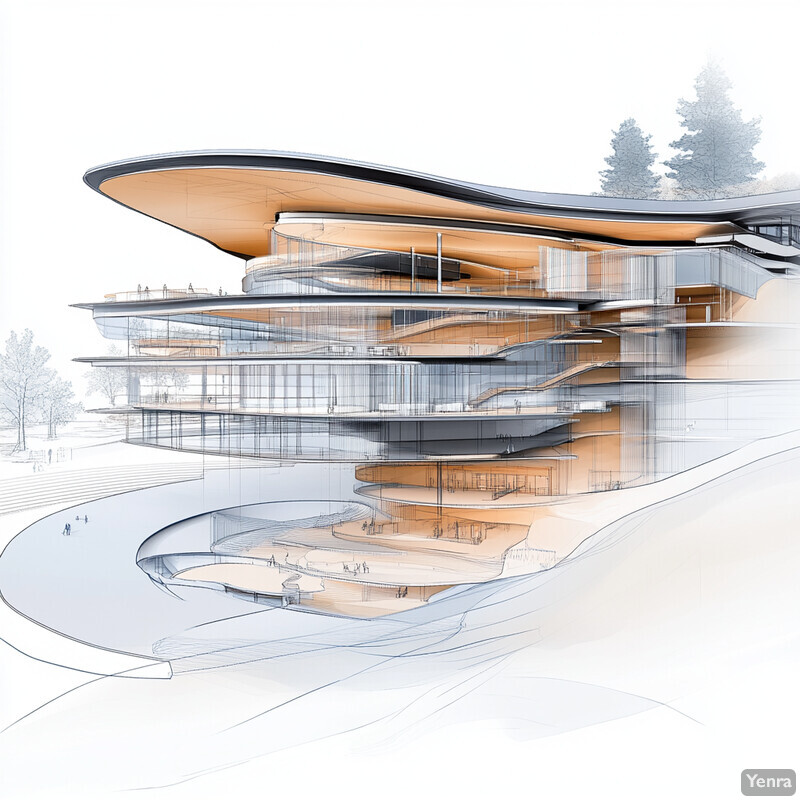
AIA still argues that building-performance analysis should shape design decisions early, Autodesk Forma now exposes environmental review inside concept workflows, and Autodesk's natural-ventilation research combines floorplan generation with occupancy and comfort modeling. Inference: the strongest pattern is AI wrapped around simulation and sometimes a surrogate model, not AI detached from building science.
8. Intelligent Facade Design
Facade generation is strongest when envelope decisions are treated as a coupled performance and buildability problem. Good systems balance solar gain, daylight, thermal load, assembly logic, and the practical realities of documentation and fabrication.

The 2025 Energy and Buildings paper on BIM-based generative facade design shows compliant, energy-efficient residential envelope options can be generated in seconds, while facade-review research keeps underscoring how tightly energy, envelope geometry, and buildability are linked. Inference: facade intelligence gets stronger when it behaves more like constrained inverse design than decorative surface styling.
9. User-Centric Space Planning
Space planning improves when AI models optimize for how people actually work, move, gather, rest, and focus. That makes space planning more than just packing rooms into an area target.
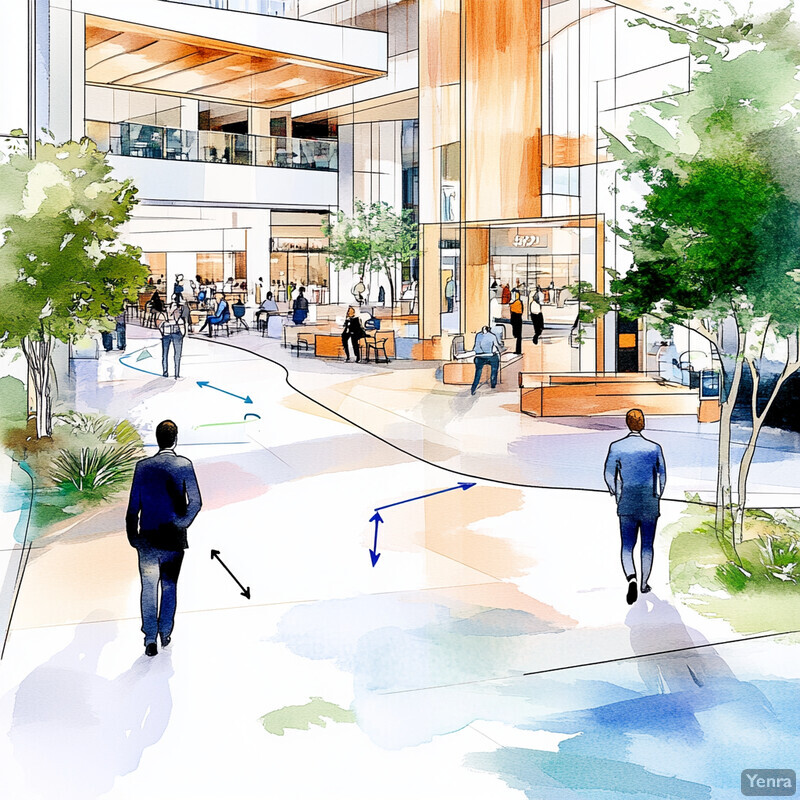
Project Discover tied office layouts to worker preferences, the Frontiers space-analysis work scores tranquil, social, and explorative qualities in habitable layouts, and Experiential Views explores vision-language evaluation of designed space. Inference: user-centric planning is moving from area-only optimization toward richer experience and behavior signals.
10. High-Level Conceptual Exploration
Generative AI is most credible in early concept work when it helps designers sketch broader territory quickly. At that stage, speed, variation, and precedent mixing matter more than perfect resolution.

Sketch-to-Architecture demonstrates how sketches, text, and generative models can speed early architectural concept creation, while a 2026 study on conceptual design found GenAI benefits varied by user expertise and prompting strategy. Inference: the strongest conceptual-exploration tools accelerate ideation and comparison, but still rely on architectural judgment to decide what deserves development.
11. Structural Optimization
Structural optimization matters because a concept that cannot plausibly carry load or be framed economically is not a strong option no matter how compelling it looks. AI helps when structural plausibility enters the comparison loop earlier.
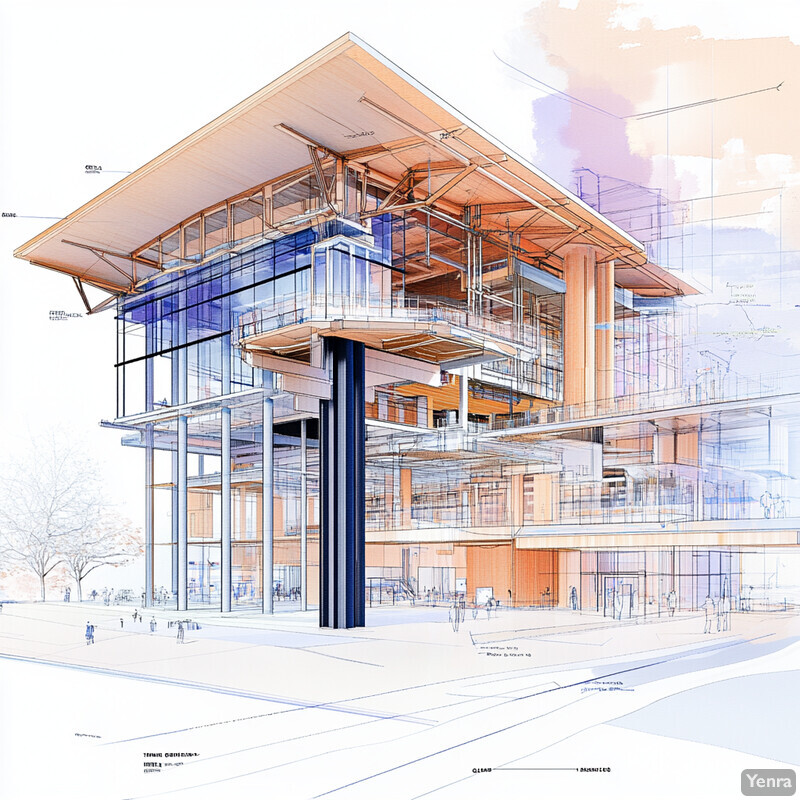
Recent reviews of design automation argue that physics-embedded models are essential if generated buildings are to become buildable rather than merely novel, and BIM-based structural optimization work has already shown that automated iteration can coordinate structural and cost outcomes. Inference: structural optimization is strongest when it acts as an early viability layer that keeps the option set realistic.
12. Material Efficiency and Sustainability
Material intelligence gets stronger when assembly choices are evaluated against carbon, durability, cost, and constructability together. That is where generative design starts to influence what the building is made of, not just how it looks.

Autodesk Research's 2025 material-selection workflow combines graph representations, retrieval, and human review to compare sustainable wall assemblies, while Autodesk's AECO updates continue pushing total-carbon analysis upstream. Inference: AI is most useful here when it narrows material choices with evidence and keeps architects inside the loop on tradeoffs.
13. AI-Enhanced Fabrication Planning
Fabrication-aware generation matters because design quality collapses when geometry survives concept review but fails in panelization, tolerances, sequencing, or onsite assembly. Strong systems start thinking about making earlier.
Adaptive Robotic Construction of Wood Frames shows how AI perception can help robotic construction absorb real-world material variability while still hitting tighter assembly outcomes. Inference: in architecture, fabrication planning gets stronger when generated geometry is evaluated against panel logic, tolerance stacks, and sequence risk before shop drawings begin.
14. Adaptive Reuse and Retrofits
Adaptive reuse is one of the most practical places for generative AI because the design problem is highly constrained by existing geometry, budget, program, and embodied-carbon consequences. Reuse-first workflows benefit from faster option comparison more than from blank-sheet novelty.

Sketch-Based Facade Renovation With Generative AI explicitly targets renovation proposals that preserve existing structures without requiring a full as-built model first, and early environmental analysis makes reuse-versus-rebuild tradeoffs easier to surface. Inference: adaptive-reuse design is where generative AI can become especially operational because the search space is naturally bounded and the sustainability stakes are concrete.
15. Evolutionary Computing and Genetic Algorithms
Evolutionary search still matters because architecture rarely has one objectively correct answer. Teams usually need a diverse frontier of good options, not a single mathematically optimal scheme.

Project Discover, Beyond Heuristics, and Autodesk's newer quality-diversity work all point to the same continuity: evolutionary methods remain a strong backbone for architectural optioning because they preserve variation while improving performance. Inference: large models add new interfaces and priors, but genetic and QD search still do much of the heavy lifting in navigable architectural design spaces.
16. Data-Driven Pattern Generation
Data-driven patterning is strongest when it is tied to something real: cultural reference, climate response, daylight filtering, fabrication logic, or brand language. Without that grounding, AI ornament quickly becomes interchangeable visual noise.

Current review work keeps emphasizing that architectural generation has to reconnect outputs to practice and evaluation, while newer design reviews frame AI-assisted generative design as useful where pattern and geometry remain traceable to goals. Inference: pattern generation is strongest when it treats precedent and performance as explicit inputs rather than using AI merely to texture a facade.
17. Time-Based Simulations
Time-aware generation matters because buildings behave differently across seasons, schedules, and occupancy modes. Stronger systems compare how a scheme performs over changing conditions instead of optimizing to one static snapshot.

Autodesk's natural-ventilation study explicitly combines generative floorplan workflows with updated comfort and occupancy models, and AIA's performance guidance still emphasizes iterative scenario testing over single-pass validation. Inference: time-based simulation is getting stronger because designers can test how options hold up across real operating patterns instead of judging them from one average-day assumption.
18. Neural Style Transfer for Aesthetics
Aesthetic transfer is most useful when it helps teams explore precedent direction, mood, and visual language quickly. It gets much weaker when firms confuse a styled image with an architectural resolution of space, structure, and envelope.

Recent reviews still place diffusion and image-generation systems mainly in ideation and visualization roles, and the 2026 conceptual-design study suggests value depends heavily on user expertise and interaction strategy. Inference: aesthetic transfer is strongest as a fast comparative layer for visual exploration, not as proof that a building has been architecturally solved.
19. Informed Design Guidance
The strongest AI design assistants do not replace architectural judgment. They surface precedents, cite likely rules, rank tradeoffs, and point out missing considerations so the architect can make a better call faster.

Across building-code research, material selection, and experience evaluation, the common pattern is AI as a guided retrieval-and-ranking layer around structured domain knowledge. Inference: informed guidance is strongest when it behaves like a decision-support system that cites sources, exposes tradeoffs, and lets teams accept or reject each suggestion.
20. AR-VR Enhanced Feedback
Immersive review becomes genuinely useful when comments made in space can flow back into editable parameters and model states. That is what turns AR and VR from presentation tech into a practical design-feedback loop.

The 2025 mixed-reality parametric-design paper combines speech, gesture, and LLM assistance inside an immersive parametric workflow, extending earlier sketch-driven exploration into more embodied interaction. Inference: AR and VR feedback matter most when they stay connected to model logic, letting users react to sight lines, scale, and circulation and then push those reactions back into the generative system.
Related AI Glossary
- Parametric Design matters because most architectural generative workflows still depend on editable parameters and relationships, not one-shot image generation.
- Building Information Modeling (BIM) explains why generative outputs become more valuable when geometry stays attached to spaces, assemblies, and metadata.
- Space Planning covers the circulation, adjacency, and room-fit logic that many architectural generators are really trying to optimize.
- Inverse Design is a helpful framing for workflows that start from target performance and work backward toward geometry or assembly options.
- Surrogate Model helps explain how AI can compress slower simulation into faster design guidance during early exploration.
- Computational Fluid Dynamics (CFD) matters because airflow and facade decisions still need physics-based grounding even when AI speeds comparison.
- Digital Twin becomes relevant as design-stage models connect more directly to later operational simulation and building performance feedback.
- Decision-Support System is the right lens for architectural AI that helps teams compare options without automating final design judgment.
Sources and 2026 References
- Autodesk: Architecture.
- Autodesk: Architectural Schematic Design.
- Autodesk: BIM for AEC.
- Autodesk Forma: Environmental Impact Analysis.
- Autodesk (2024): AECO portfolio updates and Total Carbon Analysis.
- AIA: Architect's Guide to Building Performance.
- buildingSMART: openBIM.
- UpCodes Support: Copilot user settings.
- arXiv (2023): Experiments on Generative AI-Powered Parametric Modeling and BIM for Architectural Design.
- arXiv (2024): Sketch-to-Architecture: Generative AI-aided Architectural Design.
- arXiv (2025): ARCEAK: An Automated Rule Checking Framework Enhanced with Architectural Knowledge.
- arXiv (2025): Conversational Interfaces for Parametric Conceptual Architectural Design.
- arXiv (2026): Sketch-Based Facade Renovation With Generative AI.
- arXiv (2026): The Impact of Generative AI on Architectural Conceptual Design.
- Autodesk Research: Project Discover.
- Autodesk Research: Beyond Heuristics.
- Autodesk Research (2024): Generative Design through Quality-Diversity Data Synthesis and Language Models.
- Autodesk Research: Building-GAN.
- Autodesk Research: DreamSketch.
- Autodesk Research (2025): Experiential space analysis.
- Autodesk Research (2024): Experiential Views.
- Autodesk Research (2024): Natural ventilation using updated comfort and occupancy models.
- Autodesk Research (2025): AI-assisted material selection for sustainable building design.
- Autodesk Research (2024): Adaptive Robotic Construction of Wood Frames.
- npj Clean Energy (2025): A review of artificial intelligence methodologies in computational automated generation of high performance floorplans.
- Automation in Construction (2025): Generative AI approaches for architectural design automation.
- Energy and Buildings (2025): BIM-based generative design approach for integral residential energy-efficient facades.
- Journal of Building Engineering (2024): Energy-efficient facade design of residential buildings: A critical review.
- Scientific Reports (2022): Automated BIM-based structural design and cost optimization.
- Designs (2025): Artificial Intelligence in Generative Design: A Structured Review of Trends and Opportunities.
Related Yenra Articles
- Architectural Design Simulation covers the analysis side of early building comparison, including energy, comfort, airflow, and collaborative design review.
- Home Renovation and Interior Design Tools shows how AI-assisted planning and visualization patterns translate into residential remodeling workflows.
- Urban Planning Tools extends generative and analytical thinking beyond the building to streets, districts, and planning scenarios.
- 3D Construction Printing Optimization follows digital architectural intent farther downstream into fabrication and construction execution.