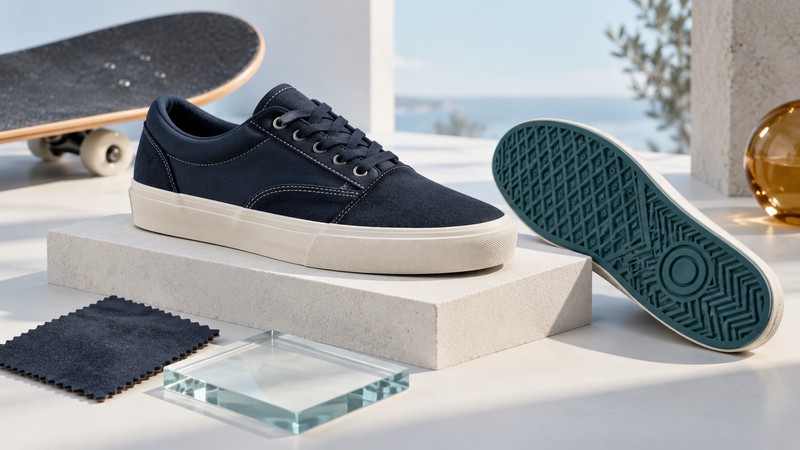
A useful skate shoe fits securely, gives you the board feel you prefer and handles the wear of your skating. Start with those needs, then compare construction and exact model details. A familiar silhouette or an athlete’s endorsement tells you less than a fitting and a clear specification.
Understand vulcanized and cupsole construction
Two common construction terms describe how the sole assembly is made. In a vulcanized shoe, heat is involved in bonding the rubber construction; a cupsole uses a molded sole unit attached to the upper. Vans’ skate-shoe construction guide describes both and its hybrid Wafflecup approach. These are starting categories: the upper, sole thickness, insole and reinforcement still affect the finished shoe.
Scroll sideways on small screens. Keyboard users can focus the table and use the arrow keys.
| Construction | Typical design emphasis | What to check on the actual shoe |
|---|---|---|
| Vulcanized | A flexible, often lower-profile connection to the board. | Forefoot flex, heel fit and comfort with the supplied insole. |
| Cupsole | A molded sole assembly that can accommodate a more structured platform. | Weight, bending feel and the balance between cushioning and board feedback. |
| Hybrid or branded system | A manufacturer-specific combination of features. | Which components differ and what evidence supports the claimed benefit. |
For a concrete model example, Nike describes the SB Heritage Vulc as a suede-and-canvas shoe with vulcanized construction. That description establishes its materials and construction; your preference still needs a fitting. Avoid assuming that every shoe from one brand uses the same design.
Compare fit before comparing slogans
Try both shoes with the socks you intend to wear. Lace them as you would for skating and walk, bend your knees and shift weight in a controlled fitting area. Notice heel movement, toe pressure, width and whether seams or the tongue create a pressure point. Ask the shop about another size or shape if the fit needs constant adjustment.
Use the same short routine for each candidate. Describe what you feel: “heel lifts when I bend,” “toes press against the front,” or “secure through the midfoot.” Those observations are more useful than a single comfort score. Confirm the retailer’s return terms before trying a shoe on grip tape or wearing it outdoors.
Keep the original insole in place for the initial comparison. If you normally use another insole, check the resulting fit as a separate configuration. Adding volume under the foot changes the space left inside the shoe; record the setup you actually intend to use.
Look at the areas that wear first
Inspect the toe, side panels, stitching, laces and outsole. Compare their placement with the worn areas on your previous pair. Your own wear pattern gives you a concrete question to take to a shop: which feature addresses that particular failure?
Etnies’ technical reference distinguishes outsole compounds and tread, midsole foams, reinforced uppers, toe caps and tongue straps. These features address different parts of the shoe. A reinforced toe may help with upper abrasion while leaving a separate question about outsole wear.
Read the exact model’s specification, including material changes between versions. A casual shoe and a skate-specific version can share a name or appearance. If the listing leaves a feature unclear, ask the manufacturer or retailer for that model’s construction details.
Read performance claims as evidence questions
Words such as “more grip,” “longer lasting” or “impact protection” become useful when the comparison and test are explained. Ask what was measured, against which baseline, on what surface and under which conditions. A numerical improvement in one component’s test is different from a prediction of your whole shoe’s service life.
Manufacturer descriptions can identify intended function. They do not establish a universal ranking across shoes. Cushioning claims also should not be converted into a promise to prevent injuries. Yenra has not performed comparative skate-shoe testing for this guide.
Make the next purchase easier
Keep a brief record of the model, size, insole setup, purchase date and typical surfaces. Photograph the upper and outsole periodically under similar lighting. Record skating sessions or approximate hours as context, along with any change in grip, fit or discomfort.
Inspect new damage before another session. For separated soles, exposed internal parts or uncertain structural damage, ask the maker or a knowledgeable shop about repair or replacement. Follow the material-specific care instructions, and distinguish cosmetic wear from a change that affects use.
On your next purchase, bring the observations and the old pair if practical. Choose the features that address a documented need, verify the fit, and keep the manufacturer’s claims separate from what you have actually observed.