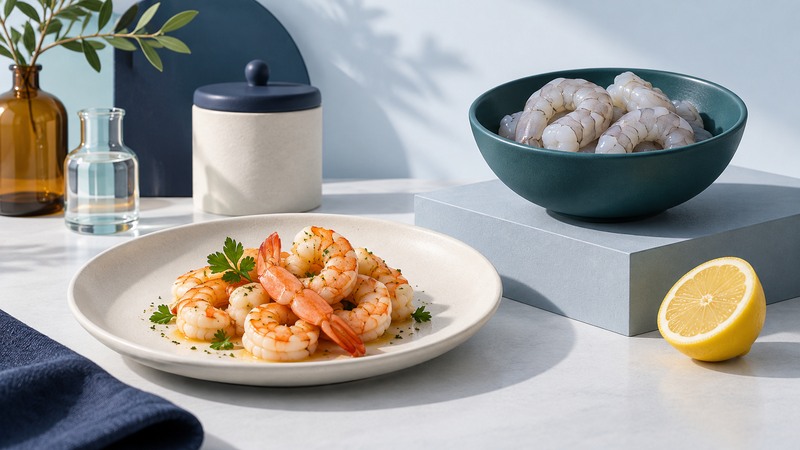
Buy shrimp by its form and count range, then choose a cooking method for that purchase. A pound of peeled shrimp and a pound with heads and shells represent different amounts of food on the plate. “Large” is less useful for planning than a label such as 21–25 shrimp per pound.
Read the whole description
Scroll the table sideways. With a keyboard, focus the table and use the arrow keys.
| Label detail | What it tells you | Planning consequence |
|---|---|---|
| Raw, peeled and deveined | Shell and digestive tract have been removed; tails may remain. | Convenient for the measured cooking method below. |
| Raw, headless, shell-on | Shell weight is included. | Allow time to peel; weigh again if a recipe needs peeled weight. |
| Cooked | The initial cooking step is complete. | Use according to package directions; prolonged recooking can toughen it. |
| 21–25 count per pound | About 21–25 shrimp in a pound of the labeled form. | A half-pound is roughly 10–13 shrimp; individual sizes vary. |
Florida’s seafood guide explains count-per-pound sizing and the forms sold. Check whether tails remain and whether the ingredient list includes a salt solution or other treatment; these details affect preparation and seasoning. Keep the bag or label until the meal is finished.
For Georgia shrimp: ask the seller where it was harvested and landed, whether it was previously frozen and which product the origin claim covers. Georgia DNR documents the state’s commercial shrimp fishery and landings system. A local seller’s address alone does not establish the catch location. Favor specific traceable information over a general promise of freshness.
Keep it cold through preparation
Buy frozen shrimp solidly frozen in sound packaging, or chilled shrimp properly refrigerated. Store at 40°F or below and use fresh seafood within two days, or freeze. Thaw in the refrigerator overnight in a container that catches drips. For a quicker method, seal in a leakproof bag in cold water and cook promptly after thawing. Keep utensils for raw shrimp separate from serving utensils. These handling points follow FDA’s seafood guidance.
Drain thawed shrimp. Remove any remaining shell or tails if the dish will be eaten with a fork. For shrimp with a visible vein, make a shallow cut along the back on a board and lift it out. Clean the board, knife and hands before preparing a ready-to-eat side.
Gently simmer one pound
For four modest portions with sides: 1 pound (454 g) raw peeled, deveined shrimp, preferably 21–25 count; 4 cups water; optional 2 lemon slices and ¼ teaspoon salt. Use a saucepan with room to stir, a strainer and a thin-tip food thermometer.
- Bring water and optional seasonings to a boil. Add thawed shrimp, reduce heat and keep at a gentle simmer. Stir so pieces cook evenly.
- Begin checking after about 3 minutes; size and water recovery affect time. The flesh should be firm, pearly and opaque throughout. With a suitable thin probe, check the thickest part of several large shrimp for 145°F.
- Drain as soon as cooked. For hot serving, transfer to a clean bowl and serve promptly with lemon. For chilled serving, cool quickly in clean ice water, drain and refrigerate promptly in a shallow covered container.
The water quantity and approximate simmering window adapt Florida’s shrimp-cooking method; FDA supplies the temperature and appearance checks. This adaptation has not been kitchen-tested by Yenra. Pink color alone is insufficient: some shrimp are reddish before cooking.
Plan portions and serving time
One pound divided four ways is 4 ounces (about 114 g) raw peeled shrimp per person, approximately 5–6 shrimp at 21–25 count. This is a planning amount with substantial sides, not a guaranteed cooked yield. A pasta dish or appetizer may use a different amount; define the meal first.
For a cold platter, keep most shrimp refrigerated and put out a small portion on ice. FDA limits time outside refrigeration to two hours, or one hour above 90°F. Track the whole serving period rather than restarting the clock when a tray is moved. For this guide, use chilled cooked shrimp within two days, following Florida’s conservative seafood-storage recommendation.
Rubbery: shorten the time between reaching doneness and draining next time. Watery in a sauté: drain and dry the shrimp and cook in smaller batches. Unevenly cooked: sort very different sizes and check several pieces. A sour or ammonia smell calls for discarding the shrimp.