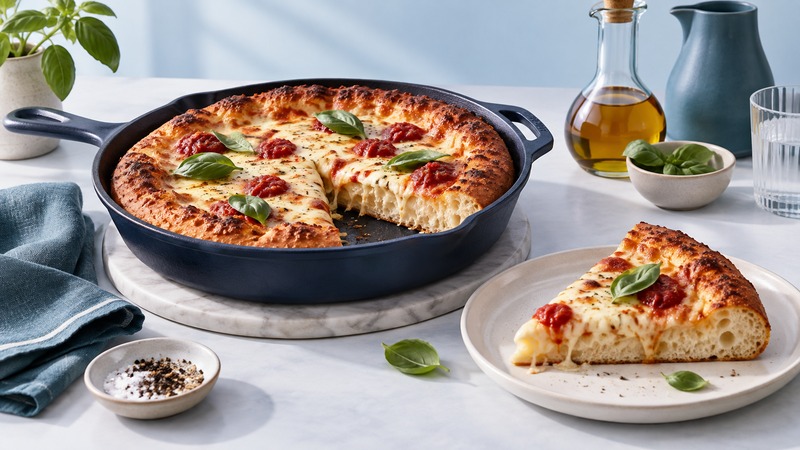
Pan pizza combines a substantial, airy crumb with a browned base. Plan the dough the day before, measure the pan’s usable bottom and leave time for the final rise. This first batch keeps the toppings to cheese and sauce so you can judge the crust clearly.
One dough, one defined pan
Use a seasoned cast-iron skillet about 10–11 inches across its top and 9 inches across its base, rated for 450°F (232°C). A 10-inch round metal cake pan is another option in the source recipe. Check handle and coating limits. Have a bowl, scale, cover and heat-resistant spatula.
Dough: 240 g all-purpose flour, ¾ teaspoon table salt, ½ teaspoon instant yeast, 170 g lukewarm water and 13 g olive oil. Pan: 18 g olive oil. Topping: 170 g grated mozzarella and 75 g thick pizza sauce.
This measured version follows King Arthur Baking’s pan pizza. Stir dough ingredients together; rest five minutes. Stretch and fold four sides over the center. Repeat that folding set every five minutes, four sets total. Rest covered 40 minutes; refrigerate 12–72 hours.
Give the cold dough time
About three hours before dinner, oil the pan with the reserved 18 g oil. Turn the dough in it and press outward. If it springs back, cover and wait 15 minutes before pressing again. Let rise covered about two hours, until puffy. Preheat to 450°F during the final 30 minutes.
The dough has 170 ÷ 240 × 100 = 70.8% water relative to flour by weight. That explains its sticky handling; adding handfuls of flour to make it feel like a firm kneaded dough changes the formula. A damp hand or scraper is more useful during folding.
A 9-inch circular base has about 64 square inches of area; a 12-inch base has about 113. The larger pan is roughly 78% bigger, so the same dough spreads much thinner. Use the specified pan for the first trial and record its inside dimensions.
Bake and inspect underneath
Distribute three-quarters of the cheese to the edges, dollop on sauce, then add the remaining cheese. Bake on a lower rack for 18–20 minutes; inspect the base with a spatula. Add 2–4 minutes as needed, moving higher if only the top needs color. Transfer promptly to a rack after a brief rest.
Use dry oven gloves and a stable heatproof surface when handling the pan. The handle stays hot after it leaves the oven. Loosen the cheese around the edge before lifting the pizza; let the pan support it until it is firm enough to move.
Yenra has checked the published formula and arithmetic but has not kitchen-tested this version. The source includes additional photos and instructions. Judge both the underside and crumb before changing the next bake.
Troubleshoot one change at a time
Focus the table and use the arrow keys to scroll sideways.
| Result | What to check next time |
|---|---|
| Pale base, browned cheese | Pan material, oven rack and full preheating. Begin with the specified heavy pan and lower rack. |
| Wet center | Sauce thickness and topping load. Keep the first pizza to the measured cheese and sauce. |
| Dense crumb | Whether the dough was visibly puffy before baking. Record room temperature and actual rise time. |
| Base softens on the plate | Move the baked pizza out of the hot pan promptly and allow steam to escape on a rack. |
Once the base works, add one prepared topping. The pizza-topping guide explains draining vegetables and precooking meats; its 12-inch examples cover a different area, so avoid transferring every quantity directly to this smaller pan.
Refrigerate leftovers promptly in shallow containers within two hours after cooking or removal from hot holding, or one hour above 90°F. Keep at 40°F or below, use within 3–4 days and reheat to 165°F. Freeze portions you will keep longer. Follow USDA’s cooling and reheating guidance; time spent on the table counts toward the limit.