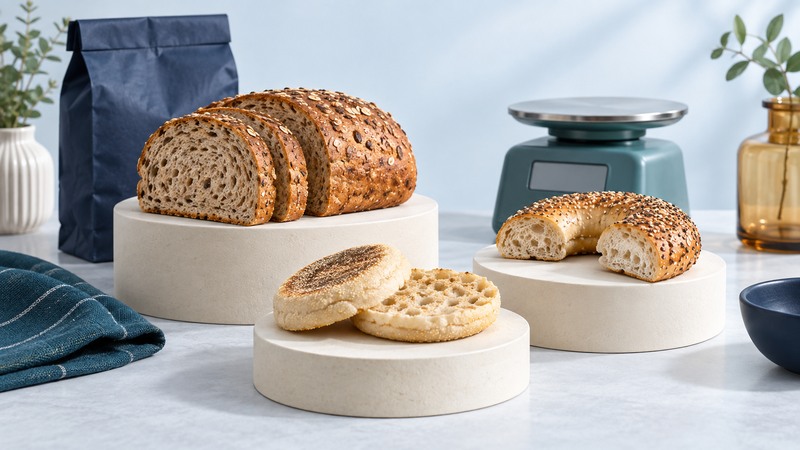
Compare breakfast breads using two questions: what is in the bread, and how much will you eat? A slice, an English muffin and a bagel can have very different weights. Use the ingredient list to identify the grain and the Nutrition Facts panel to compare your actual breakfast portion. This guide uses US labels.
Read grain ingredients and fiber separately
Look for named whole grains such as whole-wheat flour or whole oats. Whole grains retain the bran, germ and endosperm. A product can contain both whole and refined grains; “multigrain” describes a mix of grains without telling you how much is whole. Color and visible seeds also leave that question open. FDA’s dietary fiber guide (PDF) explains whole and refined grains, and that labeled fiber can include certain added fibers.
Ingredients appear in descending order by weight, under FDA’s ingredient-list guidance. Read the whole list, including the first grain ingredient, rather than relying only on the front name. Then compare the fiber grams. A whole-grain ingredient and a high fiber number answer different questions, and neither determines the entire meal’s nutritional value.
Compare equal weights, then your usual serving
Amount in your portion = amount per labeled serving × your portion weight ÷ label serving weight. Apply the same calculation to fiber, sodium or added sugar. FDA explains serving sizes and the Nutrition Facts panel. Equal weights help compare products; your usual portion helps plan breakfast.
Scroll the table sideways. With a keyboard, focus the table and use the arrow keys.
| Example product | Label serving | Fiber / sodium per label serving | At 60 g |
|---|---|---|---|
| A: sliced bread | 30 g slice | 2 g / 150 mg | 4 g fiber; 300 mg sodium |
| B: English muffin | 60 g muffin | 3 g / 240 mg | 3 g fiber; 240 mg sodium |
| C: bagel | 100 g bagel | 4 g / 450 mg | 2.4 g fiber; 270 mg sodium |
For an actual breakfast of two A slices, one B muffin or one whole C bagel, the values are respectively 4 g / 300 mg, 3 g / 240 mg and 4 g / 450 mg. The 60 g comparison and whole-bagel comparison serve different purposes. These numbers are invented examples, not a ranking of current brands.
Price the portion you will use
Scroll the table sideways. With a keyboard, focus the table and use the arrow keys.
| Package | Cost calculation | Cost of stated breakfast portion |
|---|---|---|
| A: 600 g loaf for $4.80 | 20 slices × 30 g; $4.80 ÷ 20 | $0.48 for two slices |
| B: six 60 g muffins for $3.60 | $3.60 ÷ 6 | $0.60 for one muffin |
| C: six 100 g bagels for $4.20 | $4.20 ÷ 6 | $0.70 for one whole bagel |
Include likely waste. If you use only four of the six bagels, $4.20 ÷ 4 = $1.05 per bagel eaten. Freezing part of the pack on purchase day can change which package is practical. Add spreads, eggs or other fillings when comparing the cost and nutrition of complete breakfasts.
Match shape to breakfast and storage
- Sliced loaf: convenient for toast and sandwiches; count slices and weight together when slice thickness varies. Freeze separated slices so you can remove a meal’s worth.
- English muffin: split before freezing. Its two halves make separate platforms for a topping, but the label often counts the whole muffin as one serving.
- Bagel: slice before freezing while it is easy to cut safely. A half bagel may fit the meal you are planning; calculate from the package serving basis.
Follow the package’s storage instructions. Seal freezer portions and label the date; King Arthur’s bread storage guidance recommends well-wrapped freezing for longer keeping. Use the toaster or oven’s instructions for frozen bread and slice size. Heat plain bread first, then add spreads or perishable toppings. Toasting does not make moldy bread usable: USDA advises discarding moldy bread and baked goods because contamination can extend below the surface.
Open the printable breakfast bread comparison sheet to record ingredients, your portion, label calculations, package price and usable servings.