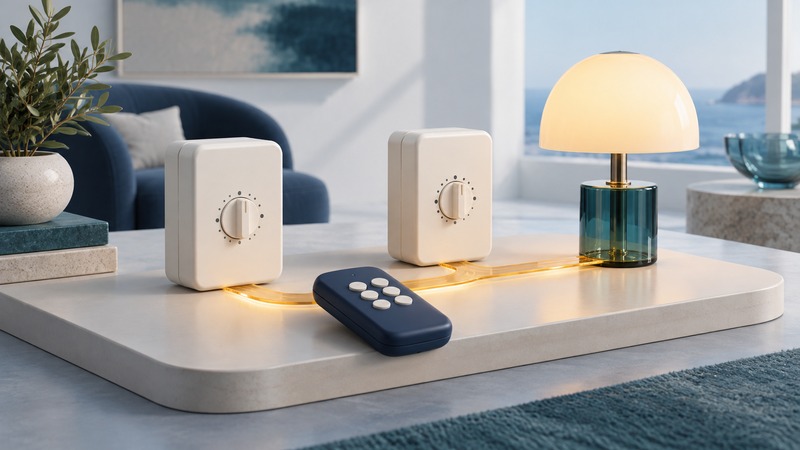
Start an X10 problem with an inventory: which controller sends the command, which address receives it, what module switches the load and how the command reaches that module. This separates a remote-control problem from a powerline problem, an incompatible lamp or a timer that was never stored correctly.
This guide is for owners maintaining ordinary existing X10 lighting and plug-in controls. Product examples refer to U.S. hardware. Confirm the region, supply, model revision and load instructions for your own equipment. Panel work, fixed wiring and phase-coupler installation belong with a qualified electrician.
Record the address and the real hardware
Classic X10 addresses combine a house code, A through P, with a unit number, 1 through 16. Multiple receivers can share an address deliberately, so record intentional groups as well as accidental duplicates. The CM15A manual explains the addressing scheme and its controller’s stored timers and macros.
- Photograph each module label and record its model, revision, room, address and connected load. Keep lamp dimmers separate from appliance switching modules.
- List RF remotes, RF-to-powerline transceivers, computer interfaces and ordinary powerline controllers. Identify which device handles each command path.
- Save the working automation configuration before changing addresses or schedules. Note any duplicate timers or other controllers that can operate the same load.
- Observe the actual lamp or device during a test. Establish from its manual whether the module reports status; software may display its last command rather than a confirmed physical state.
Resolve load compatibility before testing
A module’s name alone can hide a hardware revision. In September 2026, X10’s LM465 product page lists incandescent and certain dimmable LED compatibility, while its linked LM465 instruction sheet describes incandescent loads and a minimum-load condition. Ask X10 to resolve that difference for your exact unit before attaching an uncertain load. A bulb’s incandescent-equivalent light-output label is also different from its actual electrical wattage.
Check permitted load type, actual rating, dimming compatibility and the manual’s installation limits. An appliance module and a lamp dimmer perform different jobs; substituting one based only on a plug that fits can create an unsuitable setup. Stop using damaged or overheating equipment. Keep troubleshooting to intact, correctly rated plug-in equipment and manufacturer-supported actions.
Change one part of the command path at a time
On a narrow screen, scroll the table horizontally. Keyboard users can focus the table region and use the arrow keys.
| Symptom | First useful comparison | What the result narrows |
|---|---|---|
| Remote fails; powerline controller works | Check remote battery, house code, transceiver settings and position. | The RF/translation path becomes the first suspect. |
| Several loads respond together | Compare house and unit codes plus scene/macro targets. | An address group or automation may explain the shared response. |
| A lamp turns on but misses off commands | Record whether failure appears only while that load or another device is operating. | The operating load and communication environment need investigation. |
| One location works; another fails | Use the same documented-compatible module/load and controller with permitted plug-in relocation. | Location-dependent signal conditions become more likely. |
| Manual commands work; scheduled action fails | Check clock, date, timer conditions and where the schedule is stored. | The scheduling path can be investigated before replacing receivers. |
Powerline communication shares an electrical environment with other equipment. X10’s noise-reducer documentation addresses interference from electrically noisy loads. Use that as a reason to investigate, not as proof that buying a filter will fix every missed command. Filtering, attenuation and communication between supply legs require the right diagnosis and correctly rated equipment.
- Choose one harmless, compatible lamp/load and record its starting state. Send a single on command, wait for the response, then send off.
- Repeat a small fixed series and count successes, including the direction of each failure. Keep controller position and settings fixed.
- If safe and appropriate, compare behavior with one nonessential suspected device unplugged through its normal procedure; restore it afterward. Do not interrupt medical, security or essential equipment.
- Repeat at the original condition to see whether the difference persists. Give the record to the manufacturer or installer if signal measurement or fixed-wiring changes are needed.
Use a short log to avoid replacing the wrong part
Record time, command source, address, actual response, nearby operating equipment and the single change made. A problem that began after changing a bulb suggests checking load compatibility as well as signal conditions. Keep symptoms separate from conclusions: “lamp stayed on” is an observation; “receiver is defective” needs additional evidence.
Keep a working system supportable
The CM15A listing identifies the hardware separately from software and lists older Windows versions. Confirm the actual software package, driver support and recovery method before changing the computer or purchasing a replacement interface. Preserve a usable configuration backup; a hardware listing by itself establishes little about a modern operating system.
- List functions that work and functions that justify replacement. Include manual operation, scheduling and behavior after interruption.
- Replace one low-consequence room or function first, using a documented-compatible system. Retest the daily routine before extending it.
- Remove duplicate schedules as functions migrate and label the remaining controllers clearly.
- Keep a rollback route and a household handover record. Choose supported controls that occupants can operate without remembering which generation of automation serves each room.
Keep a working record
Download the x10 worksheet (editable text). Save a copy, fill in the fields for your situation and record exceptions as well as successful checks. The worksheet includes its purpose, source links and any example assumptions.