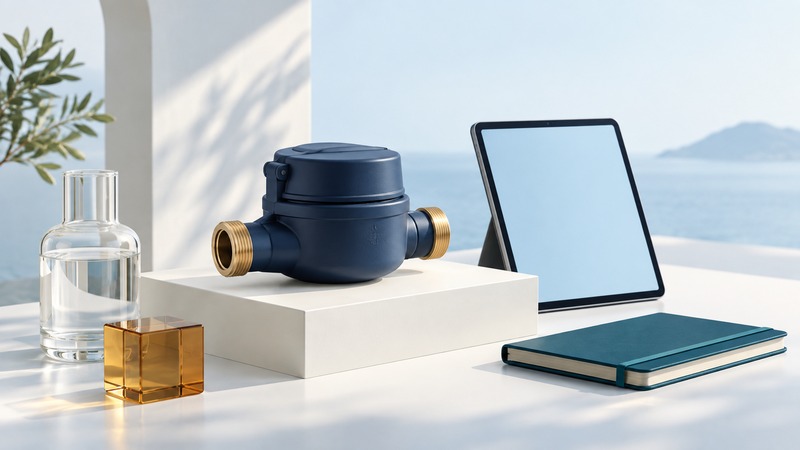
Read a water-usage record by asking three questions: what quantity is shown, which period it covers, and when the data arrived. A wireless meter can improve collection without giving the household an instant view of every use. Confirm the utility’s reporting method before interpreting a graph or comparing it with a bill.
Separate the meter from the reporting service
A meter measures water passing through it; a communications system carries readings elsewhere. Badger Meter’s AMR and AMI explanation distinguishes automated meter reading, often collected by a nearby walk-by or drive-by receiver, from advanced metering infrastructure that communicates through a network. The available detail and reporting frequency depend on the deployed system.
Ask the utility how often the meter records, how often it transmits, and how quickly the customer portal updates. Those can be three different intervals. Confirm the graph’s time zone, treatment of missing data, and whether figures are measured, estimated, or later corrected. An alert service may have its own threshold and delay.
Match the meter identifier to the account, especially after a replacement or at a property with several meters. Let the utility handle sealed equipment, communications hardware, and meter problems. Use its instructions for any reading accessible to customers.
Identify the numbers before calculating
| Quantity | Meaning | Useful check |
|---|---|---|
| Cumulative reading | The meter’s running total. | Subtract the earlier reading from the later reading in the same units. |
| Interval use | Water recorded during a stated hour, day, or other period. | Sum comparable complete intervals; account for gaps and boundary times. |
| Flow rate | A volume per unit of time, such as gallons per minute. | Check the sampling period; a rate is different from a daily volume. |
| Billing unit | The unit applied to billed consumption. | Confirm gallons, cubic meters, cubic feet, CCF, and any displayed multiplier. |
EPA’s water-bill guide explains common units and the distinction between usage and charges. One CCF is 100 cubic feet, approximately 748 U.S. gallons. For a utility-specific example, Portland’s bill guide uses CCF and explains its service and volume charges. Apply your own utility’s units and tariff to your bill.
Reconcile a reading with a period
When comparing two bills, divide each volume by its own number of service days. Then consider occupancy, irrigation, guests, appliance use, and weather. Keep changes in rates separate from changes in consumption. Save the original readings and screenshots so rounding or later corrections remain visible.
Investigate a change methodically
First check the date range, units, meter identity, and actual-versus-estimated status. Then compare the usage pattern with known events: irrigation schedules, a pool fill, visiting relatives, or a water-treatment cycle. Persistent use during an expected quiet period deserves investigation, while an isolated peak needs its timing checked.
EPA’s leak guidance suggests comparing meter readings before and after a two-hour period when water is not being used. A change indicates a probable leak. Account for automatic water users before interpreting the result, and follow the utility’s access instructions. This check identifies unexplained consumption; a plumber or utility may be needed to locate its cause.
Use the meter reading and utility-question log to document the period, readings, automatic uses, and observations. For an unexplained bill, send the utility the meter identifier, reading dates, units, screenshots, and a concise account of changed use. Ask it to explain estimates, corrections, reporting gaps, and any applicable investigation process.