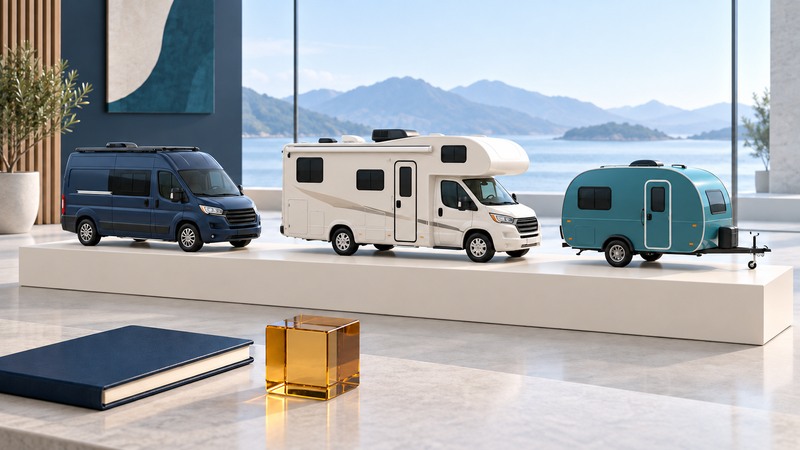
Choose a Winnebago by working from the trips you expect to take: who travels, where you stay, how much equipment you carry, and how you will store and service the RV. Then compare exact vehicles against that brief. A useful shortlist combines a livable floorplan with suitable travel seating, weight capacity, condition and support.
Write the trip before choosing the model
Describe a typical weekend and your longest expected trip. Record passengers, sleeping arrangements, mobility needs, pets, sports equipment, cooking preferences and time spent indoors. Include the maximum dimensions allowed by your storage location and the campsites you actually want to use.
Use Winnebago's current model directory to explore Class A motorhomes, camper vans, Class C motorhomes and travel trailers. The directory is the place to check the changing lineup. This guide also covers used vehicles across model years, including older Itasca-branded coaches where their original documents apply.
Keep three lists: essential requirements, useful preferences and optional luxuries. An essential requirement should be testable: for example, access to the bathroom with slides retracted, a bed you can enter comfortably, or storage that accepts the equipment you measured.
Compare the travel format first
Swipe this table sideways, or focus it and use the arrow keys.
| Format | Worth exploring when | Check before shortlisting |
|---|---|---|
| Camper van / Class B | Frequent travel and a compact living arrangement suit the trip | Real bed and bathroom fit; storage; passenger positions; usable payload |
| Class C motorhome | You want a motorized RV with several layout options | Cab and coach access; overhead clearance; sleeping versus travel seating |
| Class A motorhome | A larger integrated living space suits your plans | Storage and campsite fit; driving comfort; chassis service access |
| Travel trailer | You want to leave camp set up and use the tow vehicle separately | Loaded tow-vehicle and trailer ratings; hitch load; hitching and storage needs |
These are comparison questions, not a ranking of quality. Walk through the actual floorplan. Sit in every travel position, make up the beds, open cabinets, and check access with slides in and out as demonstrated by the seller. Confirm seat-belt locations and approved passenger use in the matching manual; a sleeping-capacity number does not establish travel seating.
Identify the exact RV and its carrying allowance
Photograph the coach certification and weight labels. A motorhome may have separate chassis and coach model years; record both. Winnebago's identification guide explains the coach identifiers used to find the right documents. Save the complete model and floorplan code, serial number, chassis VIN and equipment list.
Match the intended travel load to the actual vehicle ratings and measured weights. People, water, luggage, installed accessories and hitch-supported load all need accounting. Ask for usable carrying information for the specific RV on offer, including modifications since manufacture. A large storage compartment can reach a weight limit before it is full.
For a motorhome towing another vehicle, check the completed coach, chassis, hitch and towed-equipment instructions together. For a travel trailer, evaluate the tow vehicle as well as the trailer. The motorhome weight and towing guide explains separate axle, vehicle, hitch and combination limits; use exact equipment ratings rather than a brochure maximum.
Compare evidence and responsibilities
A new RV offers a current purchase and warranty arrangement, while a used RV lets you examine an established service history and installed equipment. Either needs a thorough demonstration and inspection. Compare written terms and actual condition instead of assuming a price or model year guarantees an easier ownership experience.
Swipe this table sideways, or focus it and use the arrow keys.
| Question | New RV | Used RV |
|---|---|---|
| What is included? | Exact stock unit, options, delivery work and written quote | Installed options, alterations, included equipment and missing items |
| What needs attention? | Delivery inspection and written correction list | Independent inspection and itemized repair assessment |
| Who handles service? | Warranty terms, exclusions, service locations and appointments | Chassis, coach and appliance support; parts supply and repair estimates |
| What history exists? | Build and delivery records; storage and transport damage checks | Maintenance, roof/seal care, water intrusion, collision and storage records |
Inspect the roof, seams, openings and interior for evidence that merits a professional moisture assessment. Ask an RV inspector to demonstrate plumbing, electrical systems, appliances, slides, leveling equipment and safety devices using the appropriate instructions. Have chassis condition assessed by someone qualified for that chassis. Record any system that could not be tested and the reason.
Winnebago's owner resources link manuals, diagrams, parts information and service support. Archived documentation can help identify a used coach; confirm current parts availability with the service provider. Check coach, chassis and relevant equipment recalls, with manufacturer follow-up for older records.
Compare the first year, then decide
Use written quotes for the RV, inspection, immediate repairs, transport, insurance and storage. Add your expected fuel, campsite, maintenance and registration costs. Record financing terms separately if financing is involved, so a monthly payment does not obscure the purchase total or the money needed for upkeep. Obtain applicable charges from the relevant provider or authority.
Before paying, agree in writing on included equipment, completed repairs, remaining defects and the handover demonstration. Keep copies of manuals and all identifiers. An independent inspection, a clear support route and a realistic first-year budget give the decision a firmer basis than brand reputation alone.
Next, use the RV trip-planning guide for a first itinerary or the race-weekend camping guide for an event stay.
Download the Winnebago buying worksheet to keep your findings and next actions together.
Researched and updated September 20, 2026. Use the linked sources for applicable documents and current service, access or event information.
Explore all motorsports guides.