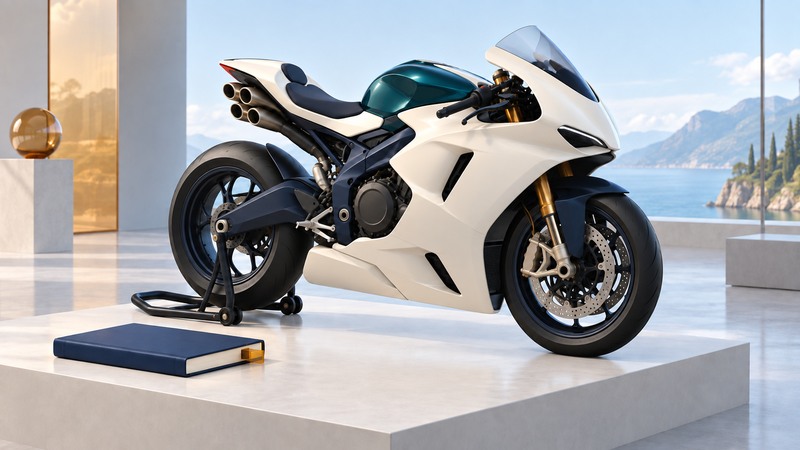
The 2010 MV Agusta F4 deserves a model-specific assessment. Establish that the bike and documents belong to the redesigned 2010 generation, understand what its advertised figures describe, and investigate its current condition and service support before comparing prices.
Confirm the generation and variant
Record the VIN, engine number, model designation, market, model year, registration year and instrument reading. Ask an MV Agusta service provider to confirm the configuration and identify replacements or modifications. An F4 badge covers different years and variants; bodywork and a listing title are insufficient to select a maintenance instruction.
MV Agusta's launch release for the 2010 model, reproduced by Autoblog, describes a redesigned engine, chassis and swingarm, a 998 cc inline four and a stated dry weight of 192.5 kg. Its TSS system varies intake length.
Use the original release for period design claims and the applicable manual for use and maintenance. Confirm special editions separately. The manufacturer-authored 2010 F4 1000 workshop manual preserved by ManualsLib is a technical reference for trained service personnel; match its applicability with the bike.
Keep the measurement beside the number
Swipe this table sideways, or focus it and use the arrow keys.
| Specification | What it describes | How to use it |
|---|---|---|
| 998 cc inline four | Engine displacement and arrangement | Confirm the model; use exact engine identity for parts |
| 192.5 kg dry | Manufacturer-stated dry mass | Keep the dry definition visible when comparing running weights |
| Eight traction-control levels | Adjustability described in the launch release | Use the matching manual; verify controls and installed software |
| Sport and Rain maps | Two engine-management maps in the release | Establish the selected mode and applicable behavior before use |
Those are original manufacturer descriptions, not measurements of a used bike. Accessories, replacement parts and fluid loads can change a comparison. A quoted power figure also needs its unit, engine speed and measurement basis; a rear-wheel dynamometer result and a factory engine claim answer different questions.
Have the seller demonstrate the display, mode selection, warning indications, immobilizer and supplied keys while the bike is stationary and in accordance with its manual. Ask the specialist to identify changes to exhaust, intake or electronics and how they affect diagnosis and service.
Request a specialist assessment with a clear scope
Collect dated invoices for scheduled engine work, fluid changes, chain and sprockets, cooling-system work, tires, brakes and suspension. Ask about track use, storage, overheating symptoms, accident repairs and changes to the instruments. A service stamp is more useful when accompanied by the work performed and mileage.
Commission a written inspection covering starting and warm operation, leaks, cooling behavior, clutch and gear selection, chain condition, wheels and bearings, suspension, brakes, steering, electrical equipment and structural repair evidence. These are assessment topics rather than a diagnosis of known faults. Let the specialist choose tests and identify work due from the correct schedule and findings.
Ask which essential parts are available and which require a lead time. Confirm that the proposed workshop can support this generation and any fitted modifications. For U.S. bikes, combine NHTSA's year/make/model resources with a manufacturer campaign check; public VIN coverage has limits for older and small-manufacturer vehicles.
Buy documented condition and a support path
Make a decision sheet with immediate repairs, scheduled work, inspection cost, parts availability and transport needs. Keep cosmetic changes and optional track preparation separate. Resolve warnings and safety-related findings before arranging a road evaluation by a qualified, appropriately licensed and insured rider.
For another approach to assessing an older motorcycle, see the Rockster inspection guide. For racing design context, read Ducati's early MotoGP project; a competition prototype and a road F4 have different operating and service requirements.
Download the 2010 F4 buyer record to keep your findings and next actions together.
Researched and updated September 20, 2026. Use the linked sources for applicable documents and current service, access or event information.
Explore all motorsports guides.