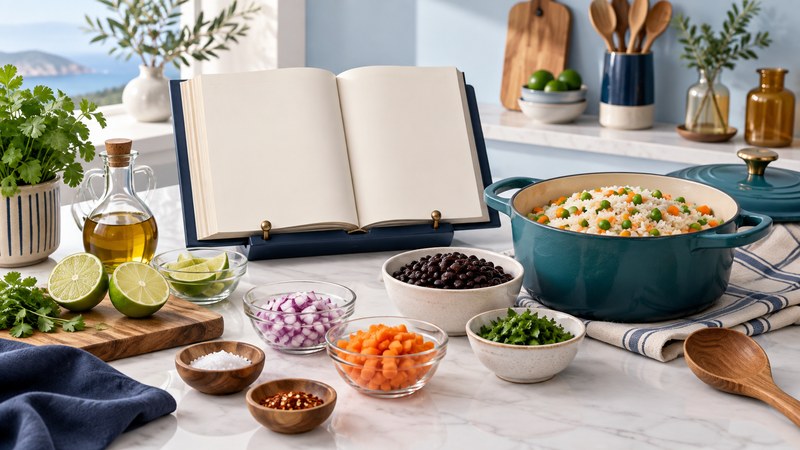
Begin with a recipe credited to Ingrid Hoffmann, read the entire method, then choose a companion dish that fits your time and equipment. Her cooking is a useful starting point for exploring particular dishes and ingredients; keep each recipe’s own name, origin and adaptations attached to it.
Find an attributed recipe or cookbook
Use Food Network’s Ingrid Hoffmann recipe index to find credited recipes. On each result, check the byline and exact title before saving it. Search results can place similarly named dishes by different cooks next to one another.
For a book, the publisher lists Latin D’Lite by Hoffmann, published by Celebra in 2013. The linked ebook record has ISBN 9781101615263. Its emphasis includes ingredient explanations, substitutions and Latin-inspired cooking. Match the language, format and ISBN to the copy you intend to buy; a different edition can have different pagination.
Preview or borrow a book before choosing it as your everyday reference. Pick three recipes you would actually cook, list unfamiliar ingredients and check required equipment. The most useful book is one that helps you make those meals with confidence.
Turn the recipes into a kitchen plan
- Read before shopping. List every ingredient with its form and quantity. Fresh, dried, canned and already-cooked ingredients can require different preparation.
- Combine the shopping list carefully. Merge matching ingredients while keeping recipe quantities in separate columns. Preserve details such as salted versus unsalted or whole versus ground.
- Map equipment. Write down the pots, pans, dishes and appliances each method needs. Reserve separate equipment where two stages overlap.
- Work backward from dinner. Start the longer dish with a buffer for preparation and cleanup. Mark any ingredient that must be cooked, thawed or chilled before the stated recipe time begins.
- Schedule the finish. Group the final plating and serving tasks so that one person is not trying to finish both dishes at once.
On your plan, separate hands-on time from unattended cooking. A quiet simmer can be useful preparation time for another dish, provided you can still monitor it. If both recipes need your full attention at the same moment, shift their starts or choose a simpler accompaniment.
Make the first cook a useful reference
Use the published version as a baseline, then note what your own equipment and ingredients changed. Useful notes name the cause: the pan was crowded, an ingredient was a different form, or the chosen portions produced more leftovers than expected.
Before substituting, identify the ingredient’s job: heat, acidity, salt, liquid, structure or aroma. Change one feature at a time and keep the quantity visible in your notes. A substitution that suits your pantry becomes your adaptation, with the source recipe still credited.
For wider cookbook-selection questions, see choosing and using a cookbook edition. For preparing fresh flavorings, see culinary herbs. Save the final menu with its recipe links and the adjustments you would repeat.