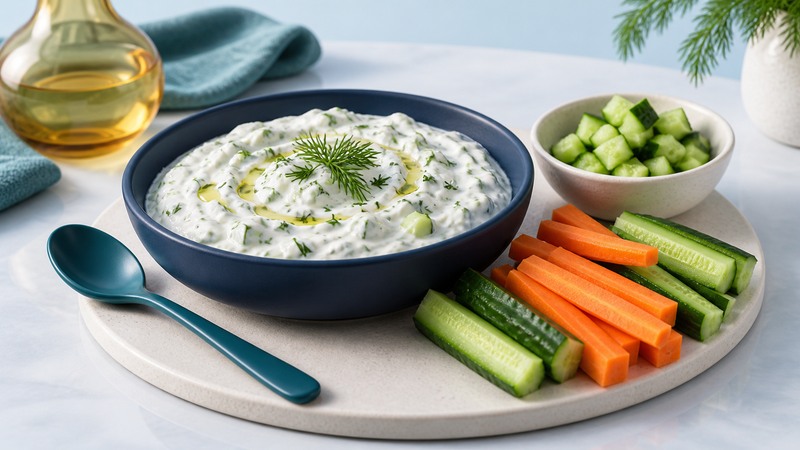
Plain Greek yogurt makes a thick dip with very little preparation. Begin with a measured lemon-and-herb base, add one variation, and adjust after a short refrigerated rest. Keeping watery vegetables out of the first mix makes the result easier to control.
Mix a small lemon-herb base
Ingredients: 250 g plain Greek yogurt, 1 tablespoon lemon juice, 1 teaspoon olive oil, 1 tablespoon finely chopped fresh dill or parsley, ¼ teaspoon garlic powder and ¼ teaspoon salt. Use garlic powder, not garlic salt. Choose unsweetened yogurt made with pasteurized milk, and keep it refrigerated until mixing. Whole-milk yogurt gives a richer result; lower-fat Greek yogurt also works but may taste sharper.
- Wash hands and rinse fresh herbs under running water; dry and chop them. Put the yogurt in a clean bowl.
- Stir in the remaining measured ingredients. Cover and refrigerate for 20–30 minutes to let the dried garlic hydrate and flavors mingle.
- Taste with the food you will dip. Add more lemon juice in ½-teaspoon increments for tang, or more yogurt to soften strong seasoning. If too thick, add cold water a teaspoon at a time.
The base weighs roughly 275 g before adjustments, enough for about nine 30 g snack portions. Measure your finished volume if serving by tablespoons. This is an independently composed Greek-yogurt base; Oregon State’s ranch dip is a useful separate yogurt-and-cottage-cheese alternative. Yenra has not kitchen-tested the base or variations below.
Add one variation to the full base
Scroll the table sideways. With a keyboard, focus the table and use the arrow keys.
| Variation | Addition and preparation | Useful with |
|---|---|---|
| Cucumber and dill | Start with 100 g cucumber. Wash, grate coarsely and squeeze firmly in a clean towel; add the drained shreds. Use dill as the base herb. | Vegetable sticks, warm pita or a grain bowl. |
| Roasted pepper and paprika | Drain and blot 60 g jarred roasted red pepper; chop finely. Add ¼ teaspoon smoked paprika. | Roasted sweet potato or a sandwich. |
| Lemon and black pepper | Add ½ teaspoon finely grated washed lemon zest and ⅛ teaspoon black pepper. | Crab cakes or baked vegetables. |
The cucumber’s starting weight includes water you will squeeze away, so the final yield varies. A pool appearing after chilling usually calls for better draining next time. Stir a small amount of separated whey back into otherwise properly stored yogurt; discard food showing mold or spoilage. Lemon juice seasons this dip; it does not replace refrigeration.
Scale by the number of portions
Planning example: twelve guests × 30 g each = 360 g dip. A double base gives roughly 550 g before vegetables, enough for twelve portions with some reserve. Double all base quantities, then taste after chilling. This is a serving plan, not a nutritional portion recommendation. Record the actual yield if repeating the event.
For protein or sodium estimates, start with your yogurt label and add the other ingredients. “Greek” describes a product style; the word alone supplies no nutrient number. To estimate protein per portion, calculate the yogurt contribution from its grams, add any relevant additions, and divide by the number of equal portions you actually serve.
Keep a small bowl on the table
Keep dip at 40°F or below, transport it in a cooler with sufficient ice, and put out small bowls while the reserve stays cold. Discard a bowl after more than two hours without cold control, or one hour above 90°F. Use clean serving utensils and separate guest portions when practical. The tailgate guide explains how to plan a cold serving setup.
Refrigerate covered leftovers promptly and use within 3–4 days, or sooner if an ingredient’s opened-use instructions require it. Keep a label with the mixing date. This uses USDA’s general leftover window; adding new yogurt later does not reset the original batch’s age. Freezing is less useful for this dip because texture can separate on thawing.
Milk is a major allergen. Check everything served with the dip, including bread, crackers and seasonings, and retain labels. A plant-based yogurt changes both flavor and nutrition; choose a plain product suitable for the person eating it and make a small trial first. See FDA’s food-allergy guidance.