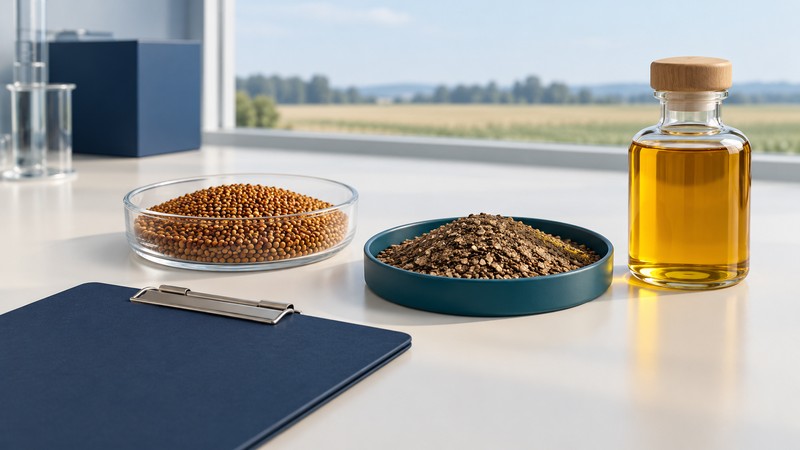
Camelina meal is a coproduct of oil production from Camelina sativa seed. Its potential feed value depends on processing, composition, and the animal being fed. Begin with the exact ingredient specification and intended use, then assess the relevant feeding evidence and regulatory requirements.
Identify the material in the study and the shipment
Whole seed, oil, press cake, and extracted meal are different materials. Oil removal changes residual fat and concentrates other components. Heat treatment and storage also affect the specification. A supplier’s generic “camelina” description leaves too much unresolved for formulation.
In a 2020 broiler feeding experiment, researchers tested 0%, 8%, 16%, and 24% camelina cake over 42 days. Mortality and abnormal gross findings were unaffected, while increasing inclusion reduced nutrient digestibility. The study illustrates why tolerability and feeding value need separate assessment. The study’s ingredient composition, bird strain, growth stage, and feeding period are essential to interpretation. A percentage inclusion from an experiment is meaningful only with those details; use the paper’s methods and complete results, including performance and adverse findings, when comparing it with a proposed ration.
On a narrow screen, scroll the table sideways. Keyboard users can focus the table region and use the arrow keys.
| Field | Why it matters |
|---|---|
| Identity and process | Species, extraction method, heat treatment, and intended ingredient definition establish what is being supplied. |
| Lot analysis and basis | Moisture, protein, residual oil, fiber, and the stated as-fed or dry-matter basis permit valid comparisons. |
| Nutritional suitability | Amino-acid availability and usable energy need evidence appropriate to the animal class. |
| Undesirable constituents | Glucosinolate measurements need named analytes, units, analytical method, and the applicable limit. |
| Use conditions | Species, production stage, inclusion ceiling, labeling, and local requirements determine whether the use is permitted. |
| Handling | Storage conditions, shelf life, and quality checks need to match the delivered material. |
Read a regulatory definition as a specific use
The 2025 AAFCO ingredient definitions, section 71.300 describe extracted camelina meal with composition and glucosinolate limits. That dated definition names broiler chickens, laying hens, and cattle fed in confinement for slaughter, with a maximum of 10% of the diet. These conditions belong together; the percentage alone is an incomplete description.
A definition for specified animals and material does not establish a universal inclusion rate for pigs, fish, breeding animals, or every camelina coproduct. Confirm the current definition and its adoption or legal relevance in the jurisdiction where the feed will be sold and used.
The FDA animal-food ingredient overview explains the U.S. framework, including food-additive and GRAS pathways for intended uses. It also describes the transition in FDA’s relationship with the AAFCO ingredient process and the Animal Food Ingredient Consultation process. For a purchasing or formulation decision, obtain the current regulatory basis for the exact material and use from the supplier and appropriate authority.
Make the percentage and comparison explicit
Ask what the camelina replaces and how the rest of the diet was adjusted. Equal ingredient percentages can yield different energy, amino-acid, and fiber levels. Compare growth or production, feed intake, efficiency, health observations, and relevant product-quality outcomes over the full study period.
Prepare a short decision record with the supplier’s lot specification, animal class, current regulatory basis, formulation assumptions, and the studies that match those conditions. A qualified animal nutritionist can determine whether the ingredient fits the complete ration and what monitoring is needed. Unresolved identity, composition, or use conditions should be settled before incorporating it into feed.
For the broader method of checking a study’s population, comparison, and outcome, see reading a nutrition association. Apply the method to the actual animal class and feed question.
Explore more guides in Understanding nutrition research.