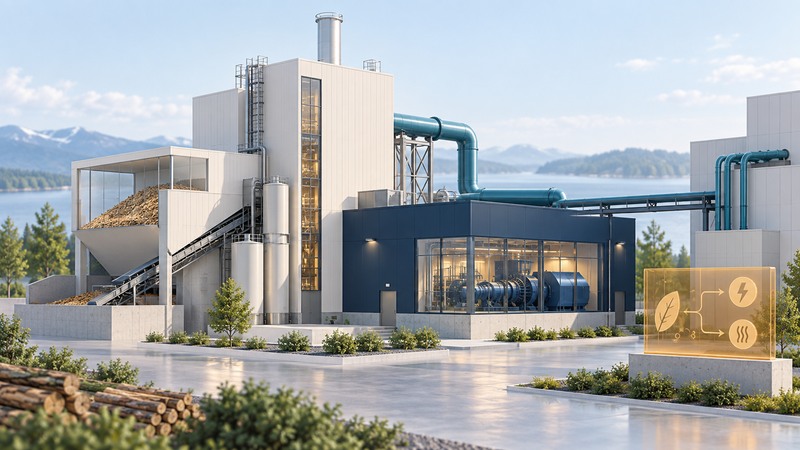
A biomass combined heat and power project must serve two linked demands: useful process heat and electricity. Start with the plant's steam profile, then check the electrical balance, fuel supply and environmental obligations. A turbine's nameplate capacity gives only one part of the answer.
This guide is for industrial energy managers comparing a proposal with the site's existing boilers and electricity supply. Assemble hourly or representative seasonal steam and electrical demand, steam conditions, fuel specifications and the proposed process flow. Building-scale heating has a separate biomass-boiler guide.
Match the steam conditions and operating pattern
A steam turbine extracts work as steam expands. In a back-pressure arrangement, its exhaust serves a lower-pressure heat requirement. Extraction and condensing arrangements offer different heat/power combinations. Ask for performance at the site's required steam pressure, temperature and flow, including part-load operation.
EPA's Biomass CHP Catalog of Technologies explains these arrangements and their fuel considerations. Its engineering examples are historical reference cases; their prices and plant assumptions need replacement in a current proposal.
Map normal production, weekends, seasonal changes and planned shutdowns. Identify who supplies steam during boiler maintenance and what happens to electricity production when heat demand falls. Useful heat is the heat actually delivered to a process that needs it.
Keep gross output, auxiliaries and site use separate
On a narrow screen, scroll the table sideways. Keyboard users can focus the table region and use the arrow keys.
| Quantity | Unit | Interpretation |
|---|---|---|
| Gross electrical output | MW | Generator output before the stated auxiliary loads |
| Net electrical output | MW | Gross output minus defined plant electrical consumption |
| Electrical energy | MWh | Power integrated over the operating period |
| Useful process heat | MW thermal or MWh thermal | Heat delivered at useful conditions within a declared boundary |
Fictional industrial balance
Assume a plant receives 20 MW of fuel energy on a lower-heating-value basis. It produces 4 MW gross electricity, uses 0.5 MW for auxiliaries, and delivers 10 MW of useful process heat. Net electricity is 3.5 MW. On this boundary, useful combined output is 13.5 MW and combined efficiency is 67.5%.
At 7,000 hours with these constant conditions, net generation is 24,500 MWh and useful heat is 70,000 MWh thermal. If the site simultaneously needs 3 MW electricity, 0.5 MW remains for possible export, subject to the connection and commercial arrangements. These invented values illustrate accounting; they are not a mill performance forecast.
Ask for separate import and export profiles. Annual net energy can hide hours of substantial grid imports. Keep fuel heating value, auxiliary scope and steam reference conditions consistent across bids.
Test the dependable fuel supply
Assess fuel moisture, particle size, contaminants, seasonal availability and competing buyers. Define whether quoted tonnes are delivered wet mass or dry matter, and whether the heating value is as received. Transport and storage affect both cost and usable quality.
Fictional moisture comparison
One hundred wet tonnes at 40% moisture by mass contain 60 tonnes of dry matter. At 50% moisture, the same delivered mass contains 50 tonnes of dry matter: 16.7% less dry material. The boiler balance must also account for the extra water. This comparison alone does not calculate usable heat.
Request an annual supply schedule with supplier commitments, quality limits, sampling responsibility, delivery access and contingency sources. A regional residue estimate describes potential material; contracts and handling capability establish a supply plan.
Define the environmental comparison
Biomass combustion produces stack emissions. Evaluate local air pollutants and ash management through the actual fuel and equipment permit review. For greenhouse gases, state the comparison system, feedstock origin, transport, processing, alternative fate of residues, land-carbon assumptions and time horizon.
EPA's archived biomass heating and cooling explanation makes carbon-neutrality assessment conditional on how the feedstock is grown and consumed. Use that principle to request a project-specific analysis, while obtaining current obligations from the responsible authorities.
Complete the evaluation with a matched steam/power model, a credible fuel schedule, an operating and maintenance plan, an emissions assessment and a current financial model. Test sensitivity to operating hours, fuel moisture and price, grid energy value and downtime. The decision should identify which conditions make the project useful and who is responsible for proving them.
Industrial biomass CHP assessment brief
Industrial biomass CHP assessment brief — plain-text download. Save a copy and fill it in with your own information. The file includes instructions, assumptions and references so it can be used independently.