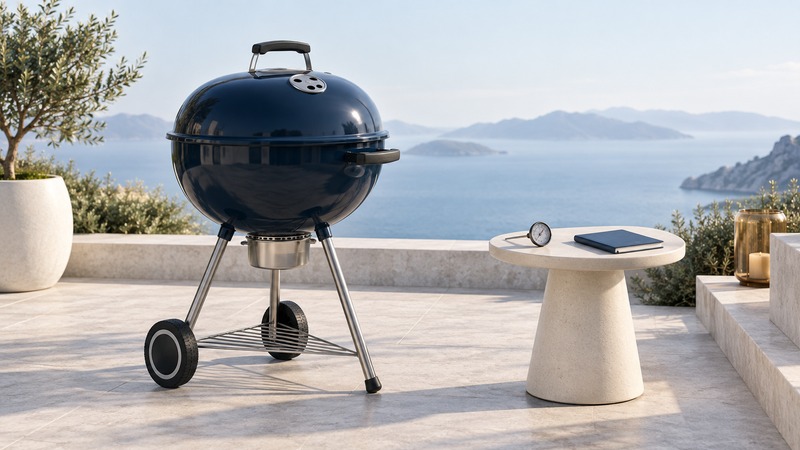
Start with the exact Weber grill you own. Its fuel type, burner or charcoal arrangement and controls determine how a recipe translates into a setup. A useful routine connects the correct manual with a cooking method, food-temperature checks and a short record of the result.
Find the model before looking for a fix
Photograph the model or serial information when the grill is cool and accessible. Use Weber's official manual lookup, which accepts serial information or a specific model search. Broad family names can return several versions. Match the manual's illustration and fuel type as well as the name.
Save the manual and parts diagram with the grill's identifiers. For a service question, record the exact symptom, when it occurs and any recent changes. Use the current support route on the official page rather than a phone number or event announcement copied from an old article.
Read the setup, ignition, shutdown, cleaning and clearance instructions before cooking. A gas, charcoal, pellet or electric grill needs its own procedure. Keep fuel-system work within the manufacturer's authorized service guidance.
Choose where the food sits relative to heat
Direct cooking places food over the heat source. Indirect cooking places it away from the active heat while the enclosed grill supplies the cooking environment. Weber's gas-grill manual example explains both methods. Apply the arrangement in your own manual rather than copying the burner positions from a different grill.
| Question | Why it helps |
|---|---|
| Does the recipe call for direct, indirect or a sequence? | The heat arrangement changes surface browning and cooking rate. |
| How thick and consistent are the portions? | Different thicknesses may finish at different times. |
| Where will finished food and clean utensils go? | A separate clean landing area supports orderly handling. |
| What temperature and rest requirement applies? | The finish check should be decided before the food goes on. |
Preheat and manage the lid as your manual and recipe specify. Treat recipe time as a planning estimate. Weather, portion size and the starting condition of the grill can alter when food reaches the required result.
Measure food temperature to check completion
USDA's grilling guidance gives these minimum internal temperatures for common meat and poultry: whole beef, pork, lamb and veal steaks, chops and roasts at 145°F with a three-minute rest; their ground meats at 160°F; and poultry, including ground poultry, at 165°F. A lid thermometer measures a different thing from the food's interior.
Use a clean food thermometer and check the appropriate thickest location, avoiding bone as directed by the thermometer instructions. Check separate pieces, especially when sizes differ. Keep cooked food and its utensils separate from those used for raw meat. Color and grill marks cannot substitute for a temperature reading.
The USDA food-thermometer guide explains placement and differences between thermometer types. Choose one you can read and use correctly with your usual portions.
Keep a short log and improve one variable
Record the grill model, fuel, method, portion thickness, settings, weather and temperature observations. Note the texture and browning you wanted and what happened. Avoid filling the log with details you will never use again.
After cooking, follow the model's shutdown and cool-down sequence. Complete the specified cleaning and inspection before the next use. For recurring ignition or temperature problems, send support the model, symptom and log; avoid improvised gas adjustments.
The downloadable log includes source references and space to record the applicable target and rest requirement before cooking. It is a record of your observations, not a replacement for the grill manual or food instructions.
Take the worksheet with you
Download the grill cooking and results log (plain text). Save a copy to fill in with your own measurements or observations. It includes instructions and a link back to this guide.