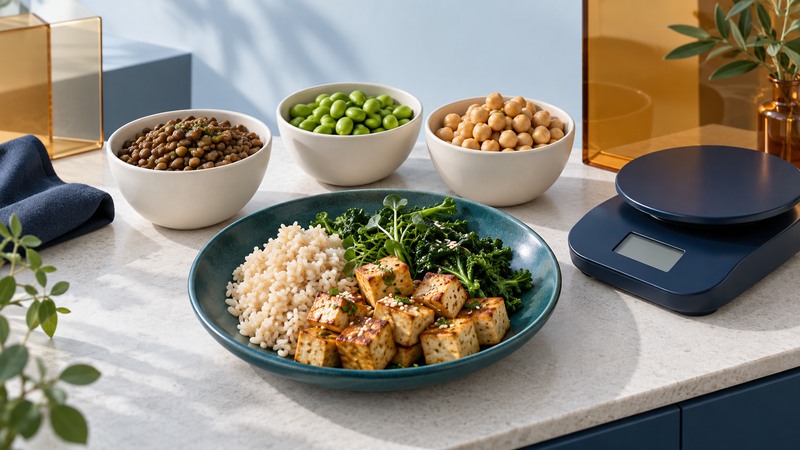
Choose a main protein food, measure the portion you will eat, then build the rest of the meal around it. Cooked beans, lentils, tofu and soy milk are useful options with quite different water content and portion sizes. The examples below help you estimate meals; they do not set an individual daily protein target.
Compare foods in the form you eat
Scroll the table sideways. With a keyboard, focus the table and use the arrow keys.
| Food and data basis | Portion | Estimated protein |
|---|---|---|
| Cooked lentils, boiled without salt; 9.02 g per 100 g | 150 g cooked | 13.5 g |
| Cooked chickpeas, boiled without salt; 8.86 g per 100 g | 150 g cooked | 13.3 g |
| Firm tofu prepared with calcium sulfate; 17.27 g per 100 g | 150 g | 25.9 g |
| Silk Original Soymilk label example | 1 cup (240 mL) | 8 g |
Sources: USDA FoodData Central SR Legacy records for cooked lentils (172421), cooked chickpeas (173757) and firm tofu (172475), plus the Silk Original Soymilk label, checked September 2026. SR Legacy is a historical reference dataset whose final release was in 2018. Numbers are rounded to one decimal place where calculated. The tofu record is one particular preparation: water content and brand can change protein substantially. Use your package’s current label for packaged foods.
Weigh lentils and chickpeas after cooking; drain canned beans before weighing and prefer the can’s own nutrition information when available. A dry-food figure applied to a cooked-food weight overstates the result because cooking adds water. For tofu, follow the package’s serving basis rather than assuming every firm block matches the USDA example.
Use a repeatable calculation
Protein in your portion = protein per labeled serving × your portion weight ÷ labeled serving weight. Fictional tofu label: 10 g protein per 85 g. A 150 g portion supplies about 17.6 g, calculated as 10 × 150 ÷ 85. That is quite different from the 25.9 g USDA example, which shows why matching the actual product matters.
Lentil and chickpea lunch bowl
One substantial bowl: 150 g cooked lentils, 100 g cooked chickpeas, ½ cup chopped cucumber, ½ cup chopped bell pepper, 1 tablespoon olive oil, 1 tablespoon lemon juice and black pepper to taste. Use cooked, cooled legumes from the refrigerator; rinse and drain canned chickpeas if used.
- Combine the lentils, chickpeas and vegetables in a bowl.
- Whisk oil with lemon juice, add pepper and toss through the bowl. Adjust the seasoning to your taste.
- Serve immediately, with bread if desired, or refrigerate promptly in a covered container. Keep chilled when taking it to work.
Protein subtotal: lentils 13.53 g + chickpeas 8.86 g = 22.4 g. This counts the two legumes only; vegetables, dressing and any bread are excluded. It is an estimate for the stated records, not a laboratory analysis of the finished dish.
A warm tofu and rice bowl
One bowl: 150 g firm tofu, drained and cubed; 1 teaspoon oil; 1 cup chopped broccoli or another quick-cooking vegetable; ¾ cup cooked rice; 1 teaspoon soy sauce; and a squeeze of lime. Use a soy sauce and tofu suitable for your dietary requirements.
- Heat the oil in a skillet over medium heat. Add tofu and turn it gently as the surfaces brown.
- Add vegetables and a small splash of water; cover briefly until they reach your preferred tenderness. Follow any cooking instructions on the tofu package.
- Add soy sauce, serve over hot rice and finish with lime. If using refrigerated leftover rice, reheat it to 165°F.
Protein subtotal: the tofu alone contributes about 25.9 g using the USDA example, or 17.6 g using the fictional label above. Rice and vegetables add more, but are excluded from this subtotal. USDA’s leftover guidance applies to chilling and reheating prepared meals.
Make substitutions deliberately
Swap cooked lentils and chickpeas by edible weight for a roughly similar protein contribution in these examples, allowing for changes in texture. Swapping tofu for beans can change the portion needed. Plant drinks also vary: check grams of protein per cup, and shake fortified drinks as the package directs. A product’s plant-based name alone tells you little about its protein content.
Read labels for allergens, especially soy and wheat in tofu dishes and sauces. A vegan diet also needs a reliable vitamin B12 source from fortified foods or supplements; NIH’s vitamin B12 fact sheet explains why plant foods do not naturally provide dependable B12. Check fortification separately from protein, and use individual advice for requirements affected by age, pregnancy or medical conditions.